
To speed up your weeknight pizza dough, start by using warm water around 110°F to activate the yeast faster and try rapid-rise or instant yeast for quicker fermentation. Increase yeast slightly, but avoid overdoing it to prevent a yeasty flavor. Control temperature and humidity, and consider shorter proofing times with careful monitoring. Using bread flour helps develop gluten quickly, while preheating your oven ensures fast baking. Keep experimenting to find the best quick method—more tips are just ahead.

Get baking supplies delivered free with Prime
- Fast, free delivery on millions of items
- Prime Video, Amazon Music and more included
- Member-only deals all year
Key Takeaways
- Use warm water (~110°F) and rapid-rise yeast to accelerate yeast activation and shorten fermentation time.
- Increase yeast quantity slightly, but avoid over-adding to prevent yeasty flavors and overly airy crust.
- Control temperature and humidity to speed up fermentation without sacrificing dough quality.
- Incorporate dough resting techniques and preheat oven for quicker handling and baking.
- Opt for higher hydration dough to maintain tenderness during rapid fermentation.

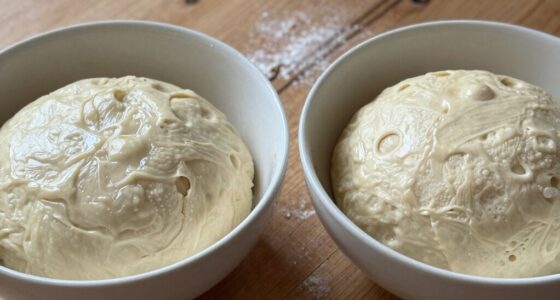
When weeknights get busy, making pizza from scratch can feel like a formidable task. The key to speeding up the process lies in adjusting your dough’s fermentation timing and making smart ingredient substitutions. Normally, traditional pizza dough requires a long, slow fermentation to develop flavor and texture, often taking several hours or overnight. But when time isn’t on your side, you can modify this process without sacrificing too much quality. One effective way is to shorten the fermentation time by increasing the amount of yeast in your recipe. More yeast accelerates fermentation, meaning your dough rises faster, and you’ll be able to shape it sooner. Just be careful not to add too much, as it can lead to a yeasty or overly airy crust. A quick rule of thumb is to double the yeast, but keep a close eye on the dough to prevent over-proofing.
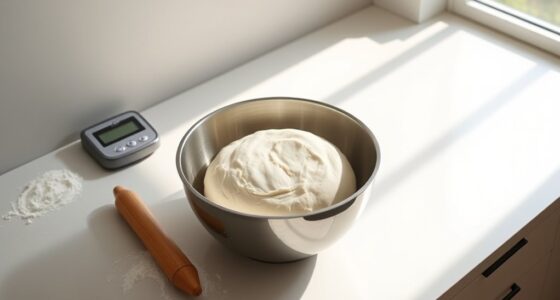
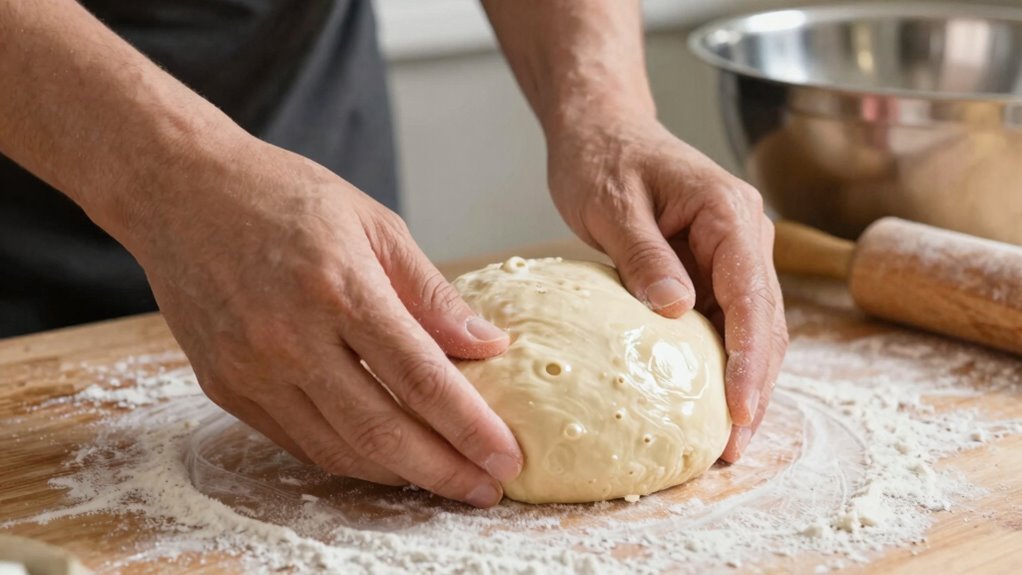
Another way to cut down on prep time is through ingredient substitutions. For instance, using warm water—around 110°F—helps activate the yeast faster, reducing the rise time. You might also consider using bread flour instead of all-purpose flour, as its higher protein content supports quicker gluten development, leading to a more elastic dough that’s easier to work with even after a short fermentation. If you’re really pressed for time, some bakers turn to instant or rapid-rise yeast, which is designed specifically for quick fermentation. This type of yeast can cut your dough’s rising time in half, often allowing you to skip the lengthy proofing altogether or just give it a quick 30-minute rise. Additionally, fermentation timing can be adjusted by controlling temperature and humidity, further speeding up the process. Incorporating techniques like using dough resting techniques can also help optimize gluten structure for faster handling.
Additionally, you can preheat your oven and baking surface to ensure rapid baking once your dough is ready. When using ingredient substitutions, be mindful of the hydration level—adding slightly more water can compensate for the shorter fermentation, helping to keep your dough tender and easy to stretch. Keep in mind, though, that these adjustments might slightly alter the flavor profile, making your crust less complex than those made with traditional, slow-fermented dough. Still, they’re invaluable tricks for weeknights when time is tight, and you still want a satisfying homemade pizza. With a bit of practice, you’ll find the perfect balance between fermentation timing and ingredient tweaks that fit your schedule, giving you a delicious, fresh pizza in no time.
As an affiliate, we earn on qualifying purchases.
Frequently Asked Questions
Can I Freeze Pizza Dough for Later Use?
Yes, you can freeze pizza dough for later use. To do this, wrap the dough tightly in plastic wrap or place it in an airtight container, then freeze. When you’re ready to use it, opt for quick thawing by transferring the dough to the fridge overnight or leaving it at room temperature for a few hours. This method preserves the dough’s texture and makes your weeknight pizza prep quicker.
What Types of Flour Work Best for Quick Dough?
If you’re worried about gluten development slowing down your quick dough, opt for bread flour or high-gluten flour, as they develop gluten faster, giving you a sturdy crust in less time. For easier handling, you can also use all-purpose flour as a substitute, but keep in mind it might result in a slightly softer crust. These flour substitutions help speed up the process without sacrificing pizza quality.
How Do I Prevent Dough From Drying Out?
To prevent dough from drying out, keep it covered with a damp cloth or plastic wrap to retain moisture and maintain ideal dough moisture levels. You should also work quickly to avoid overexposure to air, which can dry out the surface and affect crust texture. If you notice the dough starting to dry, lightly spritz it with water or adjust the humidity in your workspace to preserve its softness and guarantee a tender, well-textured crust.
Can I Make Dough Without Yeast?
Yes, you can make dough without yeast by using alternative leavening agents like baking powder or baking soda, which create bubbles for rise. For gluten-free options, try using gluten-free flour blends combined with these leavening agents. Keep in mind that the texture and flavor will differ from traditional yeast dough, but it still makes a tasty pizza base. Adjust the liquids as needed to achieve the right dough consistency.
What’s the Best Way to Store Leftover Dough?
Think of leftover dough as a secret treasure chest waiting to be rediscovered. To store it, wrap your dough tightly in plastic to prevent air from sneaking in and causing premature dough fermentation. For longer storage, substitute some of the flour with a little bit of oil or refrigerate it—this slows fermentation, keeping your dough fresh. Just remember to bring it back to room temperature before using.
warm water dough proofing thermometer
As an affiliate, we earn on qualifying purchases.
As an affiliate, we earn on qualifying purchases.
Conclusion
By adjusting your dough, you’re saving time, simplifying prep, and enjoying pizza faster. You’re reducing waiting, cutting corners, and still creating delicious results. You’re making weeknight dinners easier, more efficient, and more enjoyable. With these tips, you’re transforming your pizza routine into a smooth, stress-free experience. So go ahead, embrace the quick fixes, and savor the satisfaction of a homemade pizza—faster, fresher, and more fun than ever.
bread flour for quick pizza crust
As an affiliate, we earn on qualifying purchases.
As an affiliate, we earn on qualifying purchases.
As an affiliate, we earn on qualifying purchases.
Halloween Picks
halloween
As an affiliate, we earn on qualifying purchases.