
If your KitchenAid Artisan Series 5 Quart Tilt Head Stand Mixer is making a grinding noise, it can indicate a mechanical issue or debris. Addressing this promptly ensures your mixer continues to perform at its best and prevents further damage.

Get baking supplies delivered free with Prime
- Fast, free delivery on millions of items
- Prime Video, Amazon Music and more included
- Member-only deals all year
In this guide, you’ll learn how to identify the causes of grinding sounds, perform safe troubleshooting steps, and fix common problems effectively.
Key Takeaways
| Identify the noise source | Pinpoint whether the grinding is from the motor, gear, or attachments. |
| Check for debris or obstructions | Foreign objects or dried ingredients can cause grinding sounds. |
| Inspect the attachments and gears | Worn or misaligned parts may need replacement. |
| Perform safe cleaning and lubrication | Regular maintenance can prevent noise issues. |
Step 1: Unplug and Prepare
- Always unplug your mixer before inspecting or performing any maintenance.
- Remove the attachment (e.g., flat beater, dough hook) and the mixing bowl.
Step 2: Check for Obstructions or Debris
- Inspect the attachment hub and gears for any stuck food particles or debris.
- Clean with a damp cloth or soft brush if needed.
Step 3: Examine the Gears and Motor Area
- Remove the mixer’s head if possible, following the user manual instructions.
- Look for worn or damaged gears and lubricate if necessary using food-safe lubricant.
Step 4: Test the Mixer
- Reassemble the mixer, plug it in, and run it at low speed.
- Listen for unusual grinding sounds and observe its operation.
Additional Tips & Warnings
- Never operate the mixer if it continues to make grinding noises after troubleshooting.
- Consult the user manual for specific gear and motor inspection procedures.
- If unsure, contact a professional repair service or KitchenAid customer support.
The Products in This Guide
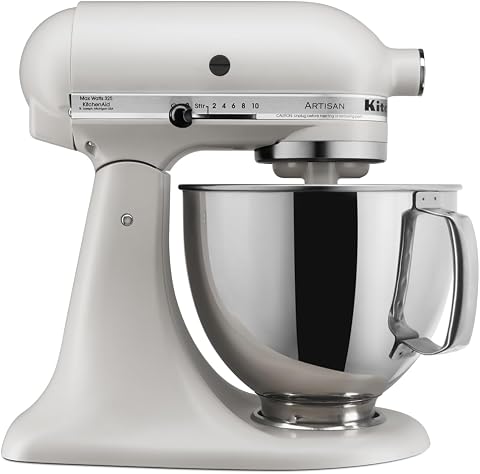
KitchenAid Artisan Series 5 Quart Tilt Head Stand Mixer
- ✔ Weight: 26 lbs
- ✔ Dimensions: 14 x 8 x 14 inches
- ✔ Included Accessories: Pouring shield, flat beater

KitchenAid Stand Mixer Attachment
- ✔ Weight: Approx. 4 lbs
- ✔ Dimensions: 10 x 8 x 5 inches
- ✔ Cleaning: Hand wash only
KitchenAid Artisan Series 5 Quart Tilt Head Stand Mixer
The KitchenAid Artisan Series 5 Quart Tilt Head Stand Mixer is built with durable metal construction, offering 59 touchpoints for thorough mixing. It features a 5-quart stainless steel bowl, 10 speeds, and a tilt-head design for easy access to ingredients. Its sturdy build and versatile functionality make it ideal for both small and large batches.
Pros:
- Durable metal construction
- Versatile 10-speed settings
- Large 5-quart bowl
- Easy tilt-head access
Cons:
- Can be heavy to move
- Price may be high for some budgets
Best for: Home bakers and chefs requiring a reliable, high-capacity mixer
Not ideal for: For those needing a lightweight or compact appliance
Bottom line: A durable, versatile mixer suited for everyday baking needs.
KitchenAid Stand Mixer Attachment
The KitchenAid Metal Food Grinder attachment enhances your mixer’s capabilities, allowing you to grind meats, vegetables, and more with ease. Its sturdy metal construction and multiple grinding plates make it a versatile addition to your kitchen arsenal.
Pros:
- Sturdy metal build
- Multiple grinding plates
- Easy to attach
- Large food tray
Cons:
- Requires separate purchase
- Cleaning can be time-consuming
Best for: Homemade sausage, meat grinding, and food prep
Not ideal for: For casual users who rarely grind ingredients
Bottom line: A durable, efficient grinder for fresh, homemade foods.
Frequently Asked Questions
Why is my KitchenAid mixer making a grinding noise?
It could be due to debris caught in the gears, worn gear components, or lack of lubrication. Inspect and clean the gear area to resolve this.
Can I fix the grinding noise myself?
Yes, with proper unplugging, cleaning, and inspection of gears and attachments, many issues can be fixed safely at home.
When should I seek professional repair?
If the noise persists after troubleshooting or if you notice unusual vibrations or damage, contact a qualified repair technician or KitchenAid support.
How often should I maintain my mixer to prevent noise issues?
Regularly inspect and clean the gear area, lubricate moving parts with food-safe lubricant, and avoid overloading the mixer.
Keep Your KitchenAid Running Smoothly
Addressing grinding noises early can save your mixer from further damage and ensure it continues to serve your baking needs. Regular maintenance, proper cleaning, and careful handling are key to longevity. When in doubt, consult the user manual or professional repair services to keep your KitchenAid Artisan mixer in top shape.
Affiliate disclosure: As an Amazon Associate we earn from qualifying purchases. Prices and availability are accurate as of the time of publishing.
Columbus Day / Indigenous Peoples' Day Picks
long weekend sales
As an affiliate, we earn on qualifying purchases.