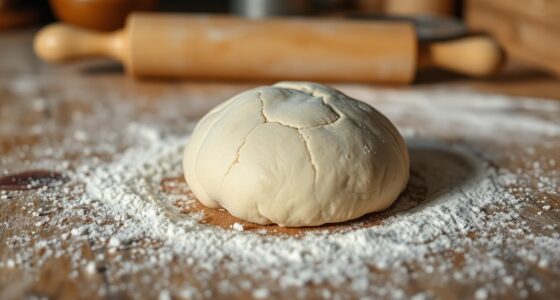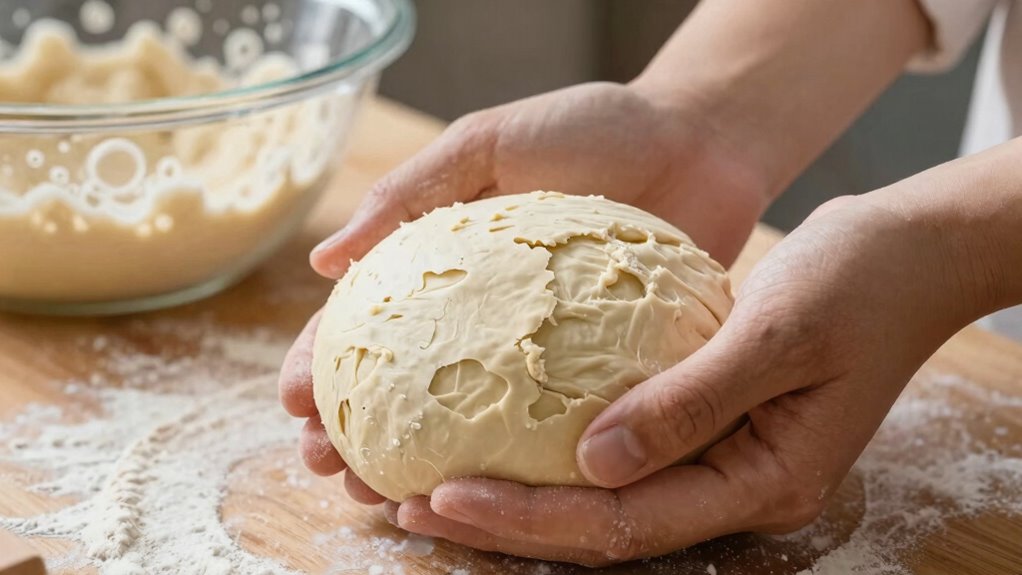

If your dough isn’t coming together smoothly, smells off, or feels overly sticky or dry, your problem likely started during mixing, especially if ingredients didn’t blend well or the texture was uneven. On the other hand, if your dough looked okay initially but didn’t rise or collapses later, the issue probably happened during proofing, often caused by environmental factors or inactive yeast. Continuing with this guide will help you pinpoint the exact cause and improve your baking.

Get baking supplies delivered free with Prime
- Fast, free delivery on millions of items
- Prime Video, Amazon Music and more included
- Member-only deals all year
Key Takeaways
- Dough that feels excessively sticky, dry, or uneven during mixing indicates a mixing problem.
- Strange or off-putting smells immediately after mixing suggest ingredient quality issues at the mixing stage.
- No or minimal rise during proofing points to fermentation or yeast problems that originated during mixing.
- Over-expansion or collapse after rising usually signals over-fermentation, often due to environmental or ingredient issues during proofing.
- Uneven ingredient distribution or inconsistent texture during mixing helps identify early-stage problems.
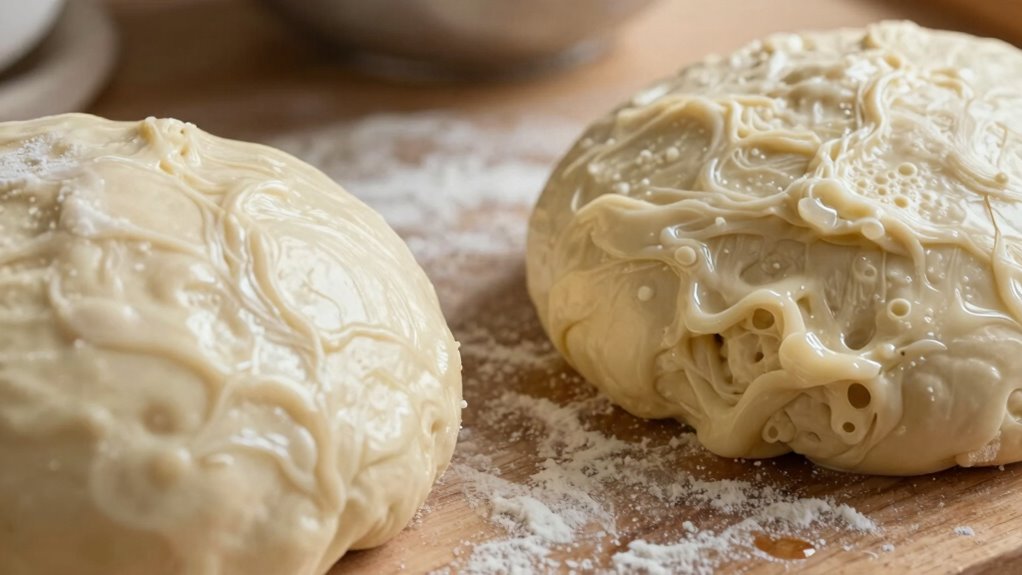
When your dough doesn’t turn out as expected, figuring out whether the problem started during mixing or proofing can save you time and frustration. The first step is to observe the dough’s texture, smell, and appearance at different stages. If your dough is overly sticky, dry, or uneven after mixing, the root cause often lies in fermentation issues or ingredient quality. Poor ingredient quality can lead to inconsistent results; for example, using flour that’s too old or has low protein content can hinder gluten development, making the dough difficult to knead or causing it not to rise properly later on. Similarly, if your yeast or leavening agents are expired or improperly stored, fermentation issues can occur, resulting in a sluggish or uneven rise.
During mixing, pay close attention to how the dough feels and behaves. If it seems unusually wet or dry, or if the ingredients haven’t combined smoothly, then the problem likely stems from ingredient quality or inadequate mixing. Inconsistent flour or yeast distribution can cause some areas of the dough to ferment faster than others, leading to uneven proofing or flat spots. If you notice a strange smell or a sour, off-putting aroma right after mixing, it might be due to poor ingredient quality or spoiled yeast. This early indication suggests that the fermentation process won’t proceed as it should, hampering the dough’s rise later.
Once you’ve mixed the ingredients properly, you move on to proofing. If your dough looks and feels fine after mixing but doesn’t rise during proofing, it points to issues with fermentation, such as inactive yeast or improper proofing conditions. A sluggish or non-existent rise often indicates that either the yeast was dead or the environment was too cold or too dry for fermentation to develop properly. Conversely, if your dough rises too quickly and then collapses, it can be a sign of over-fermentation, often caused by overly warm conditions or weak gluten structure, which may have resulted from poor ingredient quality or improper mixing.
bread dough mixing and proofing thermometer
As an affiliate, we earn on qualifying purchases.
As an affiliate, we earn on qualifying purchases.
Frequently Asked Questions
Can Improper Storage Affect Dough Quality?
Yes, improper storage can affect dough quality. Storage effects, like exposure to air or temperature fluctuations, can cause ingredients to lose freshness, leading to dough that’s less elastic or rises poorly. When ingredients sit too long or are stored improperly, their quality diminishes, impacting the dough’s texture and fermentation. To keep your dough at its best, store ingredients properly and use them before they spoil or lose their ideal freshness.
What Are Signs of Underproofed Dough?
You can tell your dough is underproofed by observing its fermentation timing and yeast activity. If it hasn’t doubled in size or shows minimal bubbles, it indicates insufficient yeast activity. The dough may feel dense, tight, or resistant when poked. Underproofed dough lacks the airy structure you want, so give it more time to ferment until it’s visibly expanded and has a gentle, springy texture.
How Does Ingredient Quality Impact Dough Problems?
Oh, surely your dough’s perfect ballet of gluten and yeast is solely sabotaged by your choice of ingredients. In reality, ingredient freshness and flour type wield enormous influence. Outdated flour or stale yeast can turn your dough into a stubborn, uncooperative mess. Using high-quality, fresh ingredients guarantees proper fermentation, elasticity, and flavor. Skimp on quality, and your dough may never rise to its full potential—no matter how masterfully you mix or proof.
Can Overmixing Cause Dough Issues?
Yes, overmixing can cause dough issues. When you overmix, you develop too much gluten, making the dough tough and difficult to shape. Proper kneading techniques help control gluten development, ensuring a tender crumb. If you’re overly aggressive or too long with mixing, it can negatively affect the texture. Pay attention to when the dough reaches the right gluten structure, and avoid overworking it to prevent problems.
Does Temperature Influence Proofing Success?
Temperature plays a vital role in proofing success because it affects fermentation control. If your kitchen experiences temperature fluctuations, it can slow down or speed up yeast activity, leading to uneven proofing. Maintaining a consistent, warm environment helps the dough rise properly. Too cold, and fermentation slows; too hot, and it may overproof. Using a proofing box or warm spot can guarantee steady temperature, resulting in better dough development.
As an affiliate, we earn on qualifying purchases.
Conclusion
Knowing whether your dough issues stem from mixing or proofing is like deciphering a secret recipe—each step holds clues. By paying close attention to the dough’s texture and behavior, you become the master baker, much like a detective unraveling a mystery. Remember, understanding where the problem begins empowers you to fix it, turning common mistakes into opportunities for delicious success. Just as the alchemist transforms base metals into gold, you’ll elevate your baking game with insight and patience.
As an affiliate, we earn on qualifying purchases.
As an affiliate, we earn on qualifying purchases.
Halloween Picks
halloween
As an affiliate, we earn on qualifying purchases.