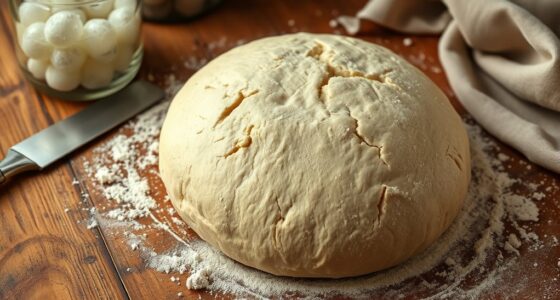
To troubleshoot a dense crust with no oven spring, check your fermentation timing and guarantee you’re not under or over-fermenting. Use high-quality, fresh flour and knead the dough properly to develop a strong gluten network. Keep the dough at the right temperature, ideally around 75-80°F, to support active yeast. Additionally, measure ingredients accurately and allow proper fermentation time. Understanding these factors can help improve your results and achieve a lighter, well-risen crust.

Get baking supplies delivered free with Prime
- Fast, free delivery on millions of items
- Prime Video, Amazon Music and more included
- Member-only deals all year
Key Takeaways
- Ensure proper fermentation time; avoid under or over-fermenting the dough.
- Use high-quality, high-protein flour for better gluten development.
- Maintain consistent fermentation temperature around 75-80°F (24-27°C).
- Knead dough thoroughly to develop a strong gluten network.
- Avoid rushing the process; allow adequate proofing for optimal oven spring.
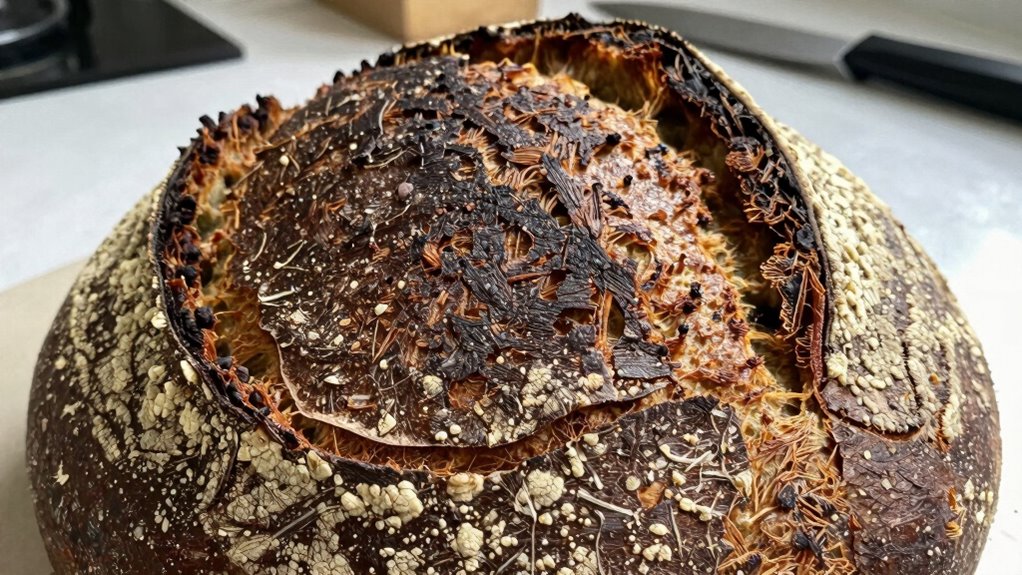
Have you ever baked a pizza only to find a dense, heavy crust that ruins the experience? If so, you’re not alone. Dense crusts with no oven spring often stem from issues during the dough preparation process. To troubleshoot this, start by examining your fermentation timing. Proper fermentation is vital for developing the gluten structure and flavor. If the dough hasn’t fermented long enough, it won’t have the necessary rise or lightness. Conversely, over-fermentation can weaken the dough, causing it to collapse during baking. Aim for a balanced fermentation schedule—usually, a longer, slow rise in the fridge helps develop flavor and strength, while a quick room-temperature proof can be effective if timed correctly. Make certain you’re giving your dough enough time to ferment, especially if you’re using a cold fermentation method, which often yields better oven spring and a lighter crust.
Next, consider the quality of your ingredients. Using fresh, high-quality flour makes a significant difference. Flours with higher protein content, like bread flour, provide more gluten, which traps gas and gives the dough its elasticity. Low-quality or low-protein flours might produce a dense crust because they don’t develop enough structure. Also, check the freshness of your yeast or leavening agents. Old yeast can lose potency, leading to poor fermentation and a dense result. Always use fresh yeast and measure your ingredients carefully, as inaccuracies can hinder proper rising.
Temperature plays an integral role, too. Ensure your dough is kept at an ideal temperature during fermentation—about 75-80°F (24-27°C). Cold environments slow down fermentation, resulting in less oven spring, while too warm conditions can speed fermentation excessively, weakening the dough. Proper temperature control helps the yeast work steadily, producing the gas needed to lift the dough during baking. Additionally, proper kneading techniques are essential for developing the gluten network, which is crucial for trapping gases and achieving oven spring.
As an affiliate, we earn on qualifying purchases.
Frequently Asked Questions
Can the Type of Flour Affect Oven Spring?
Yes, the type of flour can affect oven spring. Higher-protein flours, like bread flour, provide better gluten development, which traps gas and creates more rise. Different flour brands may have varying protein levels, so selecting a reliable brand with consistent quality can enhance your bake. Using the right flour for your recipe guarantees better oven spring, lighter crusts, and a more airy crumb.
How Does Hydration Level Influence Crust Density?
They say, “You are what you eat,” but in baking, you are how hydrated you are. Hydration level greatly influences your crust density; too little water leads to a dense crust and poor oven spring, while proper hydration guarantees a better crumb structure and lighter crust. Achieving hydration balance helps gases expand effectively during baking, giving you that airy, open crumb and a crust that’s just the right amount of crisp.
Does the Shape of the Dough Impact Oven Spring?
Yes, the shape of your dough impacts oven spring. Proper shaping techniques help create surface tension, which supports better expansion during baking. Dough conditioning, like gentle stretching and folding, strengthens gluten structure, enhancing oven spring. When you shape your dough with care, it encourages even rising and a more open crumb. Avoid tight or uneven shapes, and focus on gentle handling to optimize oven spring and achieve a lighter, airier crust.
Are There Specific Fermentation Times That Improve Crust Lightness?
Yes, specific fermentation times can improve crust lightness. Ideal fermentation timing allows flavors to develop fully, which enhances the dough’s structure and airiness. Longer, slower fermentation promotes better gluten development and flavor, resulting in a lighter crust. Be patient with your dough, and experiment with different fermentation periods to find the sweet spot that balances flavor development and oven spring, giving you a crisper, more tender crust.
How Does Dough Handling Affect Crust Density?
Your dough handling profoundly influences crust density. Proper kneading techniques develop gluten, allowing the dough to trap gases during dough fermentation, which creates a lighter, airy crust. Overworking or underworking the dough can lead to dense crusts with poor oven spring. Be gentle yet thorough during kneading, ensuring even gluten development. Also, avoid rushing fermentation, as proper dough fermentation enhances flavor and structure, ultimately resulting in a more open, less dense crust.
As an affiliate, we earn on qualifying purchases.
Conclusion
If your bread’s crust remains dense and stubborn, don’t despair—think of it as a culinary quest akin to seeking the Holy Grail. Check your dough’s fermentation, oven temperature, and scoring technique. Sometimes, just a small tweak makes all the difference. Remember, baking’s an art, not a science, so keep experimenting. Before you know it, you’ll be creating crusts so perfect, even medieval bakers would tip their hat to your skill. Happy baking!
As an affiliate, we earn on qualifying purchases.
As an affiliate, we earn on qualifying purchases.
Fall Picks
fall essentials
As an affiliate, we earn on qualifying purchases.