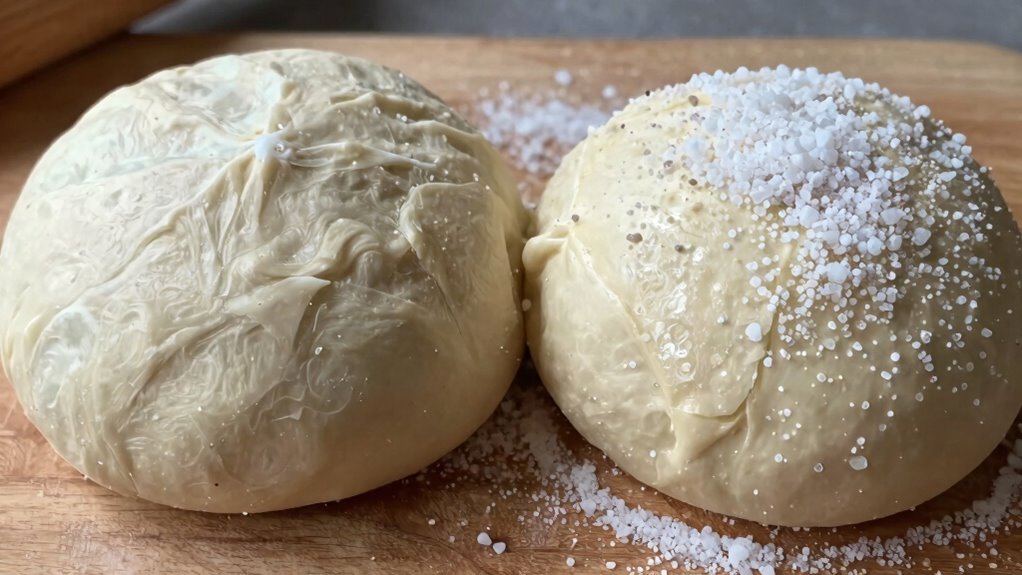
Salt strengthens your dough by tightening the gluten network, making it more elastic and easier to handle. It enhances flavor, giving your bread a richer taste and more complex profile. Salt also moderates yeast activity, controlling fermentation speed so your dough rises just right. This regulation helps prevent under- or over-proofing and results in a consistent bake. If you keep exploring, you’ll discover how salt truly masters the art of perfect bread.

Get baking supplies delivered free with Prime
- Fast, free delivery on millions of items
- Prime Video, Amazon Music and more included
- Member-only deals all year
Key Takeaways
- Salt enhances dough flavor and promotes complex taste development.
- It strengthens gluten networks, improving dough elasticity and resilience.
- Salt moderates yeast activity, controlling fermentation speed and proofing timing.
- It helps prevent uneven proofing and over-fermentation, ensuring consistent rise.
- Salt acts as a regulator, balancing flavor, structure, and process timing for bakery-quality bread.
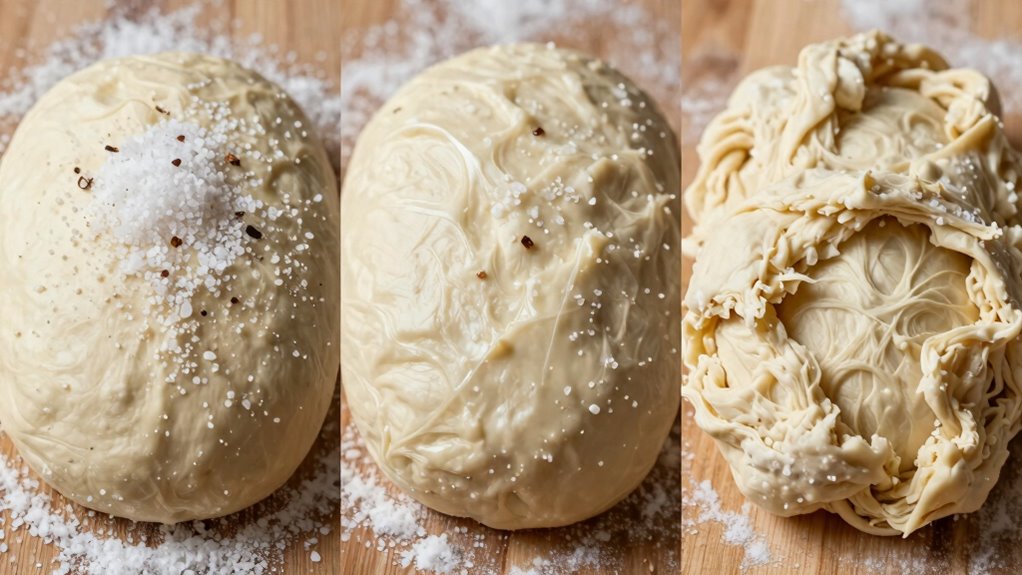
Have you ever wondered how a small pinch of salt can dramatically influence your dough? It’s surprising how such a tiny ingredient can have a powerful impact on the entire baking process. Salt plays a vital role not just in flavor but also in how your dough develops, especially through fermentation enhancement and texture modification. When you add salt to your mixture, you’re doing more than just seasoning — you’re controlling the yeast activity and shaping the dough’s structure.
Salt’s ability to enhance fermentation is one of its key functions. It moderates yeast activity, preventing it from fermenting too quickly. This regulation allows the yeast to work steadily, producing a more complex flavor profile and improving dough rise over time. Without salt, the yeast might ferment too aggressively, leading to uneven proofing and a less desirable texture. By slowing down fermentation, salt gives you a chance to develop deeper flavors and a more balanced, airy crumb. This controlled fermentation process guarantees your bread will have a better aroma and taste, making every bite more satisfying.
In addition to influencing fermentation, salt considerably modifies the texture of your dough. It strengthens the gluten network, which is essential for a well-structured loaf. When you knead your dough with salt, it helps tighten the gluten strands, making the dough more elastic and resilient. This texture modification results in a dough that’s easier to handle and shape, reducing stickiness and increasing its firmness. As a result, your finished bread will have a finer crumb and a chewier bite, attributes that are highly desirable in many baked goods.
Salt also impacts the timing of your baking process. By controlling yeast activity, it can slightly extend or shorten fermentation times, giving you more flexibility depending on your schedule. Properly salted dough tends to proof more predictably, helping you avoid under- or over-proofed bread. This precision allows you to plan your baking more effectively, ensuring your loaves are perfectly risen and baked to golden-brown perfection.
In essence, salt acts as a master regulator in your dough, balancing fermentation, improving texture, and setting the pace for your baking process. It’s a small addition that yields big results, transforming simple ingredients into bakery-quality bread. So next time you mix your dough, remember that a pinch of salt isn’t just about flavor — it’s about controlling the science behind the perfect loaf.
As an affiliate, we earn on qualifying purchases.
Frequently Asked Questions
How Does Salt Influence Yeast Fermentation Speed?
Salt slows down yeast activity, reducing the fermentation rate. When you add salt to dough, it creates an environment that inhibits yeast growth temporarily, leading to a slower rise. This controlled fermentation can improve flavor and dough structure. If you want faster fermentation, use less salt. Otherwise, adding the right amount of salt balances yeast activity, ensuring your dough develops flavor and texture without over-proofing.
Can Too Much Salt Make Dough Sticky?
Absolutely, too much salt can turn your dough into a sticky mess, practically defying all baking laws. While a salty taste may seem appealing, excessive salt can weaken gluten and hinder dough preservation, making it overly sticky and difficult to work with. It’s like adding a sprinkle of chaos—balance is key. Use just enough to enhance flavor without overwhelming the dough’s texture and preservation qualities.
Does Salt Affect Dough Rising in Cold Environments?
Yes, salt affects dough rising in cold environments. It slows down yeast activity, which can be beneficial in cold conditions, giving you more control over fermentation. Salt crystallization helps preserve dough quality, preventing spoilage. Plus, it enhances flavor, making your baked goods taste better. So, even in cold settings, salt plays a crucial role in regulating rising times, improving flavor, and maintaining dough consistency.
How Does Salt Impact Gluten Development?
Salt impacts gluten development by strengthening the dough’s protein structure through its mineral content. It tightens gluten strands, making the dough more elastic and easier to knead. Additionally, salt enhances flavor, balancing sweetness and other ingredients. You’ll notice that with proper salt levels, your dough becomes more resilient, resulting in better rise and texture, while also delivering a richer, more satisfying taste in your baked goods.
Is There a Substitute for Salt in Dough Recipes?
If you want to replace salt in your dough, consider using alternative flavor enhancers like seaweed or herbs, which add umami and aroma. For example, a baker in a gluten-free recipe replaced salt with potassium chloride, a common salt replacement option, to maintain flavor without compromising dough strength. These options help preserve taste and dough quality, making them effective substitutes for salt in recipes.
As an affiliate, we earn on qualifying purchases.
Conclusion
Remember, adding just a pinch of salt can strengthen your dough by up to 50%, enhancing its elasticity and flavor. Without salt, bread can become bland and overly sticky, making it harder to work with. So next time you bake, don’t skip that small but mighty ingredient—you’ll notice improved texture, taste, and timing in your baking process. Salt truly transforms your dough into a better, more flavorful masterpiece.
As an affiliate, we earn on qualifying purchases.
As an affiliate, we earn on qualifying purchases.
Halloween Picks
halloween
As an affiliate, we earn on qualifying purchases.