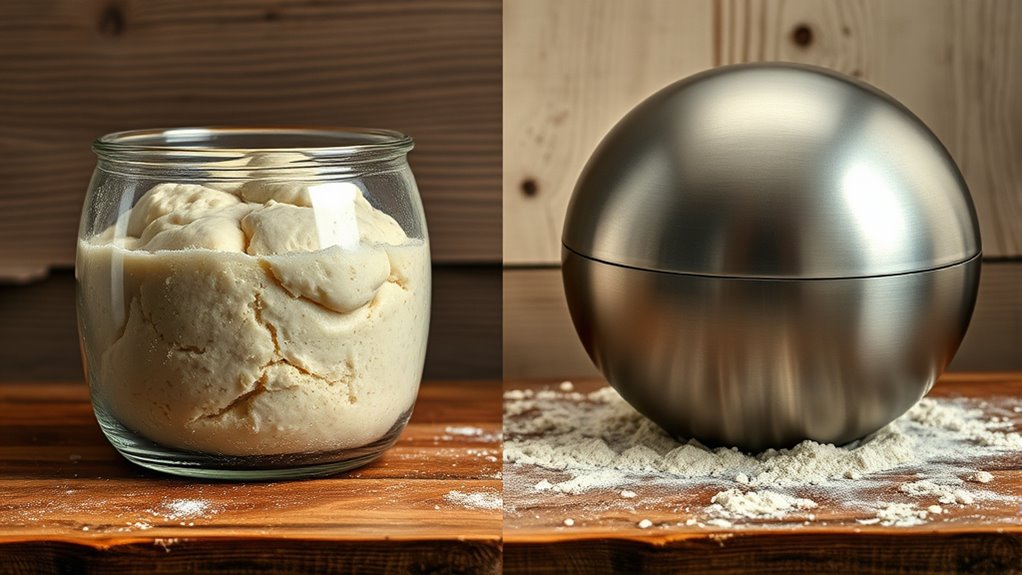

Bulk fermentation lets your dough develop deep, complex flavors and creates an open, chewy crumb, but it requires careful temperature control and longer time. Ball fermentation offers convenience and consistency, making it ideal for quick turnaround and multiple pizzas, though it may give less flavor complexity. Each method has its benefits and trade-offs; understanding them helps you match your schedule and flavor goals. Keep exploring to learn which technique suits your style best.

Get baking supplies delivered free with Prime
- Fast, free delivery on millions of items
- Prime Video, Amazon Music and more included
- Member-only deals all year
Key Takeaways
- Bulk fermentation develops deeper flavors and creates a more open crumb, ideal for artisanal breads.
- Ball fermentation offers faster turnaround and greater convenience for multiple or quick pizzas.
- Extended bulk fermentation enhances dough elasticity and flavor complexity, while shorter ball fermentation favors speed.
- Both methods require temperature control to prevent overproofing and achieve optimal results.
- Choice depends on flavor depth, production schedule, and desired dough texture.
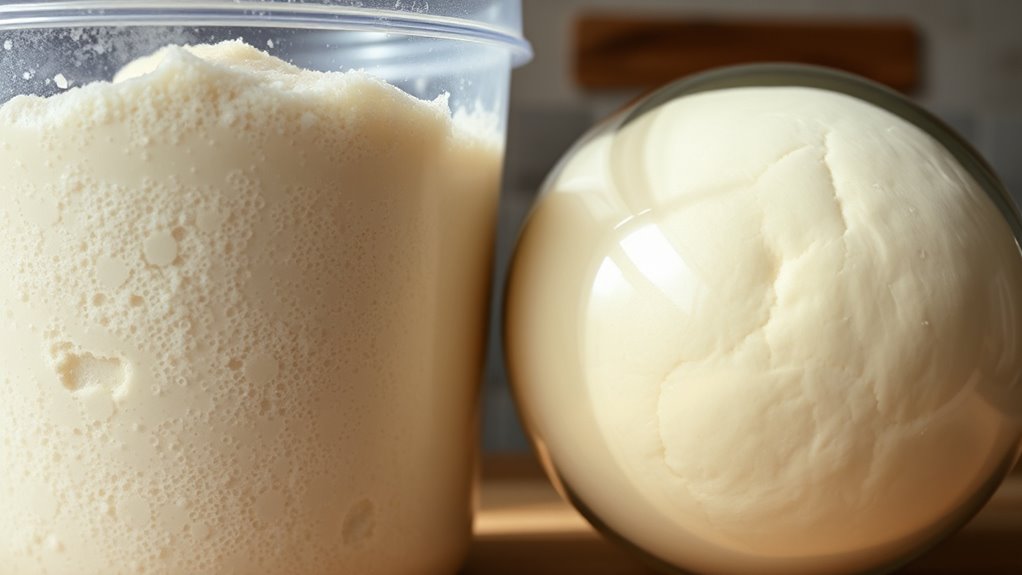
When it comes to making perfect pizza dough, choosing between bulk fermentation and ball fermentation can considerably impact your final product. Both methods influence how the dough develops flavor, texture, and elasticity, but they do so in different ways. A key factor in this decision is the starter culture you use and the fermentation time involved. Bulk fermentation involves letting the entire dough mass rest and ferment as a single unit, often for several hours or even overnight. During this period, the starter culture — whether natural or commercial — works to break down the carbohydrates, producing carbon dioxide and organic acids that develop flavor and gluten structure. The fermentation time in bulk fermentation tends to be longer, allowing more complex flavors to develop, but it also requires careful temperature control to prevent overproofing or undesirable fermentation.
On the other hand, ball fermentation involves dividing the dough into individual portions after the initial bulk fermentation, then shaping each into a ball and letting it rest further. This method gives you more control over fermentation at the individual dough ball level, which can be advantageous if you’re managing multiple pizzas or want a more consistent product. The fermentation time for each ball is typically shorter than bulk fermentation if you’re aiming for a quick turnaround, but it can be extended for added flavor complexity. Because the dough is divided into smaller balls, the starter culture’s activity is concentrated within each portion, leading to a quicker rise in some cases. This makes ball fermentation ideal when you’re short on time but still want decent flavor and texture.
Choosing between these methods depends on your schedule and flavor goals. Bulk fermentation is great if you have time and want deep, complex flavors, as the extended fermentation allows the starter culture to work thoroughly throughout the entire dough. It also tends to produce a more open crumb with a chewy texture. Meanwhile, ball fermentation offers convenience and consistency, especially when you want to prepare multiple dough balls in advance. It’s often used by pizzerias that need to turn out multiple pizzas quickly without sacrificing too much flavor.
Frequently Asked Questions
How Does Temperature Affect Bulk and Ball Fermentation Times?
Temperature control substantially impacts fermentation speed in both bulk and ball fermentation. When you keep the temperature warmer, fermentation speeds up, leading to quicker dough development. Conversely, cooler temps slow down the process, allowing flavors to develop more fully. Maintaining consistent temperature helps you manage fermentation times effectively, ensuring your dough ferments properly without overproofing or underproofing. Proper temperature control is key to achieving the best texture and flavor in your bread.
Can Both Methods Be Used for Gluten-Free Doughs?
Yes, both bulk and ball fermentation methods can be used for gluten-free doughs. A gluten-free adaptation offers you fermentation flexibility, allowing you to adjust timing to improve flavor and texture. You might find that bulk fermentation enhances dough extensibility, while ball fermentation can help develop a better crust. Experiment with both methods to discover which suits your gluten-free recipes best, ensuring a successful bake every time.
Which Fermentation Method Yields a Chewier Crust?
Did you know that longer fermentation can increase gluten development? For a chewier crust, ball fermentation generally produces a better texture comparison because it often allows for more even gluten development and fermentation. This results in a crust with a denser, more satisfying chew. So, if you want a crust with superior texture and quality, opt for ball fermentation to achieve that perfect chewy bite.
Are There Specific Types of Bread Better Suited for Each Method?
You’ll find that rustic breads like sourdough and artisan loaves are better suited for bulk fermentation because they benefit from extended fermentation times, which develop flavor and texture. On the other hand, softer, enriched breads such as brioche or sandwich bread often work well with ball fermentation, as this method simplifies shaping and maintains the dough’s softness. Choosing the right method depends on your bread type and fermentation suitability for your desired results.
How Do Fermentation Times Influence Flavor Development?
Think of fermentation times as the artist’s brushstrokes shaping your bread’s flavor. Longer fermentations allow you to develop deeper flavor complexity and richer aroma enhancement, much like aging wine enhances its character. Shorter times keep the bread fresh and mild, while extended fermentations reveal layers of tangy, savory notes. By controlling fermentation duration, you guide the flavor’s journey, turning simple ingredients into a sensory masterpiece.
Conclusion
Ultimately, choosing between bulk and ball fermentation depends on your baking style and desired results. Bulk fermentation offers a robust, hands-off approach that can transform simple dough into a masterpiece, while ball fermentation gives you more control and quicker proofing. Neither method is perfect, but mastering both can elevate your baking skills to legendary status—like turning a humble loaf into a culinary masterpiece that leaves everyone in awe. Experiment, find what works best, and enjoy the journey!
Halloween Picks
halloween
As an affiliate, we earn on qualifying purchases.