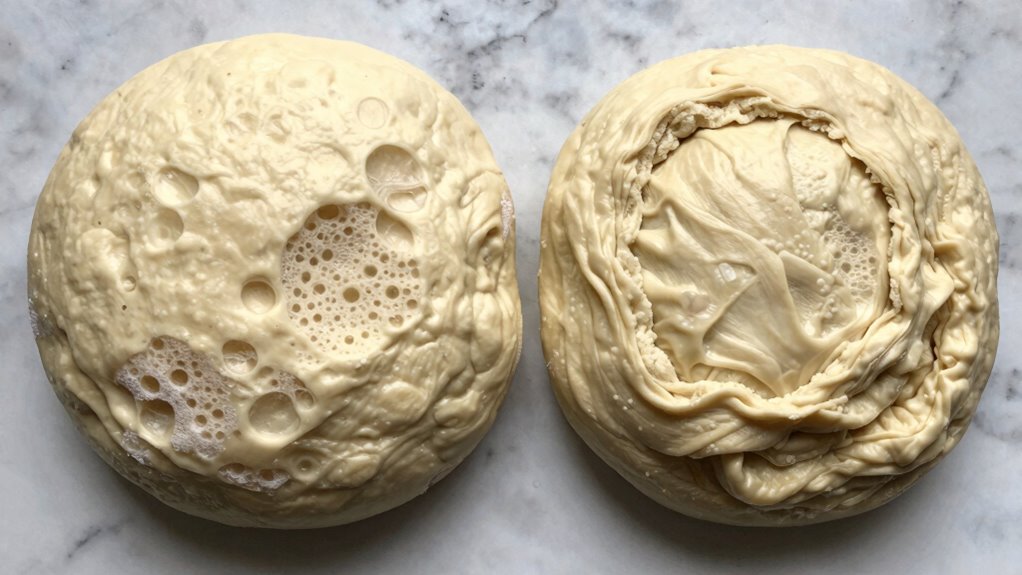

Airy dough results from a well-developed gluten network and proper fermentation, giving your baked goods a light, tender crumb. Weak dough, on the other hand, lacks enough gluten strength and gas retention, making it dense and heavy. Proper kneading and enough fermentation are key to creating airy dough. If you want to understand how to achieve perfect texture and avoid common mistakes, keep exploring these baking secrets.

Get baking supplies delivered free — and shop member deals
- Fast, free delivery on millions of items
- Access to Prime Big Deal Days deals on October 6–7
- Prime Video, Amazon Music and more included
Key Takeaways
- Airy dough results from well-developed gluten and proper fermentation, trapping ample gas for light texture.
- Weak dough has insufficient gluten or fermentation, leading to dense, flat, or heavy baked goods.
- Overworking dough creates tough gluten, reducing its ability to rise and resulting in a chewy texture.
- Proper hydration, ingredients, and kneading are essential to achieve an airy, well-risen dough.
- Under- or over-fermentation and improper handling lead to weak dough lacking volume and structure.
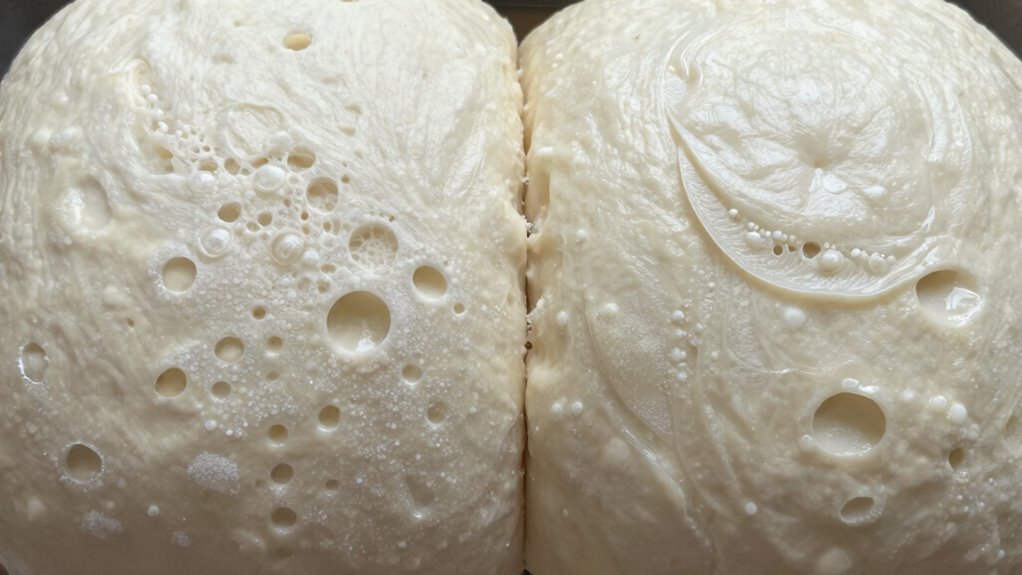
Understanding the key differences between airy dough and weak dough is vital for achieving the right texture in your baked goods. When you work with dough, you’re fundamentally shaping its structure, which hinges on gluten development and the fermentation process. Gluten development occurs when you knead or mix dough, allowing proteins in the flour to form a network that traps gas bubbles. This network gives your dough elasticity and strength, indispensable for creating airy, light textures. If you don’t develop enough gluten, the dough remains weak and won’t hold gas well, resulting in a dense or flat product. On the other hand, overworking the dough can lead to excessive gluten development, making it tough and chewy. You want to find a balance, guaranteeing enough gluten to trap gas during fermentation, but not so much that it becomes overly tough.
The fermentation process is equally significant. During fermentation, yeast produces carbon dioxide, which expands the gluten network and creates the bubbles that make baked goods airy. Proper fermentation allows these gas bubbles to grow and distribute evenly within the dough, contributing to a light and tender crumb. If fermentation is rushed or insufficient, the dough won’t develop enough gas, resulting in a weak, dense crumb. Conversely, overly fermented dough can become overly airy or collapse if the gluten structure isn’t strong enough to support the expanding gas. Therefore, understanding how fermentation interacts with gluten development helps you control the rise and texture of your baked items. Fermentation is a crucial stage that influences both the volume and structure of the final product. Additionally, gluten formation plays a vital role in determining whether the dough will be airy or weak by affecting its ability to trap and hold gases effectively.
A well-balanced hydration level can also significantly impact gluten development and fermentation, helping you achieve the desired dough strength. When you’re aiming for airy dough, you want to guarantee ideal gluten development and a well-managed fermentation process. This means kneading sufficiently to develop a sturdy gluten network and allowing enough time for fermentation to produce ample gas. You also need to think about ingredients like salt, which strengthen gluten, and sugar, which feeds yeast. For weak dough, you might under-knead or ferment too little, resulting in less gluten formation and insufficient gas retention. This leads to a dough that can’t support a good rise, producing a dense, heavy product.
As an affiliate, we earn on qualifying purchases.
Frequently Asked Questions
Can Airy Dough Be Used for All Types of Bread?
Airy dough isn’t suitable for all bread types because its fermentation process is designed to create a light, fluffy texture, which works best for bread like éclairs or certain pastries. For denser breads, you’ll want a dough with more structure. Your baking techniques matter too—using airy dough requires gentle handling to maintain its rise. So, choose your dough type based on the bread you want to make and adapt your fermentation process accordingly.
How Does Gluten Development Differ Between the Two Dough Types?
Your dough’s gluten development is like a superhero’s strength—airy dough boasts robust gluten strength, thanks to a thorough fermentation process that creates elastic, resilient gluten networks. Weak dough, however, has underdeveloped gluten, resulting in less structure and elasticity. The fermentation process in airy dough enhances gluten formation, giving it that lift and airy texture. In contrast, weak dough’s limited gluten development leads to denser, less airy baked goods.
Are There Specific Ingredients That Make Dough Airy or Weak?
Certain ingredients variations, like adding more yeast or sugar, promote fermentation techniques that make dough airy by producing carbon dioxide. Conversely, weak dough often results from insufficient gluten or less yeast, leading to a less structured and denser texture. To achieve an airy dough, you can tweak ingredients and fermentation methods—using high-protein flour or allowing longer rising times—whereas weak dough benefits from fewer leavening agents or shorter fermentation.
How Can I Tell if My Dough Is Airy or Weak During Mixing?
Your dough’s transformation during mixing is dramatic, like a superhero revealing their true power. To tell if it’s airy or weak, check its dough elasticity—if it stretches smoothly without tearing, it’s likely airy. Also, observe fermentation timing; airy dough usually ferments longer and develops bubbles, while weak dough feels overly soft and won’t hold its shape. Keep an eye on these signs to gauge your dough’s strength.
What Are Common Mistakes That Lead to Weak Dough?
You often get weak dough from common mistakes like rushing dough fermentation or making ingredient substitutions without adjustments. If you skip proper fermentation, the dough won’t develop enough gluten strength, making it weak. Substituting ingredients, like replacing flour or yeast, can throw off the balance and weaken the structure. Always follow recipe instructions closely and allow proper fermentation to guarantee your dough becomes airy and strong instead of weak.
gluten development dough scraper
As an affiliate, we earn on qualifying purchases.
As an affiliate, we earn on qualifying purchases.
Conclusion
Think of airy dough as a soaring kite, lifted high by the wind of proper gluten development, while weak dough is like a deflated balloon—lacking strength and bounce. Your goal is to craft a kite that dances effortlessly in the sky, not one that flutters down limp. By understanding these differences, you hold the key to baking bread that rises with confidence and a light, airy texture, turning simple ingredients into a masterpiece that elevates your baking journey.
As an affiliate, we earn on qualifying purchases.
As an affiliate, we earn on qualifying purchases.
Evergreen bestsellers Picks
bestsellers
As an affiliate, we earn on qualifying purchases.