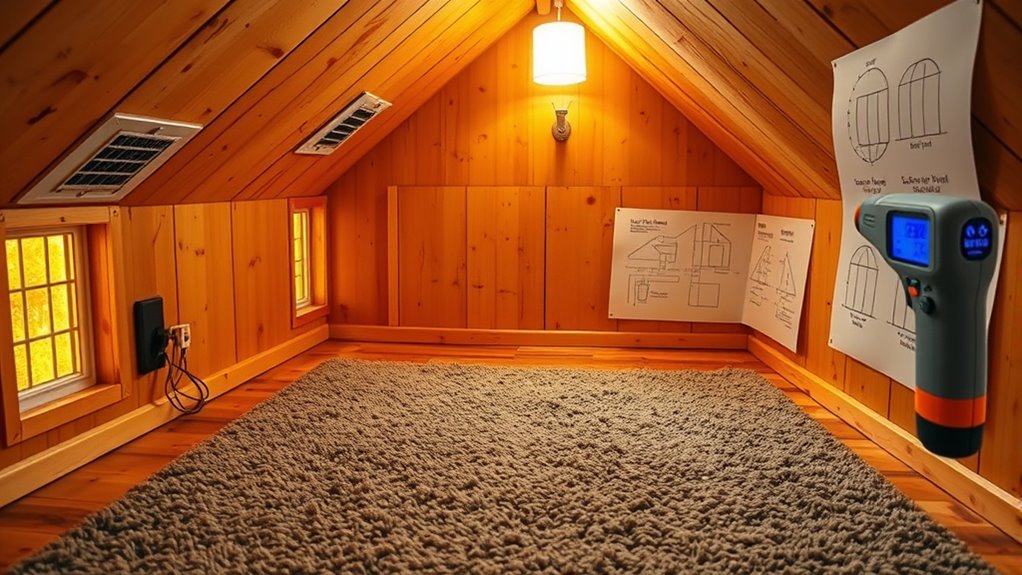

Before tackling wind and heat loss fixes, it’s important to understand key terms like air leakage, sealing, thermal bridging, and insulation quality. You should identify common problem areas such as window drafts, gaps around doors, attic openings, and basement walls. Focusing on high-impact zones can save energy and money. If you continue exploring, you’ll discover practical tips to prioritize your repairs and optimize your home’s comfort and efficiency effectively.
Key Takeaways
- Identify common sources of air leaks, such as windows, doors, attic openings, and basement walls.
- Prioritize high-impact areas like drafts and thermal bridges for sealing and insulation.
- Use a comprehensive checklist to ensure all leak points and insulation issues are addressed systematically.
- Consider AI-driven tools for accurate diagnosis of thermal bridging and leak locations.
- Focus on small, targeted fixes first to maximize energy savings and improve home comfort efficiently.
Common Terms and Definitions for Home Insulation and Sealing

Understanding key terms in home insulation and sealing can help you make informed decisions about improving your home’s energy efficiency. Air leakage refers to the unintended gaps and cracks where warm or cool air escapes, increasing your heating or cooling costs. Sealing these leaks reduces drafts and maintains consistent indoor temperatures. Thermal bridging occurs when heat bypasses insulation through poorly insulated or conductive materials, creating pathways that allow heat transfer. This phenomenon can lead to cold spots in winter or hot spots in summer, making your home less comfortable and less energy-efficient. Recognizing these terms helps you identify problem areas and choose the right solutions to enhance insulation and sealing efforts, ultimately saving you money and improving your home’s comfort. Additionally, advancements in AI technology, such as AI-driven solutions, are beginning to revolutionize how we diagnose and address these issues more effectively.
Key Components and Areas for Wind and Heat Loss Repairs
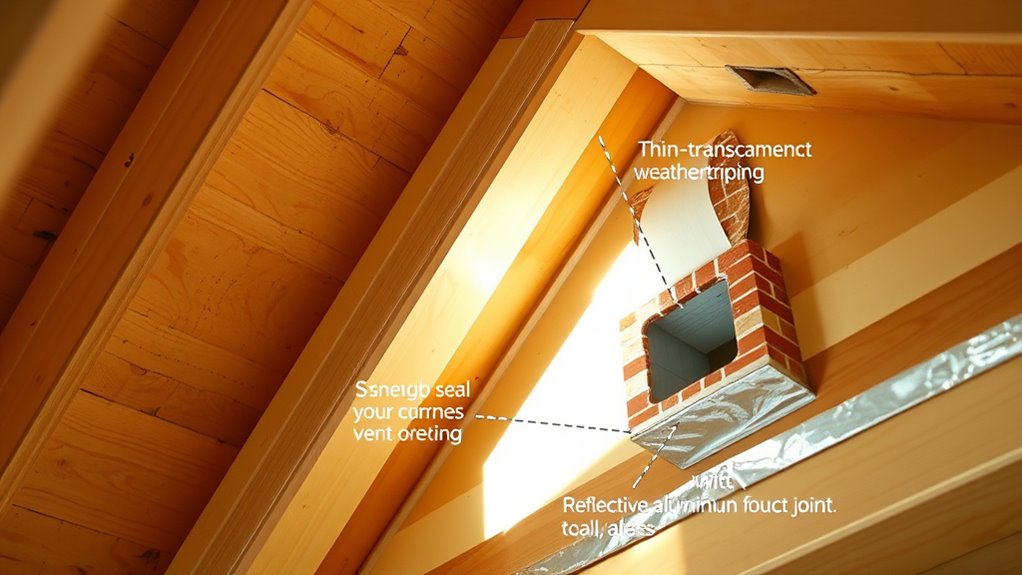
Identifying the main components and areas prone to wind and heat loss allows you to target your repair efforts effectively. Key spots include areas where air leaks occur, such as window drafts, gaps around doors, and poorly sealed attic openings. Windows are a common source of heat loss, especially if they have drafts or cracks. The attic is also critical; insufficient attic insulation can let heat escape during winter and let in unwanted heat during summer. Other areas to inspect include basement walls and ductwork for leaks. Properly sealing these components reduces heat transfer and improves energy efficiency. Insulation quality plays a vital role in maintaining your home’s temperature and energy consumption. Focus on these areas to maximize your home’s comfort and lower energy bills. Addressing window drafts and enhancing attic insulation are essential steps in your wind and heat loss repair plan.
Practical Tips for Prioritizing and Implementing Fixes
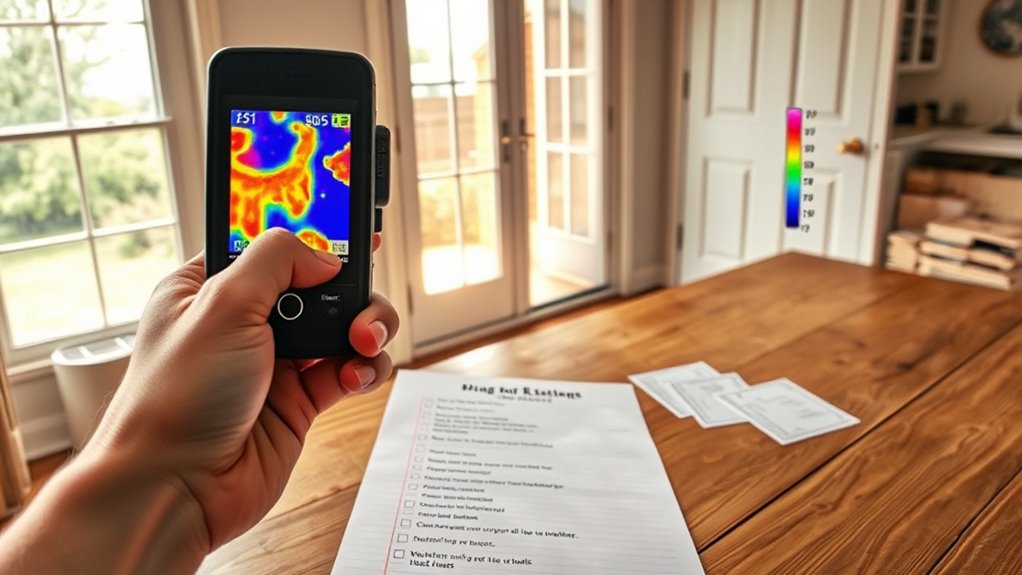
To effectively improve your home’s energy efficiency, start by evaluating which wind and heat loss areas will give you the biggest impact. Focus on thermal bridging points, where heat escapes through uninsulated sections like wall studs or window frames, and identify drafty spots. Prioritize fixes that offer the most significant energy savings, such as sealing gaps with draft proofing techniques or adding insulation. Implementing these solutions systematically guarantees efficient use of your time and budget. Addressing thermal bridging early can prevent ongoing heat loss, making your home more comfortable and reducing energy bills. Remember, small, targeted fixes often yield the best results, so focus on areas with the highest heat transfer potential before tackling less critical spots. Additionally, vertical storage solutions can help organize clutter and maximize space, making it easier to access and address problem areas efficiently.
Frequently Asked Questions
How Do I Identify Hidden Drafts in My Home?
To identify hidden drafts, hold a lit candle or incense stick near windows and door frames; if the flame flickers, you’ve found leaks. Check for window leaks by feeling along the edges for cold spots, and inspect door drafts by closing doors slowly and noticing any cool air sneaking in. You can also use a draft detector or simply run your hand around these areas to detect unseen leaks.
What Tools Are Best for Measuring Heat Loss?
To measure heat loss effectively, you should use thermal cameras or infrared meters. Thermal cameras let you see temperature differences across your home’s surfaces, revealing drafts and insulation gaps. Infrared meters are handheld devices that detect surface temperature changes, helping you pinpoint areas where heat escapes. Both tools provide quick, accurate readings, making it easier to identify and address heat loss issues, ultimately saving you energy and money.
Can DIY Fixes Effectively Improve Insulation?
Yes, DIY fixes can effectively improve insulation if you focus on installing thermal barriers like weatherstripping, draft stoppers, or attic insulation. Start by conducting an energy audit to identify the biggest heat loss areas. Then, seal gaps around windows and doors, add insulation where needed, and use thermal barriers to block drafts. These simple steps can markedly reduce heat loss and boost your home’s energy efficiency.
How Often Should Insulation and Sealing Be Inspected?
You should inspect your insulation and sealing at least once a year, especially before winter. Use thermal imaging to identify hidden air leaks and cold spots where insulation might be compromised. Regular checks help you catch issues early, ensuring your home stays energy-efficient and warm. Don’t forget to check around windows, doors, and vents, as these are common spots for air leaks that reduce your insulation’s effectiveness.
Are There Specific Materials Recommended for Weatherproofing?
Think of your home as a warm shield against winter’s chill. Use durable materials like foam board or rubberized sealing compounds to create a strong thermal barrier. These materials block drafts effectively and withstand weather conditions. For sealing gaps around windows and doors, opt for high-quality weatherstripping or caulk. By choosing these materials, you guarantee your home stays cozy, reducing heat loss and keeping energy bills lower all season long.
Conclusion
Now that you know these essential terms and fixes, you’re basically a superhero armed with the power to banish drafts and heat loss forever! With just a few simple tweaks, you’ll transform your home into a fortress of coziness—so airtight, it’ll make a summer breeze jealous. Get started today, and watch your energy bills plummet faster than a rocket. Your home will thank you, and you’ll wonder why you didn’t do this sooner!