To keep fuel dry in wet conditions, you should store wood in a well-ventilated, sheltered area away from moisture. Elevate it off the ground using pallets or blocks and cover it with breathable, moisture-resistant tarps that shed water but allow airflow. Regularly check for dampness or mold and reposition or replace affected pieces. Implementing these moisture barriers and storage techniques will help your fuel stay dry and ready for use; learn more to guarantee ideal preservation.
Key Takeaways
- Store wood off the ground on pallets or concrete blocks to prevent moisture absorption from soil.
- Cover wood with breathable, water-shedding tarps, ensuring all sides and ends are protected.
- Ensure proper airflow around stored wood to facilitate drying and reduce humidity buildup.
- Regularly inspect stored wood for signs of moisture, mold, or warping, and reposition or replace as needed.
- Apply water-resistant sealants or protective treatments before storage to enhance moisture resistance.
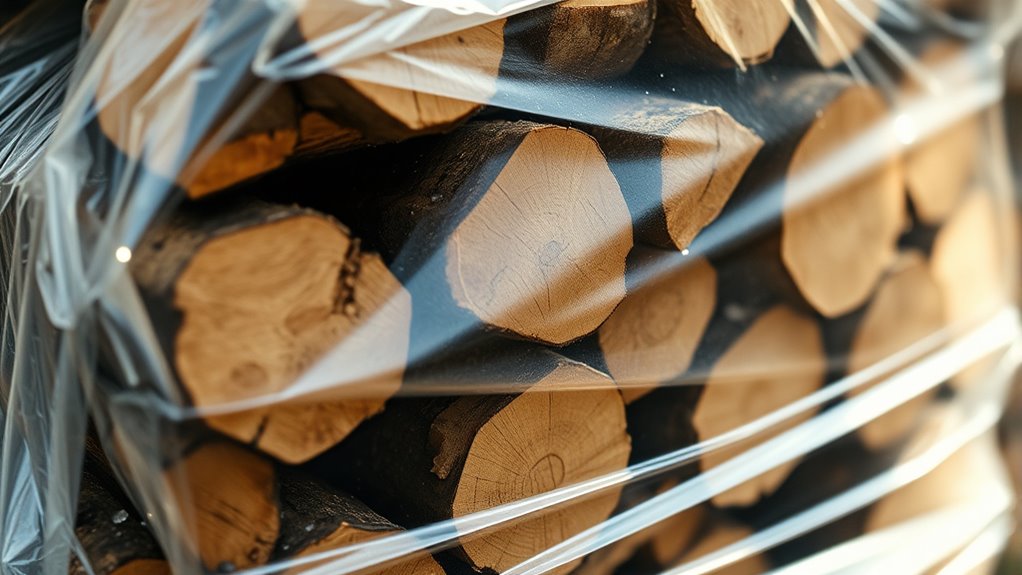
When your wood will be subjected to wet conditions, taking proper precautions is essential to guarantee protection and ensure longevity. You need to think about how to keep your wood dry and ready for use, especially when it’s stored outdoors or in damp environments. One of the most effective ways to achieve this is by using moisture barriers. These barriers act as a shield between your wood and the elements, preventing water from seeping into the material. Plastic sheeting, tarps, or specialized vapor barriers are excellent choices. When deploying moisture barriers, make sure they cover all sides of the wood, including the ends, to reduce the risk of moisture infiltration. Proper installation is critical; loosely covering the wood can trap moisture, so ensure the barriers are tight but not overly compressed, allowing some airflow to prevent mold growth.
Alongside moisture barriers, adopting effective storage techniques plays a key role in protecting your wood. Elevate your wood off the ground using pallets, concrete blocks, or other supports. Keeping wood off moist surfaces minimizes contact with standing water or damp soil, which can accelerate decay. Arrange the wood in a way that allows air to circulate freely around each piece; avoid stacking it too tightly or in a way that restricts airflow. This improves drying and reduces the chances of mold or rot developing. If you’re storing wood outdoors, choose a location that’s naturally sheltered from rain and direct sunlight, such as under a roofed shed or a well-constructed canopy. Cover the wood with moisture-resistant tarps or breathable covers designed to shed water without trapping moisture underneath. Avoid plastic wraps that trap humidity, as they can promote mold growth and decay.
Another key aspect of storage techniques is monitoring the condition of your stored wood regularly. Check for signs of moisture accumulation or mold, and adjust covers or barriers as needed. If you notice any warping or rotting, it’s best to relocate the affected pieces to a dry, ventilated area. You should also consider applying protective treatments or sealants to the wood before storage, creating an additional layer of defense against moisture penetration. These treatments can help maintain the integrity of your wood through wet conditions. Additionally, using vetted home theatre projectors can be beneficial if you plan to create a dry, climate-controlled environment indoors for your stored wood.
Frequently Asked Questions
How Long Does It Take for Wood to Dry Completely After Getting Wet?
It typically takes several days to a few weeks for wood to dry completely after getting wet, depending on moisture content and drying methods. To speed up the process, you should cut the wood into smaller pieces, increase airflow, and store it in a sunny, dry spot. Proper drying methods, like stacking the wood properly and using a cover, help reduce moisture content faster, ensuring your fuel is ready when needed.
What Types of Wood Are Best for Wet Conditions?
You should choose dense, oily woods like cedar, redwood, or teak for wet conditions because they naturally resist moisture content. These woods often require minimal treatment, but applying a protective sealant can further enhance their durability. Avoid softwoods like pine or spruce, which absorb moisture easily. Proper wood treatment helps maintain low moisture content, preventing rot and ensuring your fuel stays dry and ready for use even in damp environments.
Can Untreated Wood Be Effectively Dried and Stored Outdoors?
Yes, untreated wood can be effectively dried and stored outdoors if you use proper wood storage techniques. Make sure to stack it off the ground on a raised platform, allowing air circulation for outdoor drying. Cover the top with a waterproof tarp or roof to protect it from rain, while leaving the sides open. This way, you keep the wood dry and ready for use without trapping moisture.
What Are the Environmental Impacts of Drying Wood With Chemicals?
Did you know that improper use of chemicals in drying wood can leave harmful residues? These chemical residues may leach into soil and water, contributing to environmental pollution. When you use chemical treatments, you risk introducing pollutants that harm wildlife and ecosystems. Always consider eco-friendly alternatives, as chemicals used in drying processes can have long-lasting environmental impacts, affecting air, water, and soil quality.
How Can I Tell if Wood Is Sufficiently Dry for Burning or Use?
You can tell if wood is dry enough for burning by checking its moisture content, ideally below 20%. Use a moisture meter for accuracy, but visual cues work too—look for cracks, lighter color, and a dull surface. Well-dried wood feels lighter and sounds hollow when you tap it. Avoid green or wet-looking wood, as high moisture content causes inefficient burning and excess smoke.
Conclusion
Now that you’ve learned how to prepare your wood for wet conditions, you’re like a seasoned sailor ready to brave any storm. Keeping your fuel dry is your secret shield against the rain’s relentless assault, ensuring your fire stays alive and warm. With these tips, your wood becomes a resilient warrior, standing tall even in the wettest battles. Stay prepared, stay cozy, and let your fire blaze bright through any weather that comes your way.