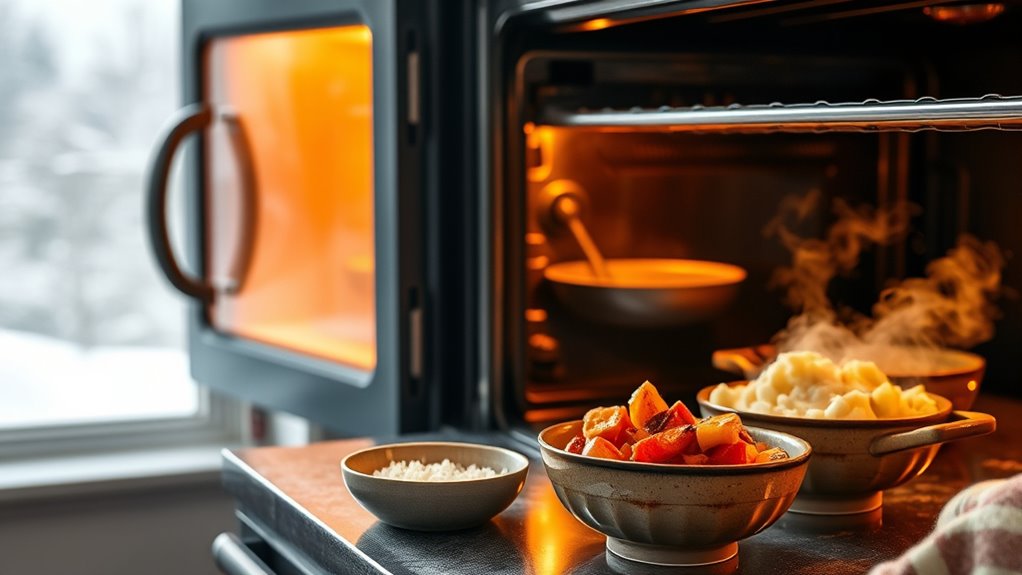

In winter, you can use your oven’s residual heat to warm side dishes efficiently. Simply turn off the oven just before your main dish is finished, then place your side dishes inside and keep the door closed for 15-20 minutes. Cover moist items loosely to prevent drying out, and uncover crispy foods to maintain texture. To discover how to maximize this eco-friendly technique and keep your meals hot, keep exploring these simple tips.

Get baking supplies delivered free with Prime
- Fast, free delivery on millions of items
- Prime Video, Amazon Music and more included
- Member-only deals all year
Key Takeaways
- Turn off the oven before placing side dishes inside to utilize residual heat effectively.
- Keep the oven door closed for 15-20 minutes to gently warm dishes without overcooking.
- Use oven-safe, covered containers for moist foods and uncover crispy items to maintain texture.
- Avoid overexposing food; monitor timing to prevent spoilage or drying out.
- Reheat multiple side dishes simultaneously by placing them in the warm oven, saving energy and time.
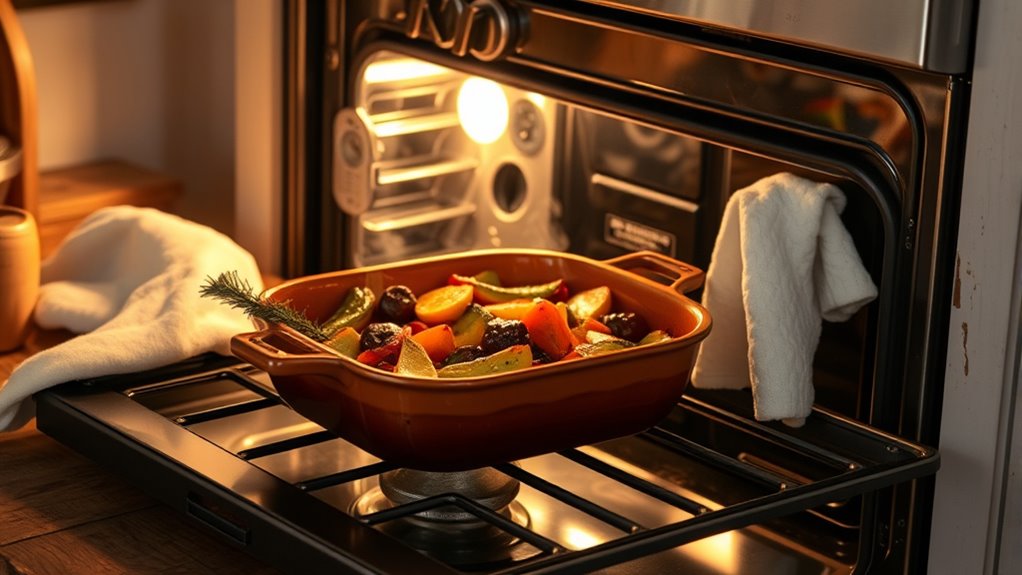
During winter, you can make the most of your oven’s residual heat by warming side dishes efficiently. This simple trick not only saves time but also helps you reduce energy consumption. Instead of firing up your oven solely to reheat or warm leftovers, you can turn it off sooner, letting the still-warm interior do the work. To do this safely, always guarantee oven safety protocols are followed—avoid leaving items unattended for too long, and keep an eye on the oven’s temperature. Using residual heat helps you minimize unnecessary energy usage, making your kitchen more eco-friendly and cost-effective.
Use your oven’s residual heat to warm side dishes safely and efficiently, reducing energy use and saving time.
When you’re finished cooking your main dish, don’t rush to open the oven door immediately. Instead, leave it closed for a few extra minutes. The oven’s walls retain heat, which can be enough to gently warm your side dishes. For example, if you have roasted vegetables or a casserole, place them in an oven-safe dish and set it inside just before turning off the oven. Close the door and let the residual warmth do its job. This method ensures your sides are warmed evenly without overcooking or drying out. Plus, it keeps your kitchen safer—there’s less risk of burns or accidents when you avoid repeatedly opening and closing the oven door.
Using residual heat also promotes energy efficiency. Instead of reheating food on the stovetop or using a microwave, you’re utilizing the already-heated oven cavity. This reduces the total energy you consume, especially if you’re warming multiple side dishes at once. It’s a smart way to make your winter cooking more sustainable, saving both electricity and your utility bills. Just remember, if you’re dealing with perishable foods, don’t leave them in the oven for too long. Keep an eye on the time—about 15-20 minutes is usually enough—to prevent food safety issues.
In addition, consider the type of side dishes you’re warming. Moist foods like mashed potatoes or stuffing can benefit from being loosely covered to prevent drying out, while crispy or baked items might need to be uncovered. When done correctly, using residual heat not only preserves the quality of your food but also reduces waste and energy use. So, next time you finish cooking your main course, think ahead: turn off your oven, tuck in your sides, and let the warmth do the work. It’s a simple, effective way to make your winter meals more efficient, safe, and eco-friendly. Additionally, understanding heat retention properties of your oven can help optimize this process even further.
oven-safe covered casserole dish
As an affiliate, we earn on qualifying purchases.
As an affiliate, we earn on qualifying purchases.
Frequently Asked Questions
Can Residual Heat Safely Warm Dairy-Based Side Dishes?
Residual heat isn’t safe for warming dairy-based side dishes because dairy spoilage can occur quickly if temperatures aren’t maintained properly. You risk bacteria growth, which can cause foodborne illnesses. For residual heat safety, avoid using it to warm dairy, as it might not keep the temperature high enough for long enough. Always reheat dairy dishes thoroughly on the stovetop or microwave to guarantee safety and prevent spoilage.
How Long Can Side Dishes Stay Warm Using Oven Residual Heat?
As you notice leftover heat in your oven, you realize side dishes can stay warm for about 20 to 30 minutes thanks to heat retention. Keep in mind, for oven safety, avoid leaving dishes longer to prevent spoilage or accidental overheating. Use the residual heat wisely, ensuring your dishes stay safe and warm without risking food safety or appliance damage. Always monitor your oven’s temperature and timing carefully.
Does Using Residual Heat Affect the Texture of Delicate Vegetables?
Using residual heat can cause some texture alteration in delicate vegetables, but it generally doesn’t harm vegetable integrity if you’re careful. You should monitor the warming process and avoid leaving them too long, as extended exposure may soften or wilt the vegetables. To preserve their freshness and texture, keep the residual heat brief and remove the dishes promptly once they’re warmed to your liking.
Is There a Risk of Overcooking When Reheating With Residual Heat?
Yes, there’s a risk of overcooking when reheating with residual heat. You should pay close attention to temperature control and reheating duration. As the oven cools, it may still retain enough heat to warm your dishes further, so remove them promptly to avoid overcooking. Keep an eye on the time and temperature to ensure your side dishes stay perfectly warm without losing their texture or flavor.
Can This Method Be Used for Cold Side Dishes?
Yes, you can use residual heat for cold dishes, especially for appetizer warming. Just place your cold side dishes in the oven after turning it off, and the lingering warmth will gently raise their temperature. This method works well for softening or slightly warming up cold dishes without overcooking. Keep an eye on them to prevent overheating, and enjoy warm appetizers served straight from the oven’s residual heat.
oven-safe food storage containers
As an affiliate, we earn on qualifying purchases.
As an affiliate, we earn on qualifying purchases.
Conclusion
By using your oven’s residual heat, you’re fundamentally wrapping your side dishes in a cozy blanket on a cold winter day. It’s like turning your kitchen into a warm hug, making every meal feel more comforting and inviting. So next time you finish baking, don’t forget to take advantage of that gentle warmth. It’s a simple trick that transforms your kitchen into a haven, where warmth and comfort are just a door away.
thermal oven mitts for handling hot dishes
As an affiliate, we earn on qualifying purchases.
As an affiliate, we earn on qualifying purchases.
As an affiliate, we earn on qualifying purchases.
Fall Picks
fall essentials
As an affiliate, we earn on qualifying purchases.