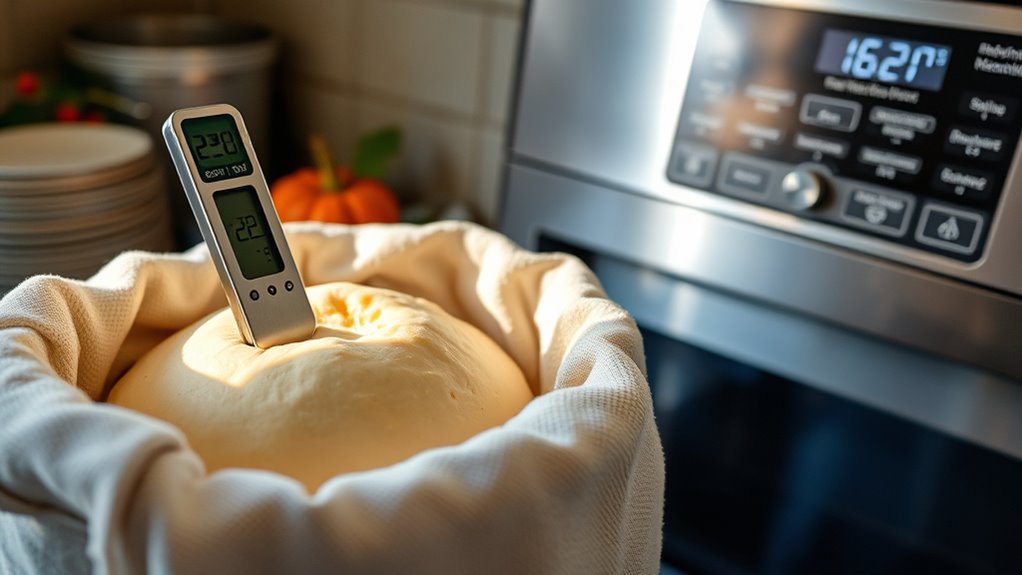

To adjust proofing times for seasonal temperature changes, you need to monitor your environment and modify your schedule accordingly. In colder months, extend proofing time by about 20-30 minutes and keep your dough in a warm, draft-free spot. During warmer seasons, shorten proofing by 15-20 minutes and control the temperature to prevent over-proofing. Paying attention to dough behavior and environment helps you perfect your process—if you keep learning, you’ll perfect your results.

Get baking supplies delivered free with Prime
- Fast, free delivery on millions of items
- Prime Video, Amazon Music and more included
- Member-only deals all year
Key Takeaways
- Extend proofing time by 20-30 minutes during colder months to compensate for decreased yeast activity.
- Reduce proofing duration by 15-20 minutes or more in warmer weather to prevent over-proofing.
- Use warm, draft-free environments or methods like placing dough near a heat source in cold weather.
- Monitor dough for signs of readiness, such as puffiness and airiness, rather than relying solely on clock time.
- Adjust proofing conditions by controlling humidity and air circulation to maintain consistent fermentation across seasons.
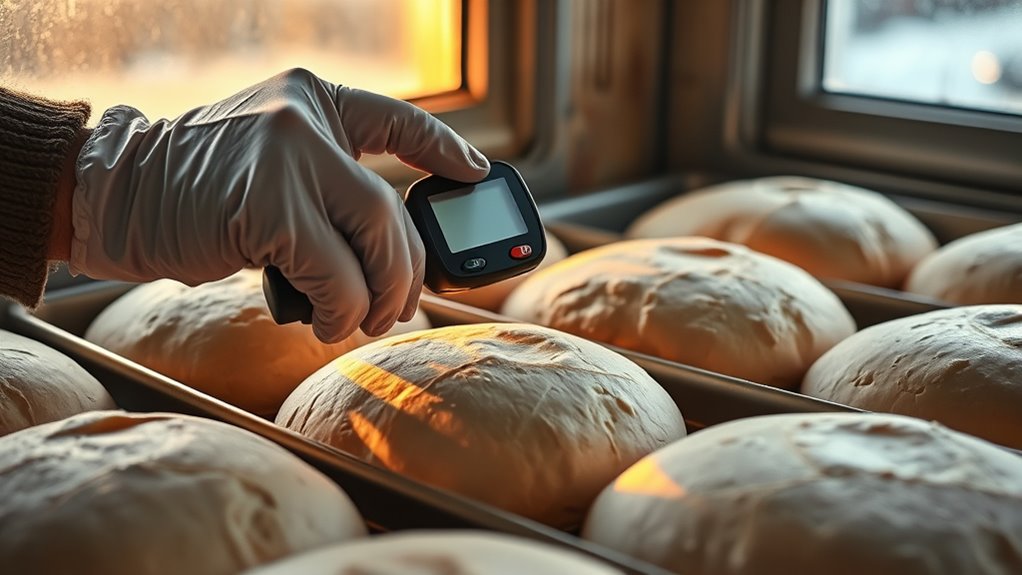
Adjusting proofing times is vital to guarantee your baked goods turn out perfectly. When the seasons shift and temperatures fluctuate, your usual proofing schedule might not cut it. Understanding how to modify your process ensures yeast activation happens at the right pace and dough fermentation proceeds smoothly, resulting in the ideal rise and texture. Temperatures directly influence yeast activity, so in colder weather, yeast activation slows down, making your dough take longer to ferment and rise. Conversely, in warmer conditions, yeast works more rapidly, risking over-proofing if you don’t adjust accordingly.
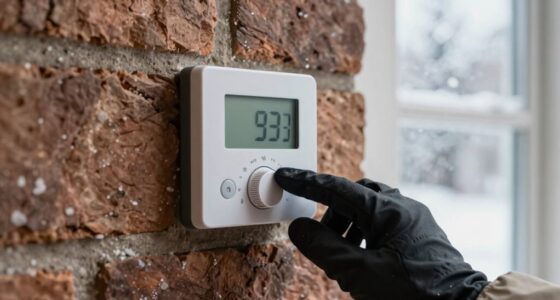
In colder months, you’ll notice that your dough needs extra time to reach the desired volume. This is because yeast becomes less active in cool environments, delaying fermentation. To compensate, try increasing the proofing time gradually—perhaps by 20 to 30 minutes—and keep your dough in a warmer, draft-free spot. You can also gently warm the proofing environment by placing a bowl of hot water nearby or using a proofing box if you have one. These methods help maintain the right temperature for yeast activation without overheating, which can kill the yeast or cause uneven fermentation.
In colder months, extend proofing time and keep dough in a warm, draft-free spot.
On the other hand, warmer temperatures accelerate yeast activity, so dough ferments faster than usual. When proofing in summer or in a heated kitchen, monitor your dough closely to prevent over-proofing. Keep an eye on its size and look for signs like a puffy, airy surface—these indicate dough fermentation is complete. You might need to cut back on proofing time by 15 to 20 minutes or more, depending on how warm the environment is. Using a cooler location or reducing proofing temperature with a damp cloth can help slow fermentation, giving you more control over the process.
Adjusting proofing times isn’t just about timing; it’s about understanding the relationship between temperature, yeast activation, and dough fermentation. When you’re aware of how seasonal shifts influence yeast activity, you can fine-tune your approach to achieve consistent, high-quality baked goods. Additionally, considering proofing environment conditions such as humidity and air circulation can significantly impact fermentation results. Keep in mind that factors like humidity and ingredient temperature also play roles, so always observe your dough’s behavior rather than relying solely on clock time. By making these small but vital adjustments, you’ll ensure your bread, rolls, and pastries rise perfectly regardless of the season, resulting in a better baking experience and tastier results every time.
As an affiliate, we earn on qualifying purchases.
Frequently Asked Questions
How Do I Tell if My Dough Is Proofing Correctly?
You’ll know your dough is proofing correctly when it has doubled in size and feels puffy but not overly sticky. Keep temperature considerations in mind—if it’s warm, proofing may be quicker, so check sooner. Use a proofing container that allows the dough to expand without sticking. Gently press a finger into the dough; if the indentation remains, it’s ready. Adjust your timing based on these signs and your environment.
Can I Adjust Proofing Times Without Changing Ingredients?
Think of proofing like tuning a guitar – you can’t just tighten or loosen strings without listening first. You can adjust proofing times by keeping an eye on your proofing container and ambient temperature, since warmer air speeds up fermentation, while cooler slows it down. If your dough’s rising too fast or slow, tweak the proofing time accordingly, without changing ingredients, to get that perfect rise every time.
What Signs Indicate Over-Proofing or Under-Proofing?
If you notice your dough’s over-proofed, it will collapse easily and lose its shape, with a sunken surface and a sour smell, indicating fermentation has gone too far. Under-proofed dough feels firm and resists shaping, with a tight crumb. Use a proofing chamber to monitor fermentation rate closely; adjusting proofing times helps make sure your dough reaches the perfect rise without over- or under-proofing.
How Does Humidity Affect Proofing Times?
Humidity levels directly impact proofing times by affecting the moisture balance in your dough. When humidity is high, it provides more moisture, speeding up proofing, so you might need less time. Conversely, low humidity causes dryness, slowing fermentation, and you’ll need longer proofing periods. You should monitor humidity closely, adjusting your proofing times to maintain ideal moisture balance and prevent over- or under-proofing.
Should I Modify Proofing Times for Different Types of Bread?
You should definitely modify proofing times for different bread types. Did you know that a slight change in fermentation temperature can double or halve proofing duration? In your proofing environment, lighter breads like baguettes need shorter proofing, while denser loaves require longer. Adjusting proofing times ensures proper fermentation and ideal texture, so monitor your environment closely and tailor the times to each bread’s unique needs for perfect results.
dough proofing temperature controller
As an affiliate, we earn on qualifying purchases.
As an affiliate, we earn on qualifying purchases.
Conclusion
By adjusting your proofing times according to seasonal shifts, you’ll master the art of perfect pastries year-round. Stay mindful of the temperature tweaks, and you’ll prevent problems like over-proofing or under-proofing. Patience and practice pave the path to pastry perfection. So, stay savvy, stay sharp, and savor the sweet success of seasonal baking. With a little awareness and adjustment, you’ll always achieve the ideal proof, no matter the month. Happy baking!
proofing bread dough warm environment
As an affiliate, we earn on qualifying purchases.
As an affiliate, we earn on qualifying purchases.
seasonal proofing bread proofing basket
As an affiliate, we earn on qualifying purchases.
As an affiliate, we earn on qualifying purchases.
Fall Picks
fall essentials
As an affiliate, we earn on qualifying purchases.