
To weatherproof your outdoor oven, consider using a weather-resistant cover that fits snugly to keep rain, snow, and UV rays out. Building or installing a shelter like a pergola or outdoor kitchen with a roof offers extra protection from the elements. Adding insulation helps maintain consistent temperatures in extreme climates. Combining covers, shelters, and insulation guarantees your oven stays protected year-round. Keep exploring to discover more tips for making your outdoor oven last longer.
Key Takeaways
- Use weather-resistant covers that fit snugly to prevent water and debris infiltration.
- Construct or install durable shelters like pergolas or outdoor kitchens with protective roofs.
- Add insulation to maintain consistent temperatures and protect internal components in extreme climates.
- Combine covers and shelters with insulation for comprehensive protection and extended oven lifespan.
- Regularly inspect and maintain all protective elements to ensure ongoing weatherproofing effectiveness.

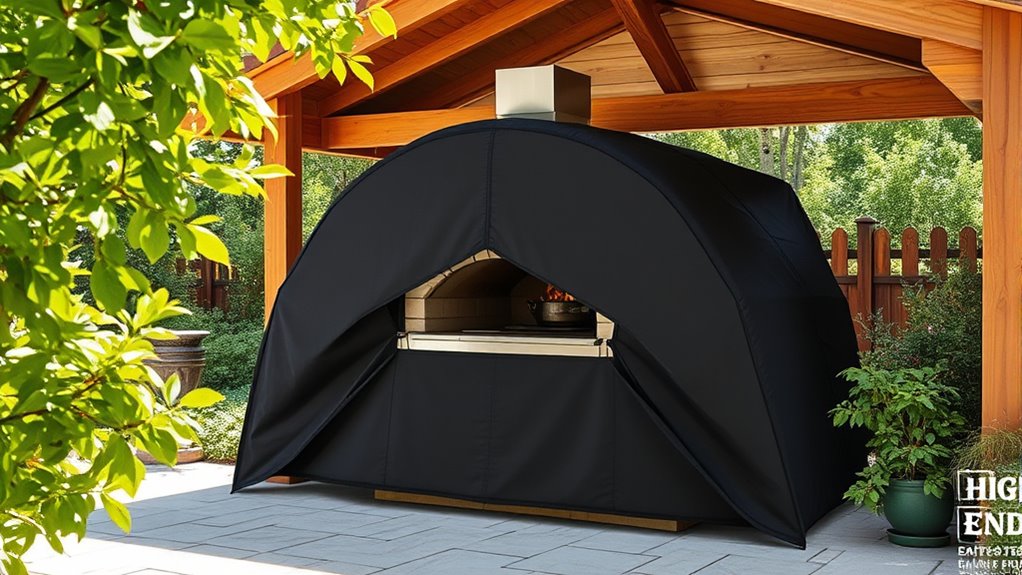
Outdoor ovens can be a great addition to your backyard, but harsh weather can quickly damage them if you’re not prepared. Protecting your oven from rain, snow, wind, and extreme temperatures is vital to guarantee it lasts and performs well over time. One of the most effective ways to do this is by investing in a sturdy cover or shelter designed specifically for outdoor ovens. These covers act as a barrier against the elements, preventing moisture from seeping into the oven and causing rust or damage. When choosing a cover, look for ones made from weather resistant materials that can withstand UV rays, heavy rain, and snow. A well-made cover should fit snugly around your oven, preventing drafts and water ingress, yet be easy to remove when you want to cook.
Protect outdoor ovens with weather-resistant covers to prevent damage from rain, snow, and wind.
Beyond covers, consider building or installing a shelter that provides more thorough protection. A simple pergola or a dedicated outdoor kitchen area with a roof can shield your oven from direct sunlight, rain, and snow. Such shelters not only prolong the lifespan of your oven but also create a more comfortable cooking environment. When designing or selecting a shelter, ensure it’s made from weather resistant materials like treated wood, metal, or composite materials resistant to corrosion and rot. This will help your shelter withstand the elements and require less maintenance over time.
In addition to physical barriers, you should pay attention to oven insulation, especially if your climate experiences extreme cold or heat. Proper insulation helps maintain consistent cooking temperatures and protects the oven’s internal components. If your oven isn’t already insulated, adding suitable oven insulation can help prevent heat loss during cold weather and reduce the impact of temperature fluctuations. Insulation materials designed specifically for outdoor ovens are typically resistant to moisture, mold, and pests, ensuring long-term durability.
Combining a weatherproof cover or shelter with quality oven insulation creates a thorough defense against the elements. This approach safeguards your investment, keeps your outdoor oven in top condition, and allows you to enjoy outdoor cooking year-round. Additionally, choosing a durable and weather-resistant cover or shelter will extend the lifespan of your outdoor oven even further. Regularly inspect your cover, shelter, and insulation for signs of wear or damage, and replace or repair them as needed to maintain ideal protection. With the right precautions, you’ll be able to enjoy your outdoor oven without worry, no matter what the weather brings.
Frequently Asked Questions
What Materials Are Best for Outdoor Oven Covers?
You should choose covers made from durable materials like heavy-duty polyester or vinyl, which resist weather and last longer. These materials offer excellent material resilience and protect your oven from rain, wind, and UV rays. Also, look for covers with proper cover ventilation to prevent moisture buildup and mold. This combination ensures your outdoor oven stays dry, protected, and in top condition for years to come.
How Often Should I Inspect My Outdoor Oven Cover?
You should inspect your outdoor oven cover at least every three to six months to guarantee its durability remains intact. Regular inspections help you catch any tears, holes, or signs of wear early, so you can address issues before weather damage worsens. Consistent checkups keep your cover effective, protecting your oven from the elements, and prolong its lifespan. Don’t forget to clean and maintain it during these inspections for maximum durability.
Can Covers Prevent Damage From Extreme Weather?
Yes, covers can prevent damage from extreme weather by shielding your oven from rain, snow, and wind. With proper seasonal weatherproofing, you protect your investment year-round. Follow cover installation tips like ensuring a snug fit, avoiding gaps, and securing the cover tightly. These steps create a barrier that withstands harsh conditions, reducing the risk of rust, cracks, or other weather-related damage, keeping your outdoor oven in top shape.
Are There Eco-Friendly Options for Outdoor Oven Shelters?
Yes, you can choose eco-friendly outdoor oven shelters made from sustainable materials like bamboo, reclaimed wood, or recycled metal. Look for biodegradable options such as plant-based fabrics or biodegradable plastics for covers and liners. These choices help reduce your environmental impact while protecting your oven. By selecting eco-conscious materials, you enjoy durable shelter solutions that are both sustainable and effective against weather elements.
How Do I Maintain Ventilation With Outdoor Oven Shelters?
To maintain ventilation airflow with outdoor oven shelters, you should focus on shelter design that encourages proper air circulation. Incorporate open sides, vents, or adjustable panels to allow fresh air in and let fumes escape. Regularly check for blockages, clean vents, and avoid sealing the shelter completely. This guarantees safe, effective ventilation airflow, preventing smoke buildup and maintaining a comfortable cooking environment.
Conclusion
By weatherproofing your outdoor oven, you’re giving it the armor it needs to brave any storm. Think of your oven as a trusty ship sailing through unpredictable seas—you want it guarded against rain, snow, and wind. With the right covers and shelters, you’ll ensure it stays in top shape, ready to serve delicious meals no matter what the weather throws at you. Keep it protected, and your outdoor cooking adventures will always be smooth sailing.