Stop guessing when baking pizza at high altitude—understanding how elevation impacts water boiling, dough rise, and oven behavior helps you make real adjustments. Myths like impossible baking or poor cheese melting are false; small tweaks like increasing oven temp and adjusting hydration make all the difference. Knowing the scientific reasons behind these changes lets you adapt recipes confidently. Keep exploring to learn proven tips and tricks that turn high-altitude baking into a success.
Key Takeaways
- High altitude lowers boiling point, requiring adjustments in dough hydration, baking temperature, and time for optimal pizza results.
- Many myths about high altitude pizza are false; proper tweaks like increasing oven heat and adjusting leavening solve common issues.
- Scientific understanding of altitude effects helps refine techniques to prevent dryness, collapsing, or uneven baking.
- Small modifications—such as reducing liquids or extending proofing—ensure better gluten development and crust quality.
- Accurate altitude-based adjustments turn baking challenges into perfect pizzas, dispelling guesswork and myths.
Understanding How Elevation Affects Pizza Baking
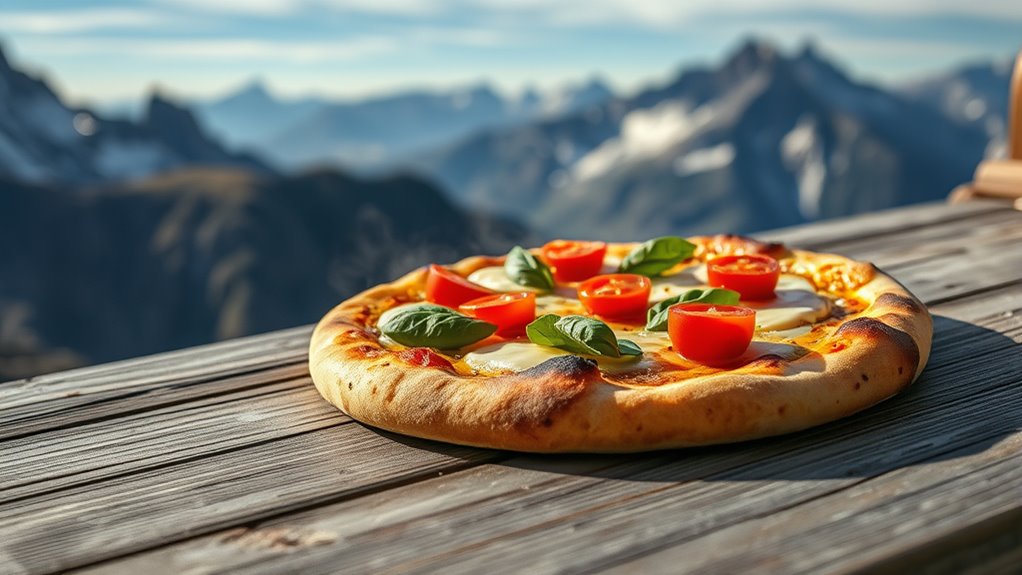
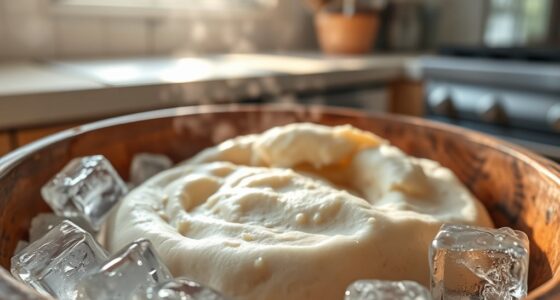
When you bake pizza at high altitudes, the reduced air pressure causes water to boil at lower temperatures, which can impact how your dough rises and cooks. Because water evaporates more quickly, you need to adjust your dough hydration—using slightly less water helps prevent a dense crust. Additionally, oven temperature plays a crucial role; increasing it ensures your pizza cooks evenly and develops a crisp crust despite the lower boiling point. Proper dough hydration improves elasticity and oven spring, while higher oven temperatures compensate for faster moisture loss. Storage conditions also influence ingredient quality and final results. Mastering these adjustments helps you achieve a better rise, ideal crust, and properly cooked toppings. Understanding how elevation influences these factors allows you to adapt your baking process effectively, making consistently delicious pizza even at high altitudes.
Common Myths About High Altitude Pizza Making
Many people believe that baking pizza at high altitudes is impossible or that traditional recipes simply won’t work, but these are misconceptions. One common myth is that dough elasticity can’t be maintained, making the crust tough or overly sticky. In reality, with proper adjustments, you can achieve the same stretchiness as at sea level. Another false belief is that cheese won’t melt properly, resulting in a disappointing topping. However, by tweaking cooking times and temperatures, cheese melts just as smoothly at high elevations. These myths overlook the fact that small modifications—like adjusting hydration levels or baking times—are effective. High altitude pizza making is entirely doable once you understand how elevation influences these vital aspects. Incorporating Gold IRA Rollovers strategies can even help fund your culinary pursuits by safeguarding your investments from inflation and market volatility.
Scientific Facts Behind Altitude Adjustments
At high altitudes, the atmosphere is thinner, which causes the boiling point of water to decrease and air pressure to drop. These altitude effects influence baking science, impacting how your pizza dough behaves. As pressure drops, water evaporates faster, leading to drier dough and longer baking times. To counter this, you might need to adjust ingredients and techniques. Understanding these scientific principles helps you make informed adjustments, ensuring your pizza turns out perfect despite the altitude. Recognizing how altitude influences baking science allows you to tweak recipes precisely and avoid common pitfalls.
Practical Tips for Perfect High Altitude Pizza
Adjusting your pizza-making approach for high altitudes can make a noticeable difference in the final result. To optimize gluten development, consider slightly increasing your flour amount or reducing liquid, which helps create a sturdy crust. For yeast activation, extend proofing times or slightly increase yeast quantity to compensate for faster rising times. Visualize the dough’s texture and rise with this table:
| Dough Texture | Ideal Rise | Gluten Development |
|---|---|---|
| Slightly sticky, elastic | Doubling in size, airy | Firm, yet tender |
| Smooth and pliable | Well-developed, shiny | Strong, resilient |
| No deflation or collapse | Light and fluffy | Well-formed gluten network |
Additionally, monitoring the contrast ratio of your projector can help ensure your viewing environment is optimized for the best visual quality.
Troubleshooting Common High Altitude Baking Issues
High altitude baking often presents unique challenges that can throw off your results if not addressed properly. Understanding the baking science behind altitude adjustments helps you troubleshoot common issues. If your baked goods are collapsing, dry, or uneven, try these solutions:
- Increase oven temperature slightly to compensate for rapid rising.
- Reduce leavening agents to prevent over-expansion.
- Shorten baking time to avoid over-drying.
- Slightly decrease liquid amounts to improve structure.
Frequently Asked Questions
How Does Humidity Impact High Altitude Pizza Baking?
Humidity effects can substantially impact your high altitude pizza baking by altering the moisture balance in your dough and toppings. When humidity is high, it adds extra moisture, making your dough softer and harder to handle, and can lead to a soggy crust. Conversely, low humidity causes dryness, so you might need to add more water to maintain the right moisture balance. Adjust your ingredients accordingly to guarantee perfect results every time.
Are Specific Flour Types Better for High Altitude Recipes?
Think of flour as your pizza’s backbone; choosing the right type strengthens your gluten structure and improves flour hydration. For high altitude baking, bread flour or high-protein options often outperform all-purpose flour because they develop better gluten, giving your crust resilience against altitude’s challenges. By selecting flour with a robust gluten network, you guarantee your pizza stays airy yet firm, mastering altitude’s tricky environment with confidence.
Can I Use Instant Yeast Instead of Active Dry at High Altitude?
Yes, you can use instant yeast instead of active dry yeast at high altitude. Just remember to adjust the fermentation time slightly because instant yeast tends to act faster. You might need to decrease the amount of yeast or shorten fermentation to prevent over-proofing. Yeast substitution is straightforward, but making a fermentation adjustment guarantees your dough rises perfectly despite the altitude differences.
How Do Altitude Changes Affect Dough Fermentation Times?
Altitude changes speed up dough fermentation because the lower air pressure enhances yeast activity. You’ll notice a faster fermentation rate at high elevations, so you should reduce rising times to prevent over-proofing. Keep an eye on your dough, and don’t let it rise too long. Adjusting fermentation times ensures your pizza has the perfect texture and flavor, even with altitude-related yeast activity variations.
What Are Allergen Considerations When Adjusting Recipes for Altitude?
When adjusting recipes for altitude, you must consider allergen concerns like gluten sensitivities and cross-contamination. Use gluten-free flours if needed and guarantee proper cleaning to avoid cross-contact. Label ingredients clearly, and avoid shared equipment. These steps help protect those with allergies or sensitivities, maintaining a safe environment while tweaking recipes for altitude. Always communicate ingredient changes to your customers to prevent allergic reactions.
Conclusion
Now that you know how altitude really influences your pizza, you might find yourself surprised when that perfect crust turns out just right—almost like it was meant to be. Sometimes, the tiniest tweak can make all the difference, and it’s funny how a little bit of science and a sprinkle of practice can turn your high-altitude baking into a delicious success story. So go ahead, experiment confidently—your next great pizza moment might be just a altitude adjustment away.