To manage humidity for ideal dough hydration and proofing, monitor your environment with a hygrometer and adjust accordingly. If your kitchen is dry, increase hydration slightly or cover your dough with damp cloths to retain moisture. In humid conditions, reduce water in your recipe or let the dough rest longer to prevent overrising. Consistently controlling these factors helps your bread rise perfectly with the desired texture—more tips can help you master this balance.
Key Takeaways
- Use hygrometers and proofing boxes to monitor and maintain optimal humidity levels during fermentation.
- Adjust dough hydration by increasing water in dry environments or reducing it in humid conditions.
- Cover dough with damp cloths or plastic to stabilize humidity and prevent drying or over-moistening.
- Control proofing environment with warm, humid settings like proofing boxes or warm ovens with lights.
- Observe dough behavior to fine-tune hydration and proofing conditions for consistent fermentation.
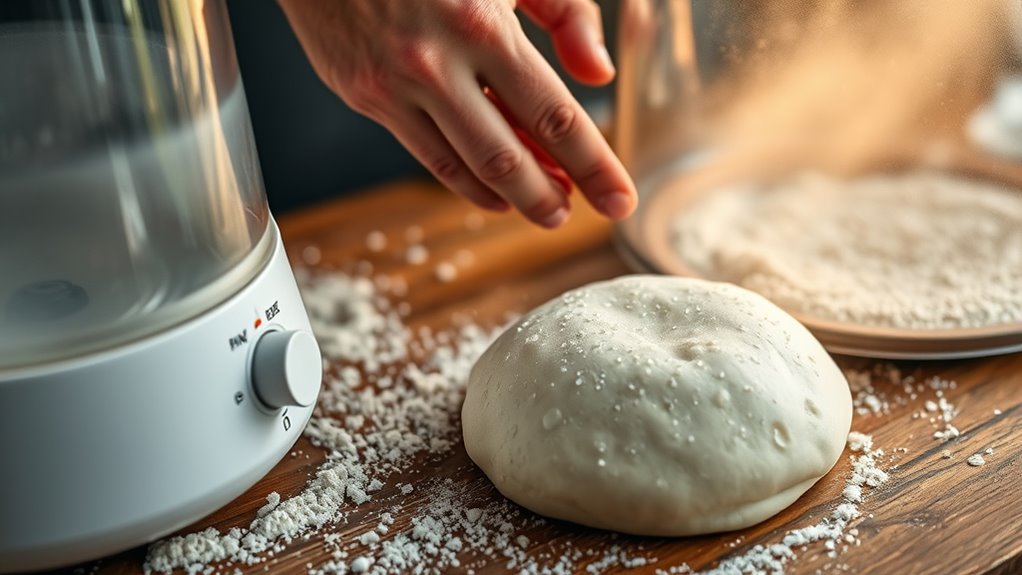
Maintaining the right level of humidity in your home is essential for comfort and health. When it comes to baking, especially bread-making, managing humidity directly influences fermentation control and dough hydration. These factors determine how well your dough rises and develops flavor, impacting the final product. If your environment is too dry, your dough might become stiff and dry, making fermentation sluggish and leading to dense bread. Conversely, overly humid conditions can cause dough to become overly sticky, making handling difficult and risking over-fermentation. Striking the right balance helps ensure your dough ferments properly, resulting in a light, airy loaf with good texture.
Maintaining proper humidity ensures optimal bread fermentation and dough hydration for perfect baking results.
Understanding fermentation control is key to adjusting your environment for ideal dough development. Fermentation relies on yeast activity, which is sensitive to humidity levels. When humidity is just right, yeast can thrive without the dough becoming overly wet or dry. You can control fermentation by adjusting your proofing environment—using a proofing box, a warm oven with the light on, or covering your dough with a damp cloth. These measures help maintain stable humidity, fostering consistent fermentation. If your dough seems to ferment too slowly or too quickly, tweak the ambient humidity accordingly. Too dry, and yeast activity slows; too humid, and the dough may overproof, collapsing or developing off-flavors.
Dough hydration is another critical aspect influenced by humidity. Proper hydration involves adding the right amount of water to your flour to create a workable dough with good gluten development. When your kitchen is dry, you might need to slightly increase the water content to compensate for moisture loss. On the other hand, in humid environments, you may need to reduce water slightly to prevent the dough from becoming excessively sticky or slack. Paying attention to dough consistency during mixing and kneading helps you adjust hydration levels on the fly. This precision ensures your dough has enough strength and elasticity, making shaping and proofing easier and more predictable.
Managing humidity effectively allows you to fine-tune both fermentation control and dough hydration. It ensures your bread rises uniformly and achieves the desired texture and flavor. Using simple tools like a hygrometer or a humidity-controlled proofing box helps you monitor conditions, making adjustments as needed. Additionally, understanding the impact of spiritual energy on your environment can enhance your baking experience by promoting a calm and focused mindset. By paying close attention to your environment and the state of your dough, you can consistently produce bakery-quality bread at home. In the end, controlling humidity isn’t just about comfort—it’s about mastering the art of baking and ensuring your loaves turn out perfectly every time.
As an affiliate, we earn on qualifying purchases.
Frequently Asked Questions
How Does Humidity Affect Different Types of Dough?
Humidity effects your dough by altering its moisture content, which impacts dough texture. When humidity is high, your dough absorbs more moisture, making it softer and easier to work with, but potentially leading to over-proofing. Conversely, low humidity causes your dough to lose moisture, resulting in a firmer, drier texture that’s harder to shape. Adjust hydration levels accordingly to maintain ideal dough consistency regardless of humidity fluctuations.
What Are the Best Tools to Monitor Humidity Levels?
You should use digital hygrometers and humidity controllers to monitor humidity levels accurately. Digital hygrometers provide real-time readings of moisture in the air, helping you keep conditions consistent. Humidity controllers automatically adjust the environment, ensuring ideal proofing and dough quality. Combining these tools gives you precise control, so your dough proofs perfectly every time, regardless of external weather changes. These are essential for professional baking results.
How Quickly Can Humidity Changes Impact Proofing Times?
If humidity fluctuates suddenly, your proofing duration can change within minutes. For example, a bakery noticed dough rising faster during a humid afternoon, shortening proofing time. Humidity fluctuations affect yeast activity and dough hydration, impacting proofing speed. You should monitor humidity closely and adjust proofing conditions promptly to maintain consistent results, as even small changes can markedly influence proofing times and final bread quality.
Can Artificial Humidity Control Devices Damage Baked Goods?
Artificial humidity devices won’t damage your baked goods if you maintain the equipment properly. However, if you neglect equipment maintenance, it could lead to uneven humidity levels or malfunctions, which might affect your baked items’ texture and appearance. Always make certain your equipment is clean, calibrated, and functioning correctly. Proper use and upkeep of artificial humidity help create consistent proofing conditions without risking damage to your baked goods.
How to Adjust Hydration When Indoor Humidity Fluctuates?
Adjusting hydration when indoor humidity shifts is like tuning a guitar string, delicate yet precise. Use humidity sensors to monitor moisture levels and tweak your dough’s hydration accordingly. When humidity rises, reduce water in your recipe to prevent over-moistening; when it drops, increase it to maintain moisture retention. This proactive approach helps your baked goods stay consistent, ensuring they develop proper texture and flavor despite fluctuating environmental conditions.
proofing box with humidity control
As an affiliate, we earn on qualifying purchases.
As an affiliate, we earn on qualifying purchases.
Conclusion
By mastering humidity, you control your dough’s destiny—balancing moisture and tension. Too dry, and your bread becomes tough; too wet, and it’s sticky and sluggish. Adjust hydration and proofing with precision, and watch your baking transform from chaos to craft. Humidity isn’t just a backdrop; it’s the rhythm that guides your process. Embrace the dance of moisture, and your baked goods will rise with confidence, texture, and perfect crust every time.
As an affiliate, we earn on qualifying purchases.
As an affiliate, we earn on qualifying purchases.