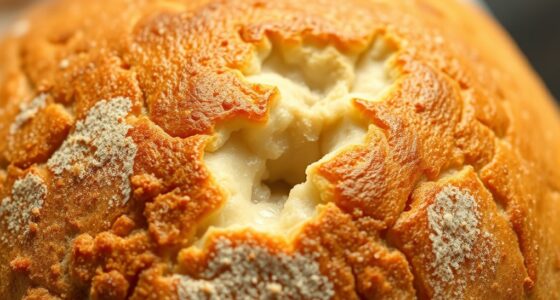
If your dough has a sour or alcoholic smell, feels slack or overly soft, and develops bubbles or foam on the surface, it’s a sign it’s overproofed. You might notice it won’t spring back when pressed and has lost its elasticity, making it hard to handle. Sometimes, it looks overexpanded or flattened. To fix it, gently punch it down, reshape, and give it a brief second proof. Keep an eye on these signs to perfect your baking skills—there’s more to learn about saving overproofed dough.
Key Takeaways
- Overproofed dough often smells sour or alcoholic and develops bubbles or foam on the surface.
- It leaves a permanent impression when pressed and fails to spring back, indicating gluten breakdown.
- The dough feels slack, overly soft, and may be difficult to handle or shape.
- Salvage by gently punching down, reshaping, and briefly reproofing to restore elasticity.
- Prevent overproofing by monitoring fermentation signs, adjusting yeast amounts, and controlling proofing times.
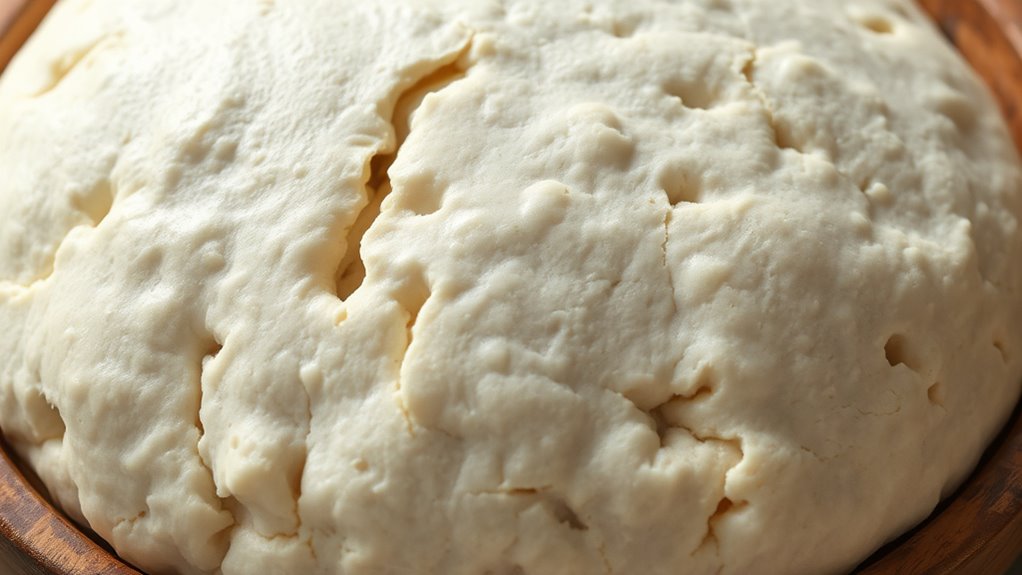
Overproofed dough occurs when your bread or pastry has been allowed to rise too long, causing it to lose its structure and leavening power. When this happens, you’ll notice clear fermentation signs that indicate the dough has gone past its ideal rise. The first clue is often a sour or alcoholic smell, a result of yeast overactivity producing excess carbon dioxide and alcohol. You might also see bubbles or foam on the surface, signaling that fermentation has become excessive. The dough’s texture becomes another essential indicator; instead of being airy and elastic, it turns sticky, slack, or overly soft, almost like a wet sponge. It may also be difficult to handle or shape, as its gluten network has weakened from over-expansion.
Overproofed dough smells sour, feels slack, and may be difficult to shape, indicating it has lost its structure.
Understanding these fermentation signs helps you catch overproofing early. If you notice the smell or texture changing considerably, it’s time to evaluate the dough’s condition. Overproofed dough typically feels lighter in weight but less firm when you press it gently. Instead of springing back, it might stay indentated or leave a permanent impression, showing that its gluten structure has broken down. Sometimes, you might see a layer of liquid forming on the surface, a sign that the yeast has exhausted its food supply and the gluten network can no longer hold the gases. These signs mean the dough has overexpanded and may not rise properly during baking, resulting in a dense or flattened final product.
If you catch your dough at this stage, don’t despair. You can sometimes salvage it by gently punching it down to release excess gas, then reshaping and allowing it to proof again briefly. This process can help re-strengthen the gluten and restore some of its elasticity. However, keep in mind that the flavor might be affected, with a more pronounced sourness or alcohol aroma. To prevent this, monitor your dough closely during its rise, especially if you’re in a warm environment that speeds up fermentation. Using less yeast or shorter rising times can help prevent overproofing altogether.
In some cases, overproofed dough is beyond saving, especially if it has become overly slack or developed a strong sour smell. But by paying attention to fermentation signs and dough texture, you stand a better chance of catching the problem early. Recognizing these cues allows you to make quick adjustments, whether that’s reshaping, refrigerating, or starting fresh. With practice, you’ll develop an intuitive sense of when your dough has risen perfectly, ensuring your baked goods turn out light, airy, and delicious every time.
Frequently Asked Questions
How Can I Prevent Overproofing in My Dough?
To prevent overproofing, focus on fermentation control by monitoring dough growth closely. Use proper proofing techniques like timing your proof and checking the dough’s size regularly. Keep your dough in a warm, consistent environment to avoid overly rapid fermentation. Also, punch down the dough gently if it starts to over-rise, and consider refrigerating it if you notice it’s rising too quickly. These steps help you maintain perfect proofing.
Can Overproofed Dough Be Used for Other Recipes?
Like a modern-day alchemist, you can turn overproofed dough into tasty treats. Yes, you can explore alternative uses and dough recycling for overproofed dough. It works well in recipes like bread pudding, crumpets, or even savory bread-based dishes. Just knead in fresh ingredients or reshape it into flatbreads. While it won’t produce perfect loaves, it’s a smart way to salvage and enjoy your dough’s potential.
What Are the Signs of Overproofed Dough Visually?
You’ll notice overproofed dough looks quite puffy and may have a slack, almost collapsed appearance. Its dough appearance appears overly aerated, with large fermentation bubbles showing through the surface. The dough might also seem flatter and less elastic than usual, often with a shiny or sticky surface. These visual signs indicate the dough has risen too long, and you might need to reshape or adjust it before baking for better results.
Does Overproofing Affect the Dough’s Flavor?
Yes, overproofing affects the dough’s flavor by altering fermentation effects and hindering proper flavor development. When you overproof, the yeast consumes too much sugar, producing excess alcohol and acids, which can cause a sour or off taste. This imbalance can make your baked goods less flavorful and more yeasty or tangy than intended. To avoid this, monitor your dough’s rise closely and stop fermentation before it over-proofs.
Is Overproofed Dough Safe to Eat?
Think of your overproofed dough as a party guest who’s had too much to drink—still safe, but needs some attention. Overfermentation from excessive yeast activity doesn’t make it unsafe to eat, but it can affect texture and flavor. If it smells sour or off, it’s best to discard it. Otherwise, it’s safe, but you might want to adjust your fermentation time next time to keep your dough in prime condition.
Conclusion
When your dough has overproofed, it’s like a balloon that’s just lost its bounce—still salvageable but needing gentle handling. With a few tweaks, you can bring it back from the brink, giving it new life like a phoenix rising from the ashes. Don’t despair; every over-risen dough holds the promise of a delicious comeback. Embrace the challenge, and your baked masterpiece will shine brighter, proof that even mistakes can turn into sweet successes.