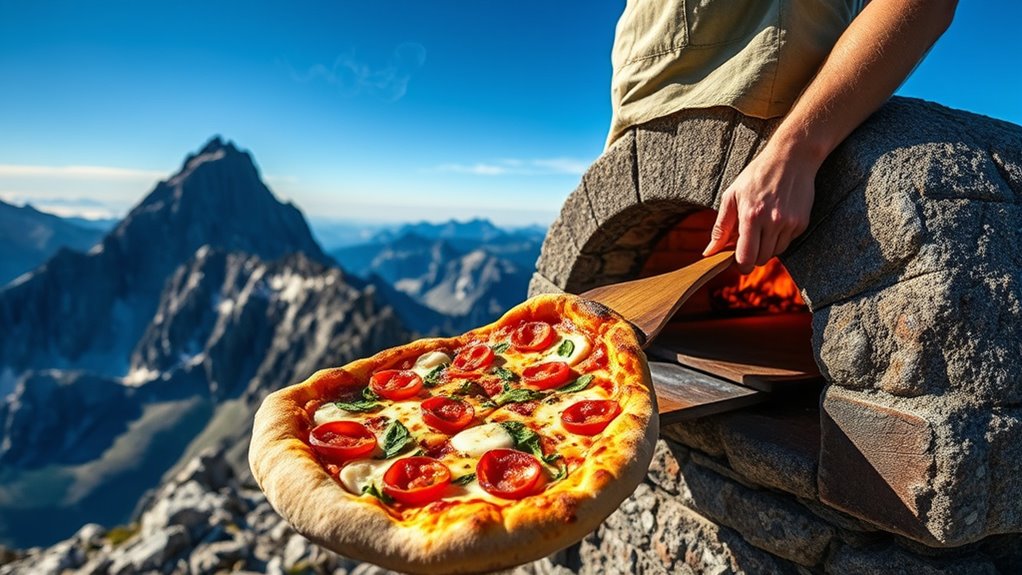
Baking pizza at high elevation means adjusting your recipe for lower air pressure and higher temperatures. You should increase your oven temperature by about 15 to 25°F and add a little more flour to stabilize the dough. Using a preheated pizza stone helps guarantee a crispy crust. Also, keep an eye on baking time to prevent overcooking. If you want to perfect your technique, there’s more to contemplate as you continue exploring!

Get baking supplies delivered free with Prime
- Fast, free delivery on millions of items
- Prime Video, Amazon Music and more included
- Member-only deals all year
Key Takeaways
- Increase oven temperature by 15-25°F to compensate for faster heat transfer at high altitude.
- Add slightly more flour to improve dough elasticity and help it hold shape during rising.
- Extend baking time or monitor closely to ensure toppings and crust are fully cooked without burning.
- Use a preheated pizza stone or steel for even heat distribution and a crispy crust.
- Shield delicate toppings with foil if baking longer to prevent overcooking or burning.

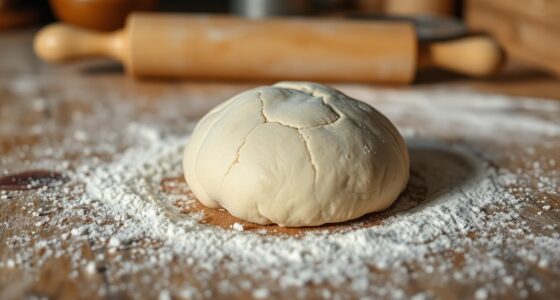
Baking pizza at higher elevations presents unique challenges because the lower air pressure affects how dough rises and how heat interacts with ingredients. When you bake at altitude, you’ll notice that your dough may not develop the same structure or rise as it does at sea level. This is primarily due to the decreased air pressure, which causes gases to expand more rapidly and makes it harder for the dough to hold its shape. To counteract this, you need to pay close attention to your dough consistency. You might find that your dough needs slightly more flour to achieve the right elasticity and strength, making it less sticky and easier to handle. Alternatively, adding a touch more sugar or fat can help improve gluten development, resulting in a dough that rises evenly and maintains its shape during baking. Incorporating natural ingredients can also enhance flavor and texture at high altitude. Adjusting your oven temperature is equally important. Because heat rises more quickly at high elevations, you may need to increase the oven temperature slightly to ensure your pizza crust bakes thoroughly and develops a nice, crispy exterior. Typically, raising the oven temperature by about 15 to 25 degrees Fahrenheit works well, but you should also keep a close eye on your pizza to prevent burning or uneven cooking. Using a preheated pizza stone or baking steel can help distribute heat evenly and produce a crust with good texture and color. Be prepared to experiment with your oven settings to find the *ideal* temperature that produces a well-cooked crust with a tender interior. Temperature adjustments also influence how toppings cook and how cheese melts. Since heat interacts differently at altitude, you might notice that cheese melts faster or toppings cook unevenly if you don’t modify the baking process. To prevent this, consider baking your pizza a bit longer at the adjusted temperature or using foil to shield delicate toppings during part of the bake.
pizza stone for high altitude baking
As an affiliate, we earn on qualifying purchases.
As an affiliate, we earn on qualifying purchases.
Frequently Asked Questions
How Does Altitude Affect Pizza Dough Rising Times?
At higher altitudes, the lower air pressure speeds up yeast activity, causing your pizza dough to rise faster. This rapid rise can hinder gluten development, making the dough less elastic and harder to shape. To counteract this, you should reduce the amount of yeast or shorten rising times, allowing the gluten to develop properly. Monitoring dough closely helps achieve the perfect rise and texture despite the altitude.
Can I Use the Same Pizza Toppings at High Elevation?
You can definitely use the same pizza toppings at high elevation, but don’t be afraid to switch things up with pizza topping substitutions for better flavor variations. Elevation can alter how ingredients taste and cook, so experimenting helps you find what works best. A little creativity goes a long way—think of it as adding your own spice to the experience. Keep an open mind, and your pizza will turn out deliciously unique every time.
Are There Specific Types of Flour Better for High-Altitude Baking?
You should choose flours with higher protein content for high-altitude baking because they develop better gluten, giving your pizza crust strength and elasticity. Bread flour or high-gluten flour are excellent options, as they help compensate for the quicker rise and drier air at elevation. Using flour with ideal gluten development ensures your crust stays chewy and well-structured, even with the environmental challenges of high-altitude baking.
How Does Humidity Impact Baking Pizza at Elevation?
Humidity effects can considerably impact your high-altitude pizza baking by altering moisture control. When humidity is high, excess moisture can make your dough sticky and difficult to work with, and it might result in a soggy crust. Conversely, low humidity can cause your dough to dry out quickly, leading to a tough crust. Adjust your water content accordingly, and consider using a humidifier or dehumidifier to maintain ideal moisture levels for perfect baking.
What Equipment Adjustments Are Necessary for High-Altitude Pizza Baking?
You should adjust your oven temperature higher by about 15-25°F to compensate for altitude. Use a pizza stone, preheated thoroughly, to make certain of even heat distribution and crisp crust. Elevation can cause dough to rise faster, so consider slightly reducing yeast or fermentation time. These equipment adjustments help you achieve a well-cooked, perfectly textured pizza despite the challenges of high-altitude baking.
As an affiliate, we earn on qualifying purchases.
Conclusion
Now that you know the secrets to baking perfect pizza at high altitude, imagine the delicious possibilities waiting to be explored. Will your next attempt turn out flawlessly, or will you need to tweak your approach? The key is in your hands—every mistake brings you closer to mastery. So, are you ready to conquer the challenges of elevation and create a pizza that’s truly worth the climb? The oven’s waiting—dare to discover what you can achieve.
high temperature oven thermometer
As an affiliate, we earn on qualifying purchases.
As an affiliate, we earn on qualifying purchases.
As an affiliate, we earn on qualifying purchases.
Halloween Picks
halloween
As an affiliate, we earn on qualifying purchases.