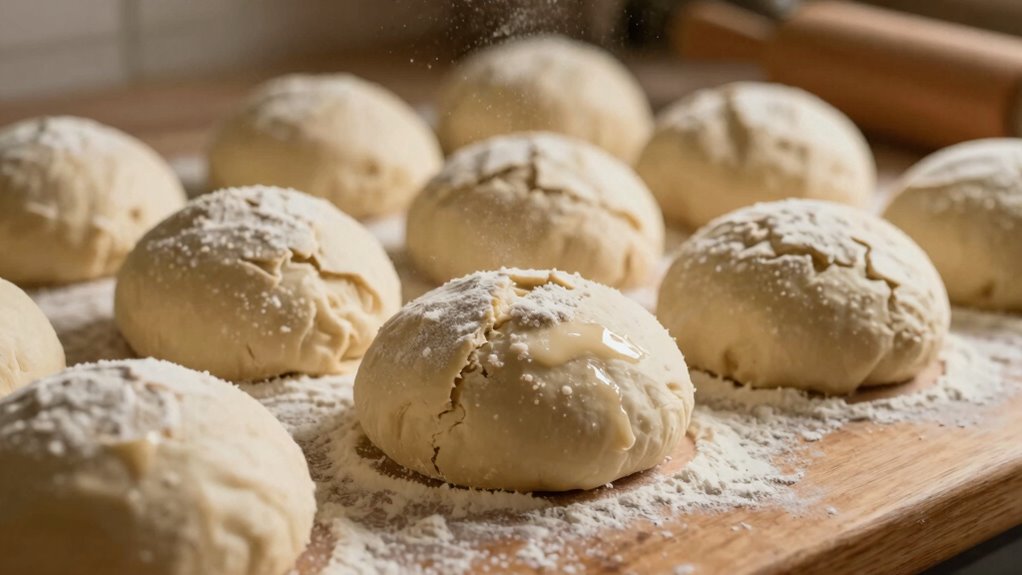

Dough balls dry out before service mainly because moisture escapes when they aren’t stored properly or exposed to air. Handling them too much or warming them without covering can cause surface drying. Environmental factors like dry air, warm temperatures, or low humidity also speed up moisture loss. To prevent this, you should cover the dough with plastic or damp cloth and store it in a cool, humid environment. Keep going to discover more tips to keep your dough moist and pliable.

Get baking supplies delivered free with Prime
- Fast, free delivery on millions of items
- Prime Video, Amazon Music and more included
- Member-only deals all year
Key Takeaways
- Exposure to air causes moisture loss, leading to drying of dough balls before service.
- Insufficient covering or improper sealing allows moisture evaporation.
- Storing in warm or dry environments accelerates surface drying.
- Handling during shaping or portioning increases surface exposure and moisture loss.
- Lack of adequate hydration or over-drying during storage reduces dough pliability.
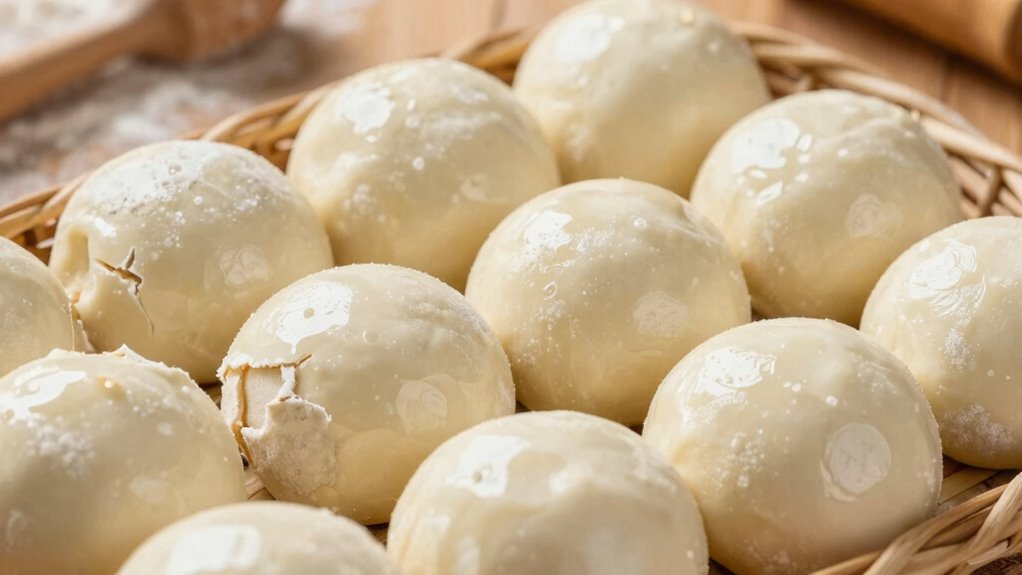
Have you ever noticed your dough balls drying out before they reach the oven? It’s a common issue that can throw off your entire baking process. The main culprit is often inadequate dough moisture retention, which occurs when the dough loses its water content during storage or handling. To prevent this, you need to understand and implement proper storage techniques that keep your dough moist and pliable.
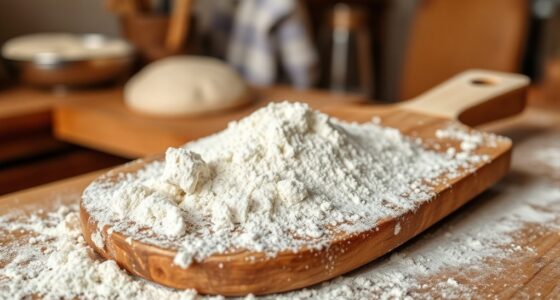
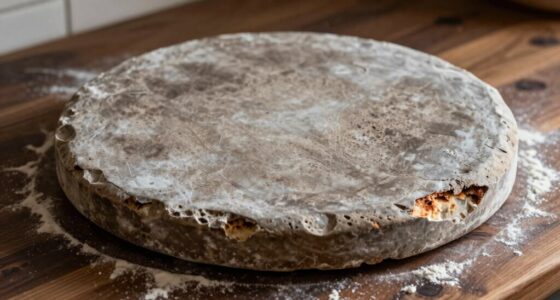
One of the key steps is controlling the environment where you store your dough. If it’s exposed to air, your dough can quickly dry out, forming a crust that makes shaping and baking difficult. Covering your dough with plastic wrap, a damp cloth, or using airtight containers helps trap moisture and prevents evaporation. This simple step is essential for maintaining dough moisture retention. When storing, avoid placing your dough in warm or dry places, as heat and low humidity accelerate moisture loss. Instead, find a cool, humid spot—like a refrigerator or a climate-controlled proofing box—to keep the dough at an ideal temperature and humidity level. Proper dough hydration is crucial because it directly impacts the dough’s ability to retain moisture and stay pliable during storage.
Cover your dough with plastic wrap or airtight containers to trap moisture and prevent drying out.
Another effective storage technique involves the way you handle your dough during and after mixing. Lightly oiling the surface of the dough can create a barrier that reduces moisture evaporation. Additionally, if you’re dividing or shaping your dough before storage, make sure to do so gently and avoid excessive handling, which can cause the dough to dry out faster. When you’re ready to use it, don’t leave the dough out at room temperature for too long, especially if it’s been stored in the fridge. Instead, bring it to room temperature gradually, covering it to prevent surface drying. Proper dough hydration is crucial because it directly impacts the dough’s ability to retain moisture and stay pliable during storage. Understanding the role of water content in dough stability can help you fine-tune your recipe for optimal moisture retention and workability. Keep in mind that over-hydrating can make the dough sticky, so find a balance suited to your environment and ingredients.
In essence, safeguarding your dough’s moisture involves a combination of proper storage techniques and understanding how environmental factors influence water retention. By covering your dough properly, choosing the right storage conditions, and adjusting hydration levels as needed, you’ll keep your dough balls fresh and workable right up until they’re ready to bake. This way, you avoid the frustration of dry, cracked dough and guarantee your final product maintains the desired texture and quality.
airtight dough storage container
As an affiliate, we earn on qualifying purchases.
As an affiliate, we earn on qualifying purchases.
Frequently Asked Questions
Can the Type of Flour Affect Dough Ball Drying?
Yes, the type of flour substantially affects dough ball drying. Different flour types, like bread flour or all-purpose flour, have varying levels of gluten and moisture absorption. Flour with higher absorption retains more moisture, keeping dough balls hydrated longer. Conversely, lower-absorption flours tend to dry out faster. Choosing the right flour helps maintain ideal dough moisture, preventing drying out before service and ensuring a better final product.
Does the Ambient Humidity Impact Dough Ball Moisture?
High ambient humidity levels and poor air circulation are like a sponge—helping dough balls retain moisture. When humidity drops, your dough can dry out quickly, much like a sponge losing water. Proper air circulation prevents stagnant air that accelerates drying. You notice your dough drying faster in winter when indoor air is dry and fans or vents blow air directly over the dough, making humidity control essential for moisture retention.
How Does Storage Temperature Influence Dough Ball Dryness?
Storage temperature markedly impacts dough ball dryness. If you don’t maintain proper temperature control, dough dries out quickly. Using appropriate storage methods, like tightly sealing dough or refrigerating at the right temperature, helps retain moisture. Cold storage slows evaporation, keeping dough pliable and fresh. Avoid exposing dough to fluctuating temperatures, which accelerates drying. Consistent temperature control and proper storage methods are essential to prevent dough from drying out before service.
Are There Specific Ingredients That Help Retain Moisture?
Yes, certain ingredients like moisture-retaining additives can help keep dough balls moist. You might consider alternative ingredients such as glycerin or lecithin, which trap moisture effectively. These ingredient alternatives are safe and can be easily incorporated into your recipe, preventing dryness without affecting taste. Using these additives guarantees your dough stays fresh and pliable, even if storage conditions aren’t perfect. This simple tweak can make a big difference in dough quality.
Can Rehydrating Dried Dough Balls Restore Their Original Texture?
Rehydrating dried dough balls can help restore some moisture, but it might not fully recover their original texture. To improve dough ball preservation, you should use moisture retention techniques like wrapping them tightly or storing them in airtight containers. Adding a bit of water or olive oil during rehydration can assist, but prevention through proper storage is the best way to maintain their freshness and prevent drying out before service.
dough proofing box with humidity control
As an affiliate, we earn on qualifying purchases.
As an affiliate, we earn on qualifying purchases.
Conclusion
So, next time you notice your dough balls drying out before service, remember it’s often just a coincidence—an overlooked detail like humidity or storage. Keep an eye on those conditions, and you’ll find that what seems like bad luck is actually a simple fix. Sometimes, the smallest change can prevent drying out altogether, proving that even in the kitchen, coincidence can be your best teacher. Stay attentive, and your dough will always be ready when you need it.
plastic wrap for dough preservation
As an affiliate, we earn on qualifying purchases.
As an affiliate, we earn on qualifying purchases.
As an affiliate, we earn on qualifying purchases.
Halloween Picks
halloween
As an affiliate, we earn on qualifying purchases.