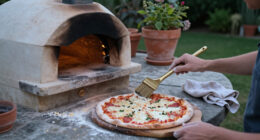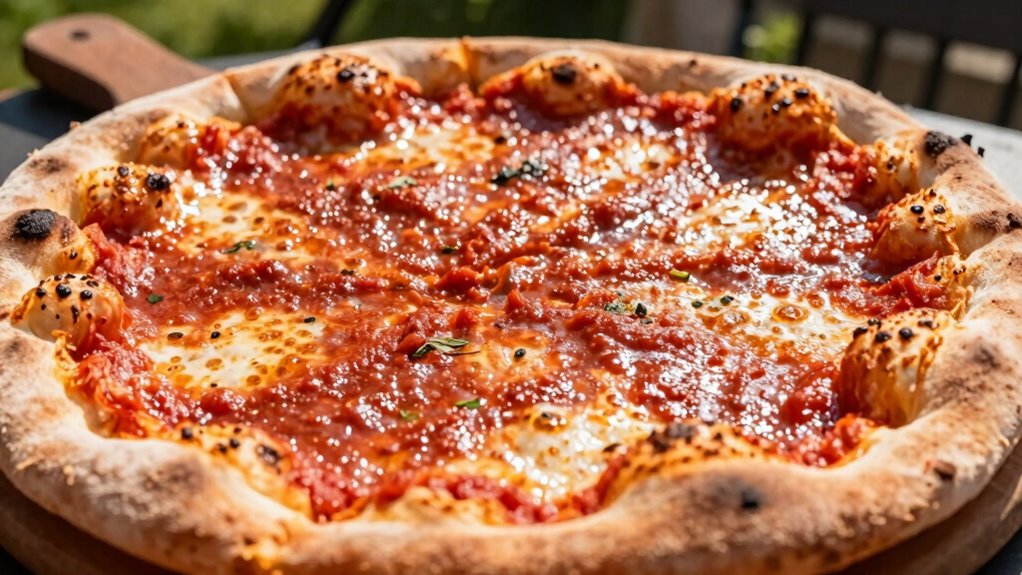

If you use a thick sauce on your outdoor pizza, it can act like a barrier that slows heat transfer, making it harder for the cheese to melt evenly and preventing toppings from cooking properly. A dense sauce may cause some areas to stay semi-solid or become stringy, while also risking uneven crust browning. Achieving the right sauce thickness helps guarantee uniform cooking, better melting, and a visually appealing, delicious result—if you keep exploring, you’ll discover how to get it just right.

Get baking supplies delivered free with Prime
- Fast, free delivery on millions of items
- Prime Video, Amazon Music and more included
- Member-only deals all year
Key Takeaways
- Thick sauce creates a heat barrier, preventing even melting of cheese and uneven cooking of toppings.
- Thin sauce promotes better heat transfer, ensuring toppings and crust cook evenly.
- Overly thick sauce can cause toppings to overcook or undercook, affecting texture and appearance.
- Runny sauce may lead to soggy crust and toppings sliding off during baking.
- Proper sauce consistency enhances heat management, resulting in a more uniform and visually appealing bake.
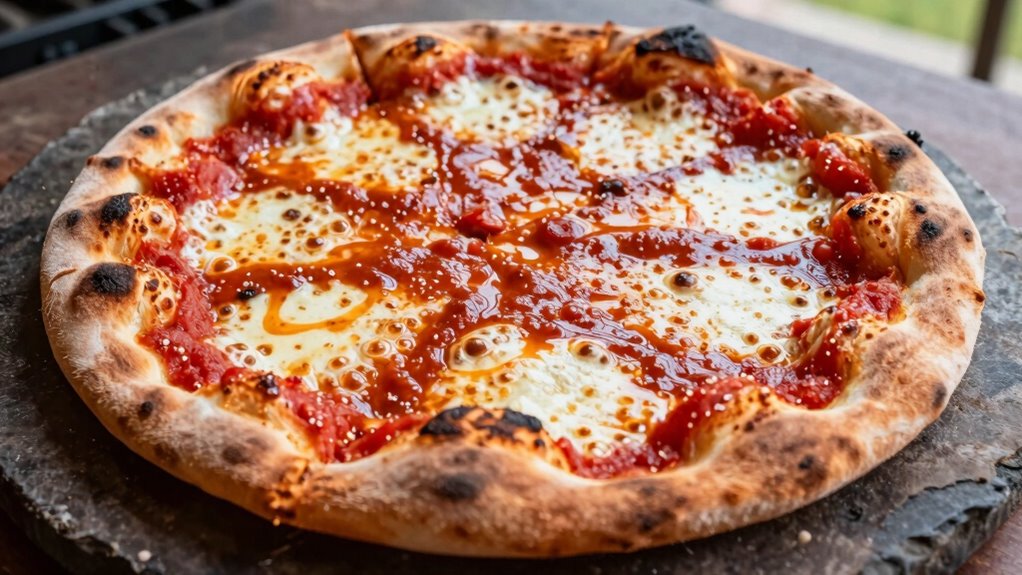
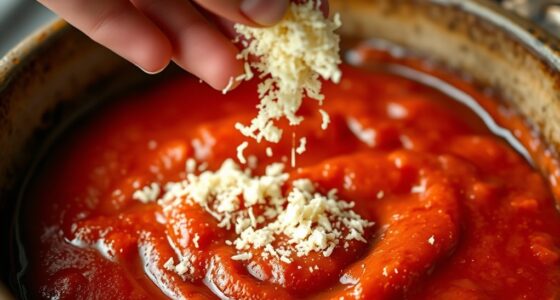
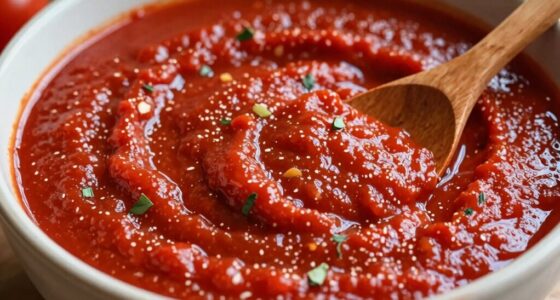
When the sauce is thick and abundant, it can create a barrier between the heat and the cheese, preventing it from melting smoothly. This can result in uneven coverage or a gloopy, under-melted top. On the flip side, a thinner sauce allows heat to pass through more readily, promoting even cheese melting and a more cohesive topping. If your sauce is too thick, you might notice the cheese remains semi-solid or stringy in spots, diminishing the overall appeal of your pizza. Adjusting the sauce’s consistency to be moderate—not too thick, not too thin—can help ensure that the cheese melts evenly and creates that desirable, gooey layer that makes pizza so irresistible. The impact of sauce thickness extends beyond just texture; it also influences the visual appeal of your outdoor pizza. A well-balanced sauce that isn’t overly thick or thin facilitates proper heat transfer, ensuring the crust achieves that perfect golden-brown color and the toppings look appetizing. If you use a sauce that’s too thick, it might cause the toppings to cook unevenly, with some parts overdone and others undercooked. Conversely, a very runny sauce can lead to a soggy crust and toppings that slide off easily. Finding the right sauce consistency for your sauce, tailored to your dough’s characteristics and your baking method, ensures your outdoor pizza turns out with an ideal balance of flavor, texture, and appearance. Additionally, understanding how the baking temperature interacts with your sauce’s thickness can further influence the final outcome. Proper heat management is essential to prevent burning or undercooking, especially when adjusting sauce thickness. Maintaining awareness of the outdoor heat conditions can help you adapt your cooking process for consistent results. A properly balanced sauce not only enhances flavor but also helps in achieving consistent baking results, especially in outdoor conditions where heat can fluctuate.
As an affiliate, we earn on qualifying purchases.
Frequently Asked Questions
How Does Sauce Thickness Affect Pizza Cooking Time?
Thick sauce, with its higher viscosity, tends to extend the cooking time because it insulates the pizza, slowing heat transfer. It also improves ingredient adhesion, keeping toppings in place. Conversely, a thinner sauce allows heat to penetrate more easily, speeding up baking. So, when you choose a thicker sauce, expect a slightly longer bake, and be mindful of how sauce consistency influences both cook time and topping stability.
Can Thick Sauce Cause the Pizza Crust to Burn?
Thick sauce can cause your pizza crust to burn if it’s unevenly spread, especially near the edges. Its dense consistency may trap more heat, leading to quicker scorching. However, its spreadability allows for better flavor infusion, enhancing taste without necessarily burning the crust. To prevent burning, make certain the sauce isn’t too thick near the edges and spread it evenly. Adjusting your oven’s temperature can also help manage this.
Does Sauce Consistency Impact Cheese Melting?
Yes, sauce consistency impacts cheese melting. Thinner sauces allow heat to reach the cheese more evenly, promoting smoother melting and better texture contrast. Thicker sauces, especially if rich in flavor, can create a barrier that slows down heat transfer, resulting in less uniform melting. When you choose a sauce with the right consistency, you enhance both flavor and cheese texture, making your outdoor pizza more delicious and visually appealing.
What’s the Best Way to Thin Thick Sauce for Outdoor Baking?
To thin thick sauce for outdoor baking, you should stir in a small amount of water, tomato juice, or olive oil—whichever suits your flavor. Store your sauce properly in airtight containers, and consider ingredient substitution—adding a splash of broth or vinegar if needed. Mix gradually, tasting as you go, until you reach the desired consistency. This approach guarantees your sauce spreads evenly and bakes perfectly.
How Does Sauce Thickness Influence Pizza Flavor Balance?
Thick sauce can overpower the pizza’s flavor, disrupting harmony, while a thinner sauce permits other toppings to shine. You should aim for even sauce distribution to maintain flavor balance, preventing any one ingredient from dominating. When the sauce is just right, it enhances the overall flavor harmony, blending seamlessly with cheese and toppings. Adjusting sauce thickness ensures each bite offers a balanced, flavorful experience, making your outdoor pizza truly delicious.
pizza sauce consistency thermometer
As an affiliate, we earn on qualifying purchases.
As an affiliate, we earn on qualifying purchases.
Conclusion
So, next time you’re crafting your outdoor pizza, remember that the sauce thickness can make or break your bake. Thinner sauce lets the crust crisp up nicely, while thicker sauce keeps things moist and flavorful. Don’t be afraid to experiment—just like the pioneers of pizza did in their ancient ovens. With a little trial and error, you’ll find the perfect balance for that legendary slice. Now, go forth and conquer your outdoor pizza game!
pizza baking stone with heat resistant handles
As an affiliate, we earn on qualifying purchases.
As an affiliate, we earn on qualifying purchases.
As an affiliate, we earn on qualifying purchases.
Halloween Picks
halloween
As an affiliate, we earn on qualifying purchases.