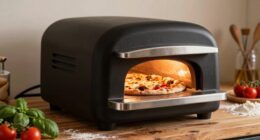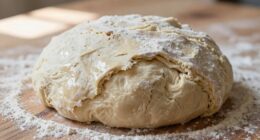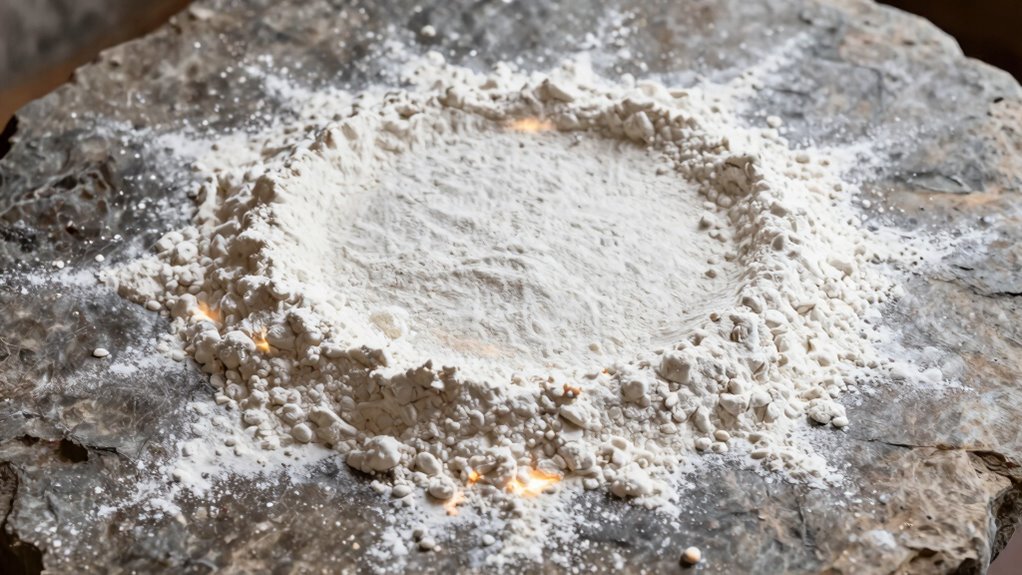
Flour burns on a hot stone because it heats up quickly and lacks enough moisture to buffer the high temperatures. When exposed directly to intense heat, the fine starch particles scorch, creating bitter flavors and uneven baking. To prevent this, you need to manage the oven’s temperature and add moisture through techniques like coating the flour or using parchment paper. Want to find out more tips to keep your baked goods flavorful? Keep exploring.
Key Takeaways
- Direct contact with hot stones causes rapid, uneven heating, leading to flour scorching and bitterness.
- High baking temperatures accelerate Maillard reactions, increasing the risk of quick burning before proper cooking.
- Low moisture content in flour makes it more susceptible to burning and bitter flavors when exposed to intense heat.
- Using insulators like parchment paper or flour coatings can prevent direct heat contact and burning.
- Gradually preheating stones and controlling oven temperature helps maintain even heat, reducing flour scorching.
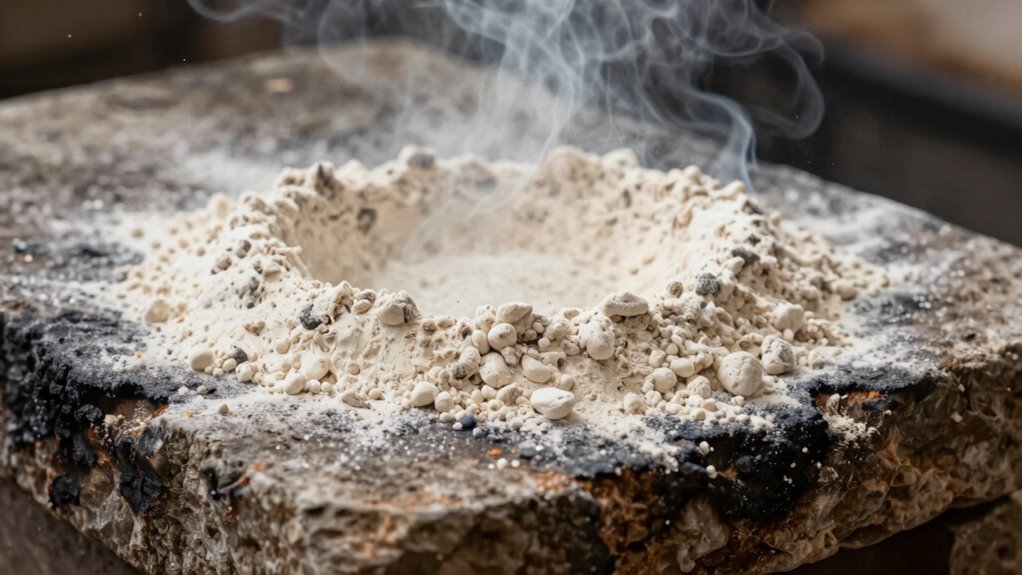
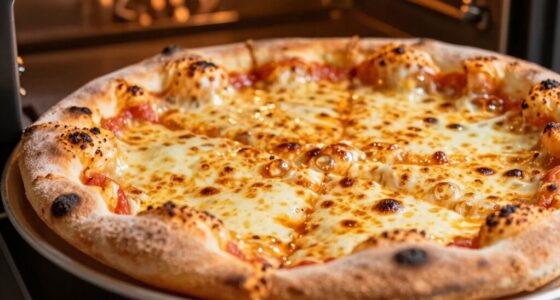
Have you ever wondered why flour tends to burn quickly when placed directly on a hot stone? The answer lies in understanding how baking temperature and ingredient moisture influence the process. When you set a hot stone to a high temperature, like during pizza or bread baking, the surface heats up rapidly, creating a scorching environment. If you then place flour directly on this surface, it’s exposed to intense heat immediately. Flour, being a fine powder composed mainly of starch, is sensitive to sudden temperature changes. This quick exposure causes it to scorch and burn before it has a chance to cook evenly, leading to that bitter flavor you’ve noticed.
Flour burns quickly on hot stones due to rapid heat exposure and low moisture content.
Baking temperature plays a crucial role here. A hot stone, often heated to 500°F or more, provides an aggressive environment for any raw ingredients placed directly on it. Without a proper barrier or a method to moderate the heat transfer, the flour’s surface reaches its burning point swiftly. The high temperature accelerates Maillard reactions and caramelization, but only after the flour has been exposed long enough. When flour burns at these temperatures, it develops an undesirable bitterness, which can ruin the flavor of your baked goods. Additionally, the rapid heat transfer can cause uneven cooking, affecting both texture and taste.
Ingredient moisture is another key factor. Flour naturally contains some moisture, but when it’s dry, it’s more prone to burning. Moisture acts as a buffer, absorbing heat and slowing down the burning process. When the flour is incorporated into dough or sprinkled on top of a dough that has some internal moisture, the heat doesn’t immediately scorch the flour’s surface. Instead, the moisture helps distribute heat more evenly, preventing rapid burning and bitter flavors. That’s why you’ll see recipes recommending to keep flour or toppings slightly moist or to apply them at the right stage of baking.
To avoid burning flour on a hot stone, you need to manage both baking temperature and ingredient moisture. Using a layer of parchment paper or a baking peel coated with flour can help insulate the flour from direct contact with the extreme heat. Also, adjusting the oven or stone temperature to a lower setting, or preheating the stone gradually, allows the temperature to stabilize and reduces the risk of burning. Adding moisture to the flour or toppings before placing them on the stone creates a protective barrier, ensuring they don’t scorch too quickly. Proper heat management is essential for achieving the best results. Additionally, employing techniques such as temperature control can help maintain a more consistent heat environment, preventing sudden temperature spikes that cause burning.
Furthermore, understanding how baking temperature impacts the process can help you better control the outcome. In essence, the key is controlling heat exposure and maintaining some level of moisture. When you do this, you’ll prevent unwanted burning and bitter flavors, resulting in a more evenly baked, flavorful dish. Recognizing the importance of ingredient moisture can significantly improve your baking results and prevent common pitfalls like burning. Increasing your awareness of heat transfer principles can further enhance your ability to manage oven conditions effectively.

Perfect Pizza Mat Non-Stick Silicone Baking Cake Liner, 12" Round Heat Resistant Toaster Pad, Reusable Perforated Steaming Mesh for Bread/Cookie/Pastry (Orange)
►FOOD SAFE/NON-TOXIC: The pizza baking mat is made of premium quality non-toxic materials fiberglass and silicone, safe from…
As an affiliate, we earn on qualifying purchases.
As an affiliate, we earn on qualifying purchases.
Frequently Asked Questions
Can the Type of Flour Affect Burning on the Stone?
Yes, the type of flour can affect burning on the stone. Flours with higher gluten content, like bread flour, tend to be more prone to burning because they retain more moisture and heat differently. Additionally, flour particle size matters; finer particles can heat up faster and burn more easily. Choosing a lower gluten flour or coarser grind can help prevent burning and reduce bitter flavors.
Does the Moisture Content of Flour Influence Burning?
Yes, the moisture level in flour influences burning. Higher moisture content can cause the flour to burn more easily on the stone, leading to a bitter taste. If flour has spoiled or absorbed excess moisture, it’s more prone to burning during baking. To prevent this, use fresh, properly stored flour with low moisture content, ensuring it doesn’t spoil or develop unwanted flavors. Proper storage helps maintain ideal moisture levels for better baking results.
How Does the Temperature of the Stone Impact Burning?
The temperature of the stone directly affects burning because higher heat transfer speeds up combustion. A stone with high thermal conductivity quickly transfers heat to the flour, increasing the risk of burning. Conversely, a stone with lower thermal conductivity heats more gradually, reducing burning risk. You should monitor the stone’s temperature to prevent excessive heat buildup, ensuring even cooking without burning, and maintaining ideal flavor.
Are There Specific Stones Less Prone to Burning Flour?
Yes, certain stone materials are less prone to burning flour due to better heat distribution. Stones like soapstone or firebrick spread heat evenly, preventing hot spots that cause burning. Avoid softer, uneven stones like some limestone or sandstone, which can develop hot spots. By choosing a stone with excellent heat distribution, you minimize the risk of burning flour and avoid bitter flavors, ensuring a better baking experience.
Can Pre-Treating Flour Prevent It From Burning?
Pre-treating flour can help prevent it from burning, especially if you warm it gently before using. This process enhances gluten development and can improve baking results. Just be mindful of its shelf life; older flour is more prone to burning and off-flavors. By pre-treating, you guarantee even heat absorption, reducing bitterness and burnt spots on your stone. Always store flour properly to maintain freshness and ideal gluten formation.
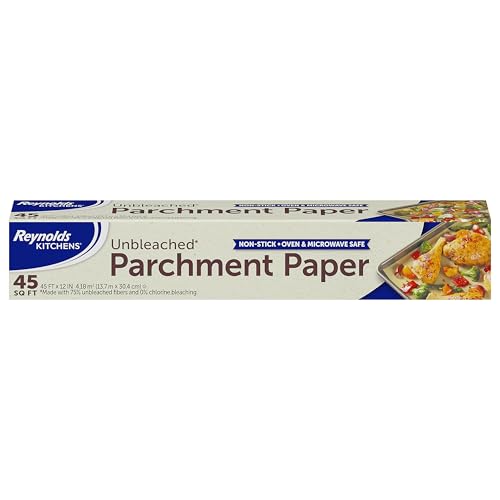
Reynolds Kitchens Unbleached Parchment Paper Roll, Non Stick Parchment Paper for Cooking and Baking, Oven Safe up to 425 Degrees, Chlorine-Free, 45 Feet x 12 Inches, 45 Total Sq. Ft.
Package Includes: One (1) Reynolds Kitchens Unbleached Parchment Paper Roll measuring 45 feet long by 12 inches wide…
As an affiliate, we earn on qualifying purchases.
As an affiliate, we earn on qualifying purchases.
Conclusion
So, next time your dough burns on the stone, remember it’s often due to high heat or insufficient moisture. Maintaining a proper oven temperature and keeping your dough hydrated can prevent bitterness and burning. Did you know that over 60% of home bakers have experienced burnt crusts at some point? By adjusting your technique, you’ll enjoy perfectly baked bread with a delicious flavor—no more bitter surprises on your stone!

B000SSXTP2
As an affiliate, we earn on qualifying purchases.
As an affiliate, we earn on qualifying purchases.

AcuRite 00620A2 Stainless Steel Oven Thermometer (150°F to 600°F)
Oven and grill safe for leave-in use while cooking
As an affiliate, we earn on qualifying purchases.
As an affiliate, we earn on qualifying purchases.