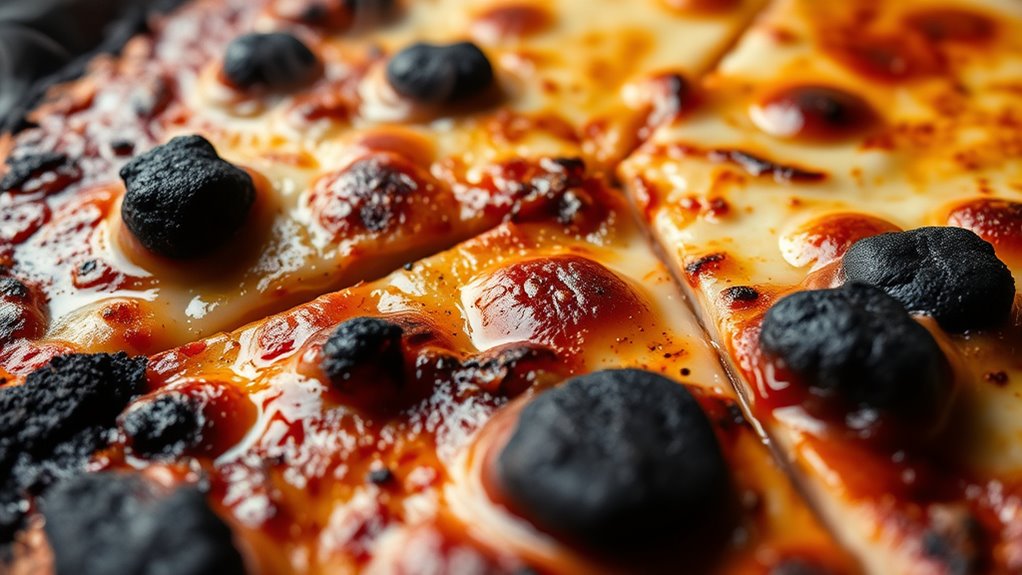

Burnt pizza contains acrylamide, a chemical that forms when starchy foods are cooked at high temperatures or become overly browned. Consuming burnt or charred parts increases your exposure to this compound, which may pose health risks over time. To stay safer, aim for a light golden crust and avoid overcooking. Understanding how acrylamide forms can help you make smarter choices for your health—there’s more to discover about keeping your food both tasty and safe.
Key Takeaways
- Burnt pizza crusts contain higher acrylamide levels due to increased browning from overcooking.
- Acrylamide forms during high-temperature cooking, especially when foods are burnt or overly browned.
- Consuming burnt or charred pizza regularly may pose health risks linked to acrylamide exposure.
- To reduce risk, cook pizza to a light golden color and avoid charring or burning the crust.
- Proper food handling and cooking practices can minimize acrylamide formation and promote safer eating habits.
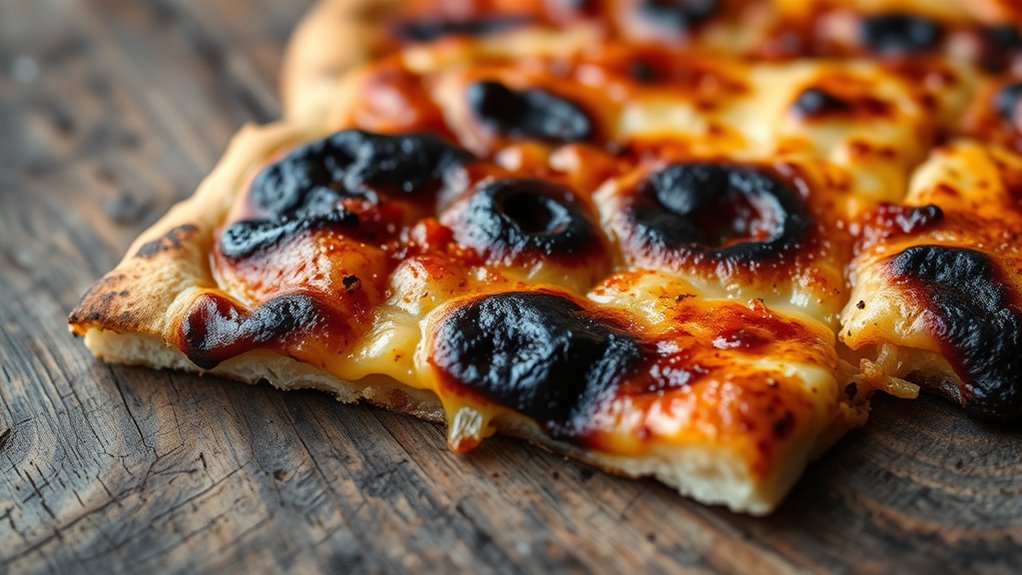
Have you ever wondered what acrylamide is and why it appears in some of your favorite foods? It’s a compound that forms during high-temperature cooking processes, especially when foods are fried, roasted, or baked. When you cook starchy foods like potatoes, bread, or even pizza at temperatures above 120°C (250°F), a chemical reaction called the Maillard reaction occurs, giving your food that appealing golden-brown color and rich flavor. However, this same process can also lead to the formation of acrylamide. While the Maillard reaction is responsible for the delicious taste and aroma, it’s important to be aware of the potential health concerns linked to acrylamide, especially when foods become burnt or overly browned.
Acrylamide forms when amino acids, particularly asparagine, react with sugars during high-heat cooking. This process is part of the Maillard reaction, which is essential for creating that desirable flavor in many cooked foods. But as you might have guessed, the same reaction that enhances taste can also produce unwanted chemicals like acrylamide. In terms of food safety, this means that while cooking your food thoroughly is good, overcooking or burning it can increase acrylamide levels appreciably. Burnt pizza crusts, charred fries, or overly browned bread are common examples where acrylamide levels can spike. These burnt spots aren’t just visually unappealing—they could pose health risks if consumed excessively over time.
Understanding the link between cooking practices and acrylamide formation is key to making smarter choices in your kitchen. To minimize exposure, it’s best to avoid excessive browning or burning your food. You can do this by cooking at lower temperatures, reducing cooking times, or removing burnt parts before eating. For pizza lovers, this means keeping an eye on the crust—aim for a light golden color rather than a dark, charred surface. It’s also helpful to avoid storing raw potatoes in the fridge for long periods, as cold temperatures can increase acrylamide formation during cooking. Additionally, being aware of cooking methods that influence acrylamide levels can help you make healthier choices. Being mindful of these details supports food safety and helps you enjoy your favorite dishes without unnecessary health risks.
Frequently Asked Questions
Can Acrylamide Form in Other Common Household Foods?
Yes, acrylamide can form in other household foods through chemical reactions, especially when you cook starchy foods like potatoes, bread, or coffee at high temperatures. To guarantee food safety, avoid overcooking or burning these items, as the browning process increases acrylamide levels. Being mindful of cooking times and temperatures helps prevent harmful chemical reactions, keeping your meals healthier and safer for everyone.
Are There Safe Levels of Acrylamide in Cooked Foods?
Sure, there are “safe” levels of acrylamide, according to risk assessments and regulatory standards, but don’t let that fool you into thinking it’s harmless. These standards aim to minimize health risks, yet they don’t guarantee zero danger. You’re better off avoiding overcooked foods altogether, since even tiny amounts can accumulate over time. So, stay vigilant, cook wisely, and remember—regulations are just guidelines, not a free pass to indulge recklessly.
How Does Acrylamide Affect Long-Term Health Risks?
Acrylamide poses long-term health risks because of its carcinogenic potential and neurological effects. When you consume foods high in acrylamide regularly, it may increase your risk of certain cancers and cause nerve damage over time. To protect your health, limit intake of heavily roasted or burnt foods, and opt for cooking methods that reduce acrylamide formation. Staying informed helps you make safer choices for your long-term well-being.
Can Cooking Methods Reduce Acrylamide Formation?
Yes, cooking techniques and temperature control can help reduce acrylamide formation. You should cook at lower temperatures, ideally below 120°C (250°F), to minimize acrylamide. Avoid over-browning or burning your food, and opt for methods like boiling, steaming, or microwaving instead of frying or roasting at high heat. These adjustments can considerably lower your exposure to acrylamide and promote healthier eating habits.
Is Acrylamide Detection Possible at Home?
Home testing for acrylamide detection isn’t currently practical because detection methods require specialized equipment like chromatography or spectroscopy. While some DIY kits claim to test for certain contaminants, they aren’t reliable for acrylamide. For accurate results, you’d need to send samples to a professional laboratory. So, at this point, home testing isn’t feasible, and understanding acrylamide levels relies on proper cooking methods and awareness of risk factors.
Conclusion
Now that you know about acrylamide, it’s important to be mindful of how you cook your food. Did you know that foods like pizza can contain up to 50 times more acrylamide when burnt? By avoiding overcooking or burning your pizza, you reduce your exposure to this potentially harmful chemical. Staying informed helps you make healthier choices and enjoy your favorite treats safely. Keep an eye on your food and cook smarter for better health.