
When adjusting for humidity, you should tweak your dough’s hydration by slightly reducing water in humid conditions to prevent excessive stickiness, or increasing it in dry weather to keep the dough soft and pliable. Adding flour during kneading or covering your dough during resting also helps maintain the right moisture balance. Understanding how humidity impacts dough allows you to make small adjustments for consistent results, and there’s more to discover for perfect texture under any weather.

Get baking supplies delivered free with Prime
- Fast, free delivery on millions of items
- Prime Video, Amazon Music and more included
- Member-only deals all year
Key Takeaways
- Reduce water slightly in humid conditions to prevent dough from becoming overly sticky.
- Add small amounts of flour during kneading to absorb excess moisture in high humidity.
- Slightly increase hydration with more water during dry weather to keep dough soft and pliable.
- Use damp cloths or plastic wrap to cover dough during resting, retaining moisture in dry or humid environments.
- Adjust ingredient ratios based on real-time observation of dough texture to maintain optimal elasticity and handling.
Weather conditions can considerably impact your dough, making it tricky to achieve consistent results. One of the most influential factors is humidity, which directly affects dough consistency. When the air is humid, your dough can become sticky, overly moist, or difficult to knead, while in dry conditions, it can turn out crumbly or dry. Understanding how humidity effects influence your dough is essential for adjusting your techniques and ingredients to maintain the desired texture and elasticity.
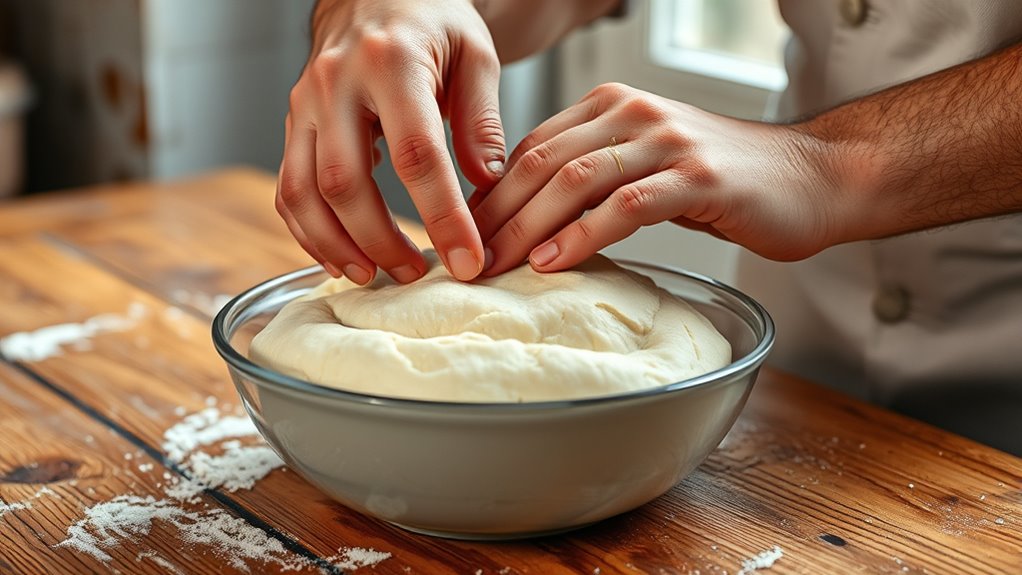
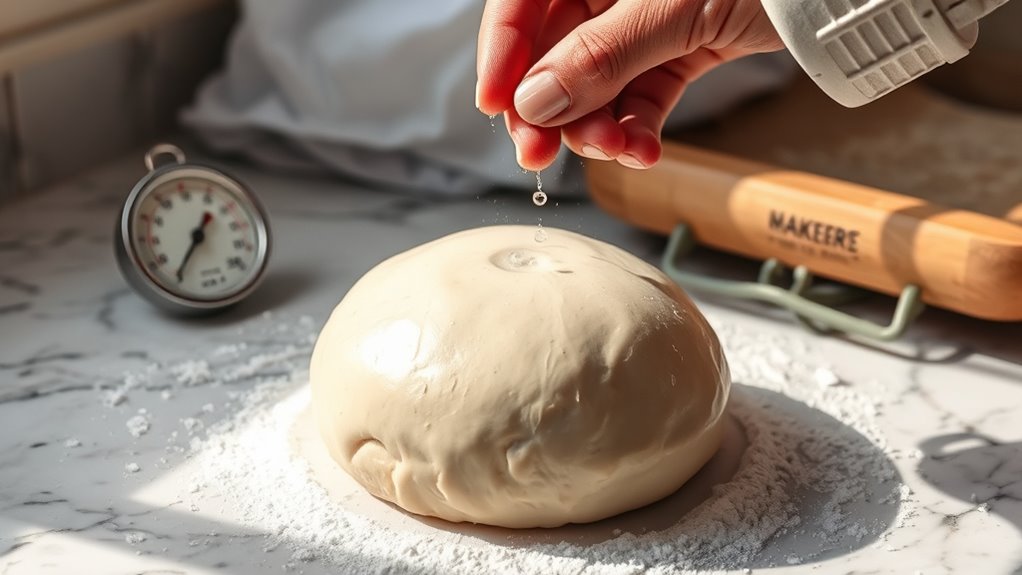
High humidity introduces extra moisture into the environment, which your dough readily absorbs. As a result, it may become wetter than usual, making it stickier and harder to handle. If you notice your dough feels overly tacky or soft, it’s likely due to humidity effects. To counteract this, you can reduce the amount of water or liquid in your recipe slightly. Start by adding a small amount less than called for, then adjust as needed until the dough reaches the right consistency. Additionally, using a bit more flour during kneading can help balance the moisture content, preventing the dough from becoming too sticky and ensuring it maintains good elasticity.
Conversely, in dry weather, your dough might lose moisture quickly, leading to a crumbly or stiff texture. When the air is dry, the dough can dry out faster, making it difficult to knead or shape properly. To combat this, you may need to increase the hydration slightly by adding a bit more water or liquid. Keep a close eye on the dough’s texture; it should be soft, pliable, and smooth without being sticky. Covering the dough with a damp cloth or plastic wrap during resting periods can also help retain moisture and prevent it from drying out prematurely. Being aware of environmental factors like humidity allows you to better control your dough’s consistency and achieve reliable results.
Frequently Asked Questions
How Does Humidity Affect Yeast Activity During Dough Fermentation?
Humidity influences yeast activation by maintaining moisture levels, which helps yeast thrive. When humidity is high, fermentation speed increases because the yeast remains active longer and produces gas more efficiently. Conversely, low humidity can slow down fermentation, as the dough dries out and hampers yeast activity. You should adjust your dough’s hydration and fermentation time based on the humidity to guarantee ideal yeast activation and consistent results.
Can Adjusting for Humidity Improve Bread Shelf Life?
Yes, adjusting for humidity can improve bread shelf life. By controlling humidity levels during storage, you prevent moisture loss or excess, which helps preserve freshness. Use proper humidity control devices and storage techniques like airtight containers or cloth bags to maintain ideal moisture. This minimizes staling, mold growth, and spoilage, ensuring your bread stays fresh longer and maintains its texture and flavor over time.
What Tools Help Measure Humidity Levels for Baking Adjustments?
You can use a hygrometer to measure humidity levels for baking adjustments. Look for a digital or analog hygrometer with precise readings. Make sure proper hygrometer calibration to maintain accuracy. For indoor humidity control, adjust your environment with a humidifier or dehumidifier as needed. Regular calibration and monitoring help you maintain ideal moisture levels, ensuring consistent dough quality and better bread shelf life.
How Do Different Dough Types Respond to Humidity Changes?
Think of dough as a chameleon, changing with its environment. When humidity rises, your bread dough becomes more elastic, thanks to increased flour absorption, making it softer and more pliable. Conversely, in dry conditions, dough can become stiff and difficult to work with. You’ll notice pastry dough tends to be delicate and crumbly in humid weather, while yeast dough may overproof if humidity causes excessive moisture absorption.
Are There Specific Ingredients That Counteract High Humidity Effects?
Yes, you can counteract high humidity effects with specific ingredients and humidity buffering techniques. Add a bit more flour to your dough to absorb excess moisture, and incorporate ingredients like cornstarch or dry milk powder to help control moisture levels. Using less water initially and allowing dough to rest can also improve consistency. These ingredient adjustments help maintain proper dough texture despite high humidity, making your baking results more reliable.
Conclusion
Just like a ship relies on steady winds, your dough depends on the right humidity. When weather shifts unexpectedly, adapting your technique keeps your baking sailing smoothly, much like Odysseus steering storms. Stay flexible, trust your senses, and remember that even the most seasoned bakers face unpredictable elements. Embrace these challenges as part of the journey—after all, every great baker learns to dance with the weather, turning chaos into perfect crusts.
Fall Picks
fall essentials
As an affiliate, we earn on qualifying purchases.