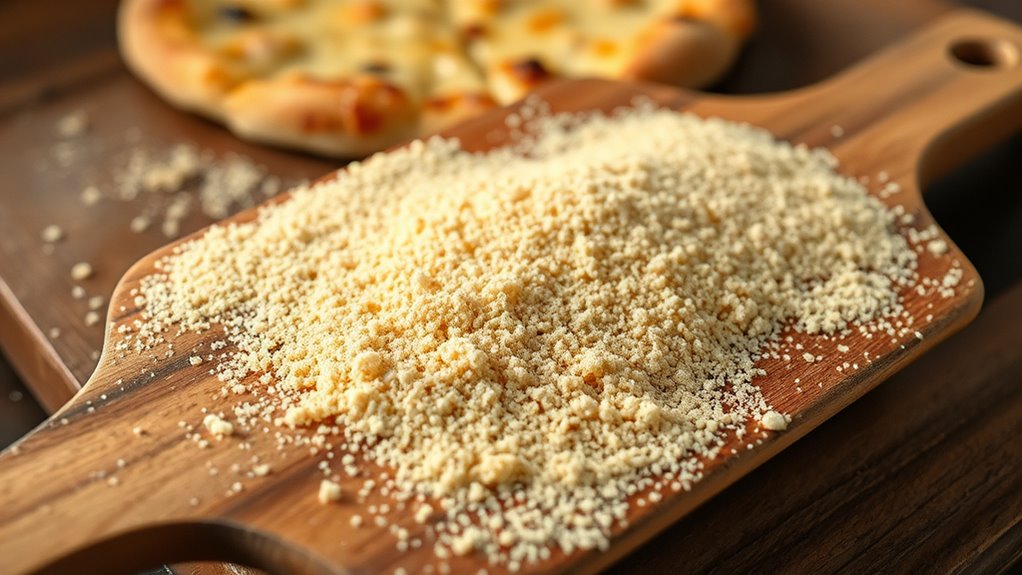

Using semolina to dust your peel burns less than cornmeal because its coarser texture resists burning at high oven temperatures, preventing dark spots on your crust. Semolina’s high-temperature resilience means it’s less likely to produce smoke or burnt flavors, and it creates less residue on your dough. Its gentle grip helps launch your pizza smoothly without the risk of scorching. Keep exploring to discover more tips for better pizza results.
Key Takeaways
- Semolina’s high-temperature resistance prevents burning at oven temps over 500°F, unlike cornmeal.
- Its finer, more uniform particles reduce the risk of scorching and produce less smoke.
- Semolina’s texture minimizes residue, decreasing chances of burnt spots on the crust.
- Unlike cornmeal, semolina maintains flavor integrity during high-heat baking.
- Its stable composition withstands repeated high-heat exposure without degrading or burning.
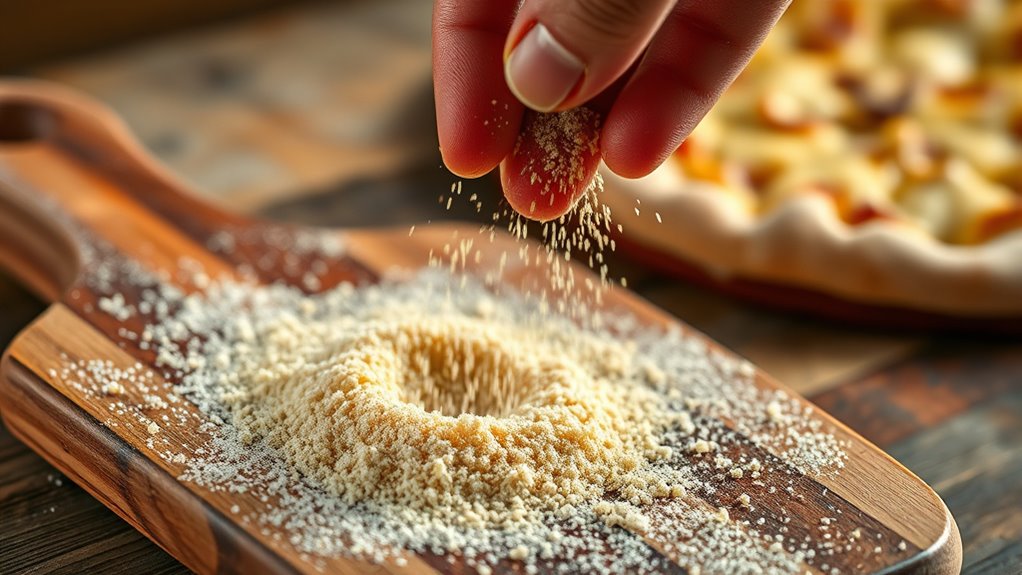
Have you ever wondered what makes slipping dough onto your pizza stone or baking surface smoother? It all comes down to the right dusting agent, which helps prevent sticking and makes launching your pizza effortless. Semolina flour has become a popular choice among pizza enthusiasts because it offers excellent performance without some of the drawbacks associated with traditional options like cornmeal. When you use semolina to dust your peel, you benefit from its unique properties that improve dough handling and baking results.
One of the key factors influencing how well your dough slides is dough elasticity. Properly kneaded dough with good elasticity stretches easily, making it easier to transfer onto a hot baking surface. Dusting with semolina helps maintain this elasticity by reducing friction, so your dough doesn’t tear or stick as you slide it onto the stone. Unlike cornmeal, semolina particles are finer and more uniform, which creates a smoother surface that interacts gently with the dough. This means less resistance during the transfer process, allowing you to achieve a clean and effortless launch every time. When you work with dough that has good elasticity and dust it with semolina, you can better control the shape and thickness of your pizza without worrying about sticking or tearing.
Dough elasticity and semolina dusting ensure smooth, effortless pizza transfers every time.
Another reason semolina excels is its resilience at high baking temperatures. Pizza stones often require temperatures exceeding 500°F (260°C), and some dusting agents tend to burn or create smoke at these intense heat levels. Semolina, however, resists burning because of its composition, which makes it ideal for use in high-temperature ovens. When you dust your peel with semolina, you’re less likely to encounter those unpleasant burnt flavors or smoke that cornmeal can produce when exposed to extreme heat. This not only preserves the flavor of your pizza but also ensures a cleaner oven and better overall baking experience.
Additionally, semolina’s coarse texture provides just enough grip to help you slide the pizza without sticking, yet it’s fine enough not to leave a gritty residue on your crust. This balance means your dough retains its integrity, and your finished pizza looks and tastes perfect. Using semolina also minimizes the risk of excess dusting, so your pizza remains less floury and more appealing visually and flavor-wise.
Using commercial-quality flour in your dusting process can further enhance your results by providing a consistent and reliable surface interaction. In short, dusting your peel with semolina enhances dough elasticity, prevents sticking, and withstands high baking temperatures better than cornmeal. This combination results in a smoother, more reliable transfer process and a better-tasting pizza. Once you switch to semolina, you’ll notice how much easier it is to slide your pizza onto the stone, making the entire baking process more enjoyable and consistent.
Frequently Asked Questions
Can Semolina Be Reused Multiple Times for Dusting?
You can reuse semolina dusting a few times, but it’s best to monitor its effectiveness and cleanliness. Reusing semolina involves careful handling, and you should consider proper semolina disposal practices if it becomes too clumpy or contaminated. To maintain ideal dusting quality, avoid reusing semolina that’s been exposed to moisture or burnt residue. Regularly clean your surface and use fresh semolina when needed to prevent sticking and burning issues.
How Does Semolina Affect the Flavor of the Pizza Crust?
While semolina’s neutral taste might seem unremarkable, it subtly enhances your pizza’s flavor profile. Instead of overpowering, it allows the natural flavors of your crust to shine, adding a gentle texture that complements the taste enhancement. Its presence creates a balanced crust, where the aroma and subtle nutty notes enrich each bite. You’ll notice a more refined, sophisticated taste that elevates your pizza experience without competing with your toppings.
Is Semolina Suitable for Gluten-Free Baking?
Semolina isn’t suitable for gluten-free baking because it contains gluten and may cause cross reactivity in sensitive individuals. For gluten-free alternatives, you should select options like rice flour, chickpea flour, or gluten-free oats. These options won’t trigger gluten cross reactivity and provide a safe, tasty base for your baked goods. Always check labels carefully to ensure your ingredients are truly gluten-free and avoid potential reactions.
Can I Mix Semolina With Other Dusting Agents?
Did you know mixing dusting agents can improve your pizza experience? Yes, you can combine semolina with other dusting agents like cornmeal or flour to optimize peel performance. Mixing dusting agents enhances compatibility and prevents burning. You get better control over sticking and browning. Just make certain the ratios are balanced to avoid a soggy or burnt crust. Experimenting with combinations makes baking more enjoyable and tailored to your preferences.
Does Semolina Improve the Overall Texture of the Pizza Dough?
Yes, semolina improves your pizza dough’s texture by enhancing dough elasticity, making it easier to stretch without tearing. It also contributes to a crisper crust, giving your pizza a delightful crunch. When you use semolina, you’ll notice a smoother dough that handles well and results in a more satisfying, textured crust. Its coarse nature helps create a better balance between flexibility and crispness, elevating your homemade pizza experience.
Conclusion
So, next time you’re preparing your pizza, dust your peel with semolina instead of cornmeal. You’ll notice it burns less and keeps your crust from sticking, making your pizza night smoother than a Victorian tea party. Trust me, your taste buds and your oven will thank you. After all, who wants a smoky kitchen when you’re just trying to channel your inner Neapolitan chef? Give semolina a whirl—your pie deserves a touch of elegance.