

To use a laser thermometer safely and avoid eye exposure, always aim the device away from your eyes and never stare directly into the laser beam, even if it seems weak. Keep the laser pointed only at the target surface, and be cautious around reflective surfaces that can redirect the beam. Wearing safety glasses and maintaining a safe distance help protect you. If you want to learn more about laser safety, there’s more important information you should know.
Key Takeaways
- Always aim the laser away from eyes and never look directly into the beam during use.
- Keep the device pointed only at the target surface, avoiding reflective objects that could redirect the laser.
- Use the thermometer in well-lit environments to clearly see the laser spot and ensure proper aiming.
- Be cautious to prevent laser beam bounce-back from shiny surfaces, which can pose eye injury risks.
- Follow manufacturer safety guidelines and handle the device carefully to minimize accidental eye exposure.
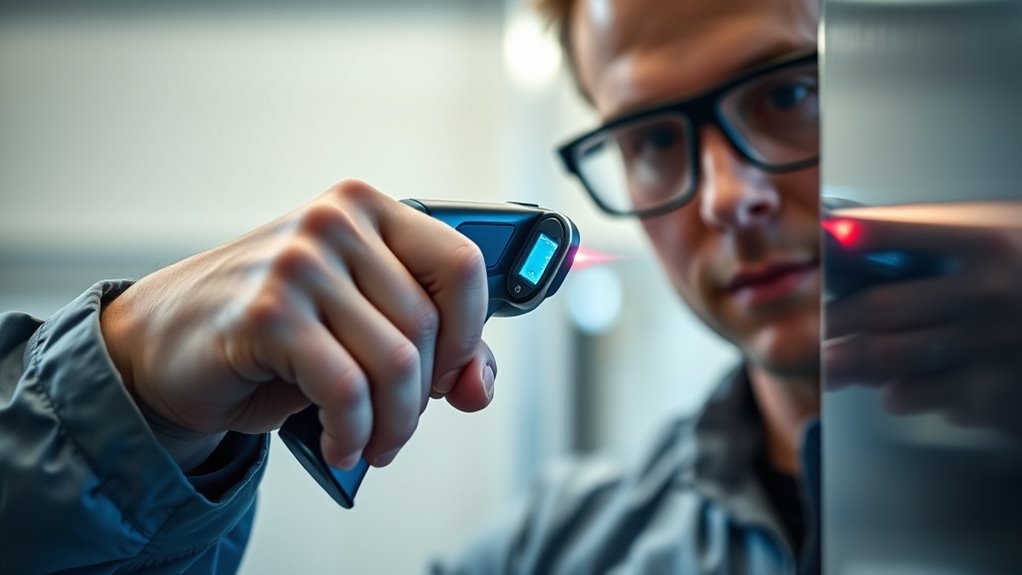
A laser thermometer is a handy tool for quickly measuring temperature without making contact, but you need to use it safely to avoid potential hazards. One of the most important safety considerations when using these devices is preventing eye exposure to the laser beam. The laser used in these thermometers is designed to be precise, often classified as Class 2 or Class 3R lasers, which means they can cause eye damage if stared into directly for an extended period. To guarantee safe operation, always aim the device away from your eyes and never look directly into the laser beam, even if it appears weak. Proper handling and awareness of the laser’s direction are key to avoiding accidental exposure.
Laser safety guidelines are essential to prevent injury, especially since some laser beams can be invisible to the naked eye. When using the thermometer, keep the laser pointing only at the target surface, not toward people or pets. Using the device in well-lit environments can help you see the laser spot more clearly, making it easier to aim accurately without risking accidental eye exposure. Additionally, avoid using the laser near reflective surfaces where the beam could bounce back into your eyes or someone else’s. If you’re working in a shared space, make everyone aware of the laser’s presence and ensure they know not to look directly into the beam.
Infrared accuracy is another vital aspect of using a laser thermometer effectively. These devices rely on infrared sensors to measure temperature from a distance, providing quick readings without contact. To maintain infrared accuracy, keep the lens clean and free of dust, dirt, or smudges, which can distort readings. Follow the manufacturer’s instructions for calibration and proper usage, as environmental factors like ambient temperature, humidity, and surface emissivity can influence the accuracy of your measurements. When taking readings, hold the device steadily, and ensure you’re aiming at the correct spot on the surface to get the most precise result. Be aware that reflective surfaces like shiny metals might give inaccurate readings unless you adjust for emissivity or use a matte coating to improve measurement reliability.
Additionally, understanding the classification of lasers used in these devices helps ensure you’re aware of the potential risks and safety measures needed.

Amazon Basics Silicone Rectangular Baking Mat, Non-Stick, Reusable, Dishwasher Safe, Food Safe, Heat Resistant, 16.5" x 11.6", Beige/Gray, 2-Pack
Baking mat (2-pack) for easy and convenient baking, roasting, or food prep
As an affiliate, we earn on qualifying purchases.
Frequently Asked Questions
Can Laser Thermometers Cause Long-Term Eye Damage?
Laser thermometers can cause laser eye damage if you look directly into the laser beam, but they won’t cause long-term vision effects if used properly. You’re unlikely to experience long-term eye damage or lasting vision problems if you follow safety guidelines. Always avoid direct eye exposure to the laser, and use the device as intended. Proper handling minimizes the risk of laser eye damage and keeps your eyesight safe.
Are There Specific Eye Protection Recommendations for Different Laser Classes?
You should follow protective eyewear guidelines based on laser class distinctions. For Class 1 and 2 lasers, basic safety glasses usually suffice, but for Class 3 and higher, specialized protective eyewear is essential. Always verify the laser’s classification and choose eyewear rated to block the specific wavelength and power. Proper protection minimizes eye risk, ensuring safe operation without long-term damage.
How Should I Store My Laser Thermometer to Prevent Accidental Exposure?
You should store your laser thermometer in a secure, cool, and dry place, away from children and pets. Use designated storage safety areas, like a locked cabinet or drawer, to prevent accidental activation or exposure. Guarantee the thermometer placement is stable, and avoid placing it near other devices that could knock it over. Proper storage safety minimizes risks and keeps your thermometer ready for safe, effective use.
Is It Safe to Use a Laser Thermometer Around Children?
Yes, it’s safe to use a laser thermometer around children if you follow proper safety precautions. Always keep the device pointed away from their eyes to prevent laser exposure, and avoid aiming it at their face. Use the thermometer at a safe distance and supervise children during its use. Child safety is paramount, so educate older children about laser risks and store the device securely when not in use.
What Are the First Steps if I Accidentally Look Into the Laser Beam?
If you accidentally look into a laser beam, act fast—about 90% of eye injuries from laser exposure can be prevented with quick response. Immediately, rinse your eye with clean water for at least 15 minutes to reduce damage. Seek emergency response or medical help promptly, even if you experience no pain, as eye injury may not be immediately apparent. Don’t delay; early treatment is essential for proper recovery.

Amazon Basics Non-Stick Silicone Baking Mat, Food Safe, Dishwasher Safe, Heat Resistant, 16.5" x 11.6", Beige/Gray, Rectangular, 4-Pack
Baking mat (4-pack) for easy and convenient baking, roasting, or food prep
As an affiliate, we earn on qualifying purchases.
Conclusion
To stay safe, always avoid pointing a laser thermometer at your eyes. For instance, imagine measuring a child’s temperature and accidentally shining the laser into their eye; it could cause damage. By following safety guidelines—never aiming the laser at anyone’s eyes and using proper distance—you prevent accidents. Remember, while laser thermometers are handy, respecting their power keeps everyone safe. Stay cautious, and you’ll get accurate readings without risking your or others’ eyesight.

whisrvival 4 Pcs Silicone Baking Mat, Non-Stick Baking Mat, Food Safe Silicone Mats for Baking Cookies, Macarons, Vegetables, 480℉ Heat Resistant (Grey)
2 Half (16.53 x 11.61 inches) & 2 Quarter sheet (11.81'' x 8.26'')Silicone Baking Mats, perfect for keeping...
As an affiliate, we earn on qualifying purchases.

NOAH & PAW Dog Life Jacket, Human Standards Lifejacket Design, Dog Life Vest for Swimming and Boating, 3X Foam Support for Max Floating, Breathable Mesh, Salvavidas para Perros, Size L
Dog Life Vest was tested in oceans, swimming pools, and lakes. While human life jackets use an ISO...
As an affiliate, we earn on qualifying purchases.