Stone temperature really means how hot your stone gets to create that perfect crust and even cook your toppings. When the stone is at the right heat—around 500°F–550°F—you’ll get a crisp crust without burning the bottom or leaving the inside undercooked. If your oven isn’t accurate, your results can vary. Monitoring and adjusting the heat can make a big difference. Keep going to discover how mastering stone temperature can elevate your backyard pizza game.
Key Takeaways
- The stone’s temperature directly influences crust crispiness and even cooking of toppings.
- Proper temperature ensures dough cooks thoroughly without burning or sogginess.
- Monitoring and adjusting stone temperature leads to consistent, high-quality backyard pizzas.
- Accurate temperature control prevents hot spots and uneven baking.
- Achieving optimal stone temperature mimics professional oven conditions for authentic results.
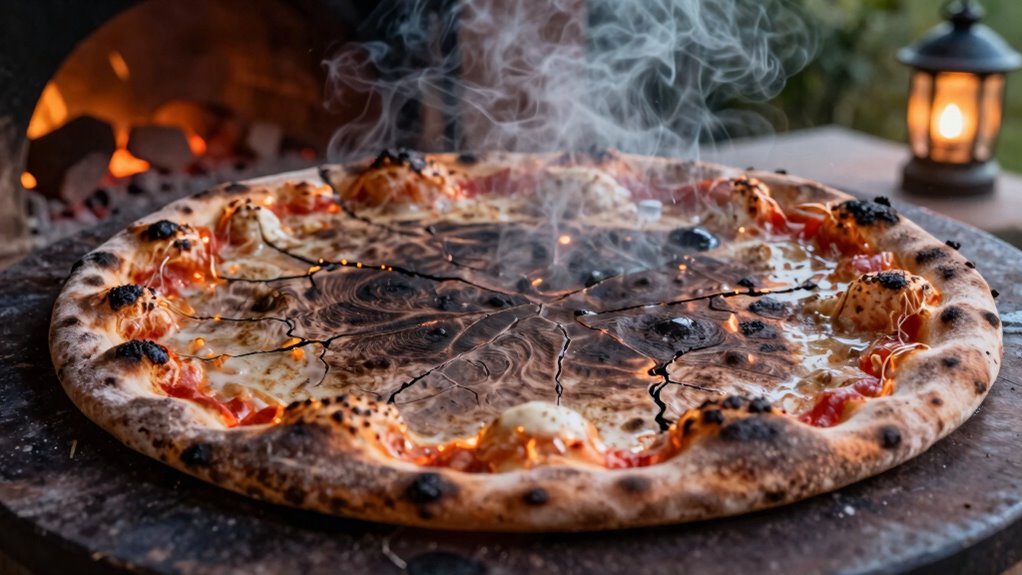
When it comes to making the perfect backyard pizza, understanding your stone’s temperature is essential. The temperature of your pizza stone directly impacts how your pizza dough cooks and develops that desirable crispy crust. If your stone isn’t hot enough, your pizza dough might stay soggy or undercooked, especially around the edges. Conversely, if it’s too hot, you risk burning the bottom before the toppings are properly cooked. To get it just right, you need to know how to gauge and control your stone’s temperature, which starts with proper oven calibration.
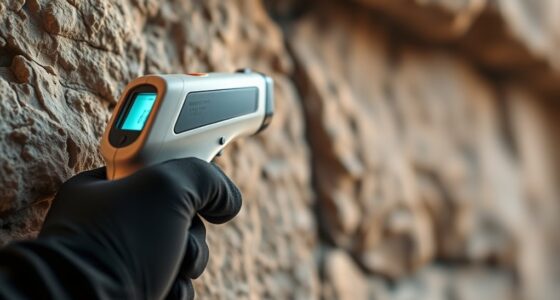
Oven calibration is crucial because most home ovens aren’t perfectly accurate in their temperature readings. What the dial says and what the oven actually reaches can vary significantly. When using a pizza stone, this discrepancy can throw off your entire cooking process. To ensure your oven and stone are working together, you should use an oven thermometer to verify the actual temperature inside. Place the thermometer on the stone and preheat your oven to your target temperature, typically between 500°F and 550°F for authentic pizza. If the thermometer reads lower or higher, adjust your oven’s settings accordingly, so your oven reaches that precise temperature. This calibration helps you produce consistent results and avoid surprises when cooking your pizza.
Knowing your stone’s temperature also influences how you prepare your pizza dough. Pizza dough benefits from a hot surface because it quickly crisps up and creates that ideal texture. When the stone is at the right temperature, it acts almost like a mini oven within your oven, cooking the dough quickly and evenly. Additionally, using a properly calibrated oven ensures that the temperature control is accurate, making it easier to replicate perfect results each time. Properly understanding and managing your oven’s heat also helps prevent hot spots that can cause uneven cooking. If your dough is cold or the stone isn’t hot enough, it can lead to uneven cooking or a doughy center. A properly heated stone not only improves browning but also helps in preventing sticking, ensuring your pizza releases easily once cooked. Furthermore, understanding the thermal mass of your stone can help you better predict how long it will take to reach the desired temperature and maintain it during cooking.
Getting comfortable with your oven calibration and understanding your stone’s temperature can dramatically improve your backyard pizza game. It’s not just about setting the right temperature; it’s about knowing precisely how hot your stone is and how that heat interacts with your pizza dough. This knowledge helps you adjust your cooking time, dough thickness, and toppings to achieve that perfect balance. With consistency and practice, you’ll find that mastering stone temperature means better crusts, more evenly cooked toppings, and that satisfying crispy texture every time you fire up your backyard pizza oven.

Pizza Oven Laser Thermometer Gun for Cooking, OnniOne Infrared Thermometer for Blackstone Griddle, -58℉~1022℉ Non Contact Grill Temperature Gun with Carrying Storage Bag, LCD Backlit (NOT for Human)
【NOT FOR HUMAN】THIS IS NOT A MEDICAL THERMOMETER,DO NOT USE TO TAKE TEMPERATURE OF BODY OR FOREHEAD.OnniOne digital…
As an affiliate, we earn on qualifying purchases.
As an affiliate, we earn on qualifying purchases.
Frequently Asked Questions
How Does Ambient Weather Affect Stone Temperature?
Ambient weather greatly affects your stone temperature through humidity effects and thermal conductivity. High humidity can slow down the stone’s heat absorption, making it harder to reach ideal pizza temperatures. Cooler or damp weather reduces thermal conductivity, causing the stone to heat unevenly. Conversely, dry, warm conditions help the stone heat up faster and maintain consistent temperatures. To get the best results, monitor weather conditions and adjust your heating time accordingly.
What’s the Ideal Stone Temperature for Different Pizza Styles?
For perfect pizza crust and ideal cooking time, aim for a stone temperature of around 750-800°F for Neapolitan-style pizzas, which need quick, high-heat cooking. For thicker, pan-style or deep-dish pizzas, a slightly lower temperature of 650-700°F works better, ensuring thorough cooking without burning the crust. Adjust your stone temperature based on your pizza style to get that ideal balance of crispness and doneness.
Can Temperature Fluctuations Damage My Pizza Stone?
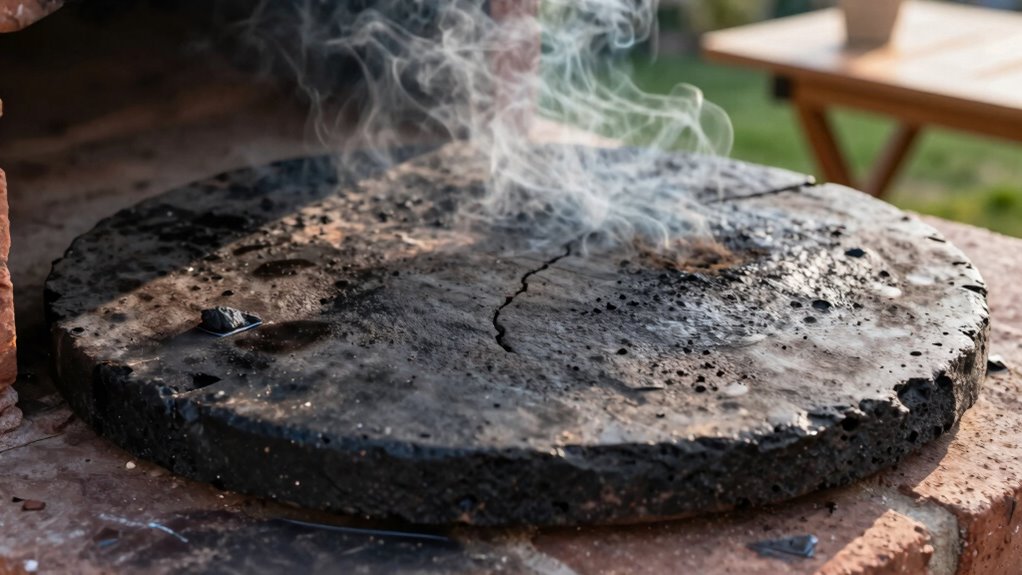
Temperature fluctuations can damage your pizza stone if they’re extreme or sudden, affecting its durability. Rapid changes cause stress, leading to cracks or breakage. To prevent this, guarantee proper temperature calibration before cooking. Gradually heating and cooling your stone helps maintain its integrity, and avoiding drastic temperature shifts preserves its longevity and performance, so your backyard pizza adventures stay delicious and trouble-free.
How Long Does It Take for a Stone to Reach Optimal Temperature?
To achieve perfect pizza, give your stone about 30 to 45 minutes to warm up, depending on your oven and stone thickness. This allows the cooking techniques of proper heat retention to work their magic, ensuring an even, crispy crust. Patience is key, as a well-heated stone creates the ideal environment for baking. Rushing this step can prevent your pizza from reaching that delicious, restaurant-quality finish.
Is There a Difference Between Stone Temperature and Oven Temperature?
Yes, there’s a difference between stone temperature and oven temperature. Your oven might be set to a certain temperature, but the stone’s temperature can vary due to factors like cooking techniques and how well it’s calibrated. To get perfect pizza, you need to monitor and adjust the stone’s temperature separately, ensuring it heats evenly and reaches the ideal temperature for baking. Proper temperature calibration helps you achieve consistent, delicious results.

Etekcity Infrared Thermometer Laser Temperature Gun 774
𝐕𝐞𝐫𝐬𝐚𝐭𝐢𝐥𝐞 𝐓𝐨𝐨𝐥𝐬: Infrared technology allows you to measure various objects at home and outdoors; Use it for 𝒎𝒆𝒂𝒕,…
As an affiliate, we earn on qualifying purchases.
As an affiliate, we earn on qualifying purchases.
Conclusion
Understanding stone temperature is like tuning a finely crafted instrument — it’s essential for hitting the perfect note in your backyard pizza. When your stone heats evenly, it guarantees a crisp crust and perfectly melted cheese, transforming your outdoor cooking into a true culinary symphony. So, keep an eye on that temperature gauge, and let your pizza sing with flavor. After all, a well-heated stone is the secret ingredient that turns a simple bake into a memorable feast.

HANS GRILL PIZZA STONE | Rectangular Pizza Stone For Oven Baking & BBQ Grilling With Free Wooden Peel | Extra Large 15 x 12" Inch Durable Cordierite Cooking Stone.
PIZZA STONE FOR GRILL AND OVEN: Our very best pizza stone formulated from toughened porous cordierite stone. FDA…
As an affiliate, we earn on qualifying purchases.
As an affiliate, we earn on qualifying purchases.

Ooni Digital Infrared Thermometer Gun – Instand Read Digital Thermometer with LCD Display, for Indoor and Outdoor Cooking, Barbecue Laser Thermometer
ACCURATE: The thermometer comes calibrated specifically for the cordierite baking stones used inside Ooni ovens, but an adjustable…
As an affiliate, we earn on qualifying purchases.
As an affiliate, we earn on qualifying purchases.