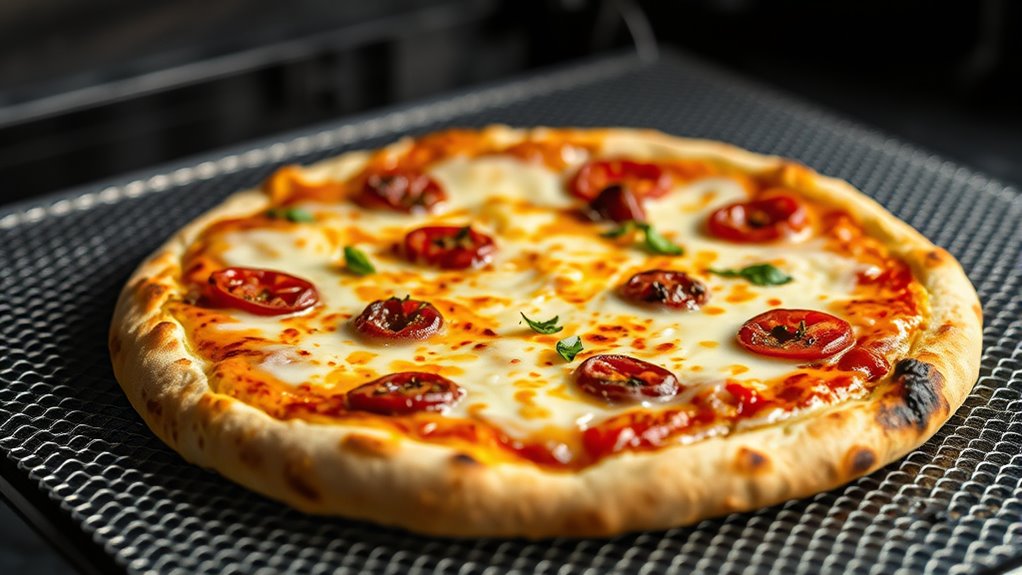
Use pizza screens when you want a crisp, evenly baked crust. They’re perfect for high-hydration doughs and when you aim for a professional-style result at home. Screens help promote better heat circulation, prevent sticking, and facilitate moisture escape, reducing sogginess. This leads to a crunchier, more evenly browned crust with a sturdy base. If you want to improve your pizza baking technique, you’ll discover helpful tips for using pizza screens effectively.
Key Takeaways
- Use pizza screens when aiming for a crispy, evenly browned crust during baking.
- Employ screens with high-hydration doughs to prevent sogginess and promote crispness.
- Choose pizza screens to improve heat circulation and achieve professional-style crusts.
- Use screens to facilitate moisture escape, reducing crust sogginess and enhancing crunch.
- Opt for pizza screens when baking at home to replicate bakery-quality, crisp crusts efficiently.
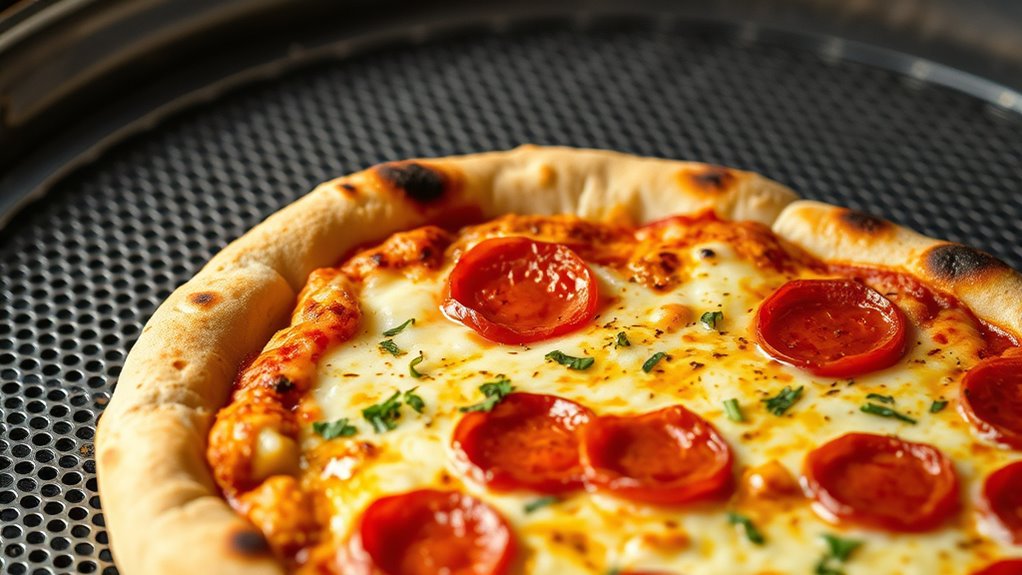
Using pizza screens can considerably improve your baking results by ensuring even heat distribution and preventing sticking. When you bake on a screen, you’re employing a simple yet effective tool that enhances your baking techniques, especially if you’re aiming for a specific crust texture. Unlike traditional baking surfaces, pizza screens allow hot air to circulate freely around the dough, promoting uniform baking from all sides. This airflow helps you achieve a crisper, more evenly browned crust without the risk of sogginess or uneven spots.
Pizza screens ensure even heat, prevent sticking, and promote crispy, evenly browned crusts for perfect baking results.
One of the main reasons to use a pizza screen is its ability to produce a crisp crust. When you bake directly on a solid surface, moisture can become trapped underneath, leading to a softer, sometimes chewy crust. With a screen, moisture escapes more efficiently, resulting in a drier, crunchier bottom. This is particularly beneficial if you prefer a pizzeria-style pizza with a sturdy yet crisp foundation. The open design encourages the crust to develop a desirable texture, giving you that satisfying crunch with every bite.
Your baking techniques will also benefit from incorporating pizza screens into your routine. They are versatile tools that can help you replicate professional results at home. For instance, if you’re working with high-hydration doughs or aiming for a specific crust texture, a screen provides the perfect environment for even baking. It’s especially useful for achieving the ideal balance between a crispy exterior and a tender interior. Plus, because screens heat quickly and evenly, they reduce baking times slightly, which can help you better control your oven’s heat and avoid overbaking.
Using pizza screens also simplifies cleanup. Since the dough doesn’t stick to the surface, you won’t have to scrub off baked-on residue. This saves you time and keeps your baking area tidy. Additionally, they are durable and easy to store, making them a practical addition to your baking tools.
Frequently Asked Questions
Can Pizza Screens Be Reused Multiple Times Without Losing Quality?
Yes, you can reuse pizza screens multiple times without losing quality, but durability concerns depend on the material variation. Metal screens, especially aluminum, tend to be more durable and withstand frequent use, while non-stick or coated varieties might wear out faster. To guarantee longevity, clean them thoroughly and avoid abrasive tools. Proper maintenance helps maintain the screen’s performance, so your crispy crust stays consistent with each bake.
Are Pizza Screens Suitable for All Types of Pizza Dough?
Did you know that 65% of pizza bakers find pizza screens versatile? You’ll find that pizza screens are suitable for most pizza doughs, especially when dough elasticity is high and you need a baking surface compatible with quick heat transfer. However, very thick or highly hydrated doughs might not perform well on screens, as they could stick or not crisp evenly. Always consider your dough type for the best results.
How Do Pizza Screens Affect Baking Time and Temperature?
Pizza screens can slightly reduce baking time and may require temperature adjustments. Because they promote even heat distribution, your crust crisps up faster, so you might need to shorten the baking time by a minute or two. Keep an eye on the oven temperature, as you may find it beneficial to lower it slightly to prevent over-baking. Modifying these factors ensures your pizza achieves the perfect crisp crust without burning.
Are There Specific Cleaning Methods Recommended for Pizza Screens?
To keep your pizza screens in top shape, use gentle cleaning techniques like hand washing with warm, soapy water and a soft brush to remove residue. Avoid harsh abrasives that can damage the surface. For maintenance tips, regularly inspect for warping or rust, and dry thoroughly after washing. You can also occasionally scrub with baking soda for stubborn spots, ensuring your screens stay clean and durable for perfect crispy crusts every time.
Can Pizza Screens Be Used in Convection Ovens or Only Standard Ovens?
You can definitely use pizza screens in convection ovens, as they’re versatile tools for achieving a crisp crust. Just keep in mind convection oven compatibility, and you might need to make slight oven temperature adjustments for ideal results. The screens promote even heat distribution, so whether in a standard or convection oven, they help you bake delicious, crispy pizzas with ease. Just monitor your bake and tweak temperatures as needed.
Conclusion
So, next time you’re craving a perfectly crispy crust, don’t hesitate to reach for your pizza screens. They’re like the secret weapon in your kitchen arsenal, turning ordinary pizzas into crispy, golden masterpieces. Whether you’re baking at home or in a busy pizzeria, using a pizza screen can make all the difference — transforming your pizza game faster than you can say “delicious.” Trust me, once you go screen, you’ll never go back!