To calibrate your oven thermometer and guarantee accuracy, start by testing it in boiling water at sea level; it should read 212°F. Alternatively, submerge it in ice water, expecting around 32°F. If it doesn’t, you can adjust or replace the thermometer for precise results. Regular calibration helps maintain consistent baking outcomes. Keep going to discover more tips on keeping your thermometer accurately tuned for perfect cooking every time.

Get baking supplies delivered free with Prime
- Fast, free delivery on millions of items
- Prime Video, Amazon Music and more included
- Member-only deals all year
Key Takeaways
- Use boiling water (212°F/100°C at sea level) to test if the thermometer reads accurately.
- Submerge the thermometer without touching container sides or bottom during testing.
- Compare the reading to the expected temperature; adjust if it deviates significantly.
- Use ice water (around 32°F/0°C) for additional calibration checks, especially for low-temperature accuracy.
- Regularly recalibrate your oven thermometer to maintain precise temperature readings and consistent baking results.
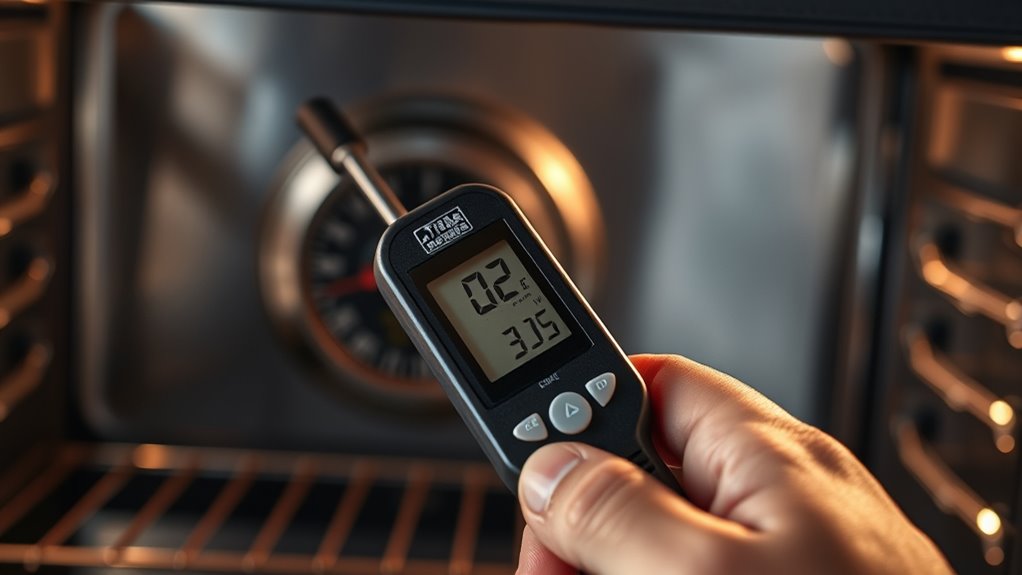
A properly calibrated oven thermometer is vital for ensuring your baked goods come out just right, but many people overlook the importance of checking and adjusting theirs. If your thermometer isn’t accurate, your oven’s baking temperature could be off, leading to undercooked or burnt results. Ensuring thermometer accuracy helps you control your cooking process precisely, reducing guesswork and improving consistency with every bake. The first step is to test your oven thermometer against a reliable temperature source, like boiling water or ice water. This simple test reveals whether your thermometer reads correctly or needs calibration.
When you test your oven thermometer, start by filling a pot with water and bringing it to a rolling boil. The boiling point of water at sea level should be 212°F (100°C). Insert your oven thermometer into the boiling water, making sure it doesn’t touch the sides or bottom of the pot. Wait a few minutes for the temperature to stabilize, then compare the reading. If it shows below or above 212°F, you know it’s not accurate. Similarly, you can test with ice water by filling a container with ice and a small amount of water, then submerging the thermometer. The ideal reading should be around 32°F (0°C). If it’s off, adjustments are necessary to maintain accurate baking temperature control. Regular calibration can also help maintain measurement accuracy over time.
oven thermometer calibration kit
As an affiliate, we earn on qualifying purchases.
As an affiliate, we earn on qualifying purchases.
Frequently Asked Questions
How Often Should I Calibrate My Oven Thermometer?
You should calibrate your oven thermometer at least once a year, or more often if you notice inconsistent cooking results. Use reliable measuring techniques, like placing the thermometer in hot water or in the oven at a known temperature, to verify its accuracy. Keep calibration tools handy, such as a standard thermometer, to verify readings. Regular calibration ensures your oven’s temperature remains precise, helping you cook perfectly every time.
Can I Calibrate Digital and Analog Thermometers the Same Way?
Think of your thermometers as siblings with different personalities. You can’t treat digital calibration and analog adjustment exactly the same way. Digital thermometers often have a calibration setting or button, making adjustments straightforward. Analog thermometers usually require a screw or dial adjustment at the back. While the goal is the same—accuracy—the methods differ. Always follow the manufacturer’s instructions for each type to guarantee precise readings.
What Signs Indicate My Oven Thermometer Needs Calibration?
If you notice temperature inconsistencies or a faulty display on your oven thermometer, it’s a sign you need calibration. Inaccurate readings can cause your food to undercook or burn. Check if the thermometer’s display is faulty or if it shows different temperatures than your oven’s setting. These issues suggest calibration is needed to make sure your thermometer provides reliable, accurate readings for perfect cooking results every time.
Does Calibration Affect the Lifespan of My Thermometer?
Calibration doesn’t directly impact your thermometer’s durability, but it can influence its accuracy over time. When you calibrate your oven thermometer regularly, you help maintain its precision, preventing unnecessary strain that might cause damage. Proper calibration ensures consistent performance, extending its lifespan. If you ignore calibration, minor inaccuracies could lead to repeated adjustments, potentially affecting the thermometer’s long-term durability and making calibration impact a key factor in preserving your device.
Are Professional Calibration Services Necessary for Home Use?
A stitch in time saves nine, and for home improvement, accuracy is crucial. You don’t need professional calibration services for your oven thermometer if you regularly check its accuracy with boiling water or ice. While experts can ensure perfect precision, maintaining kitchen accuracy with simple at-home tests keeps your appliance reliable and your cooking spot-on. Save money and trust your own skills to keep your kitchen running smoothly.
digital oven thermometer with calibration
As an affiliate, we earn on qualifying purchases.
As an affiliate, we earn on qualifying purchases.
Conclusion
Now that you know how to calibrate your oven thermometer, you’ll guarantee every pie, roast, and soufflé turns out perfect. Don’t forget, a well-calibrated thermometer is your trusty partner in the kitchen, much like a good compass on a voyage. With just a few simple steps, you can avoid any culinary blunders and keep your cooking on point. So, go ahead—trust your calibrated tool and cook with confidence, just like the pros of yore.
analog oven thermometer adjustment
As an affiliate, we earn on qualifying purchases.
As an affiliate, we earn on qualifying purchases.
boiling water test oven thermometer
As an affiliate, we earn on qualifying purchases.
As an affiliate, we earn on qualifying purchases.
Halloween Picks
halloween
As an affiliate, we earn on qualifying purchases.