To cut and serve like a pro, choose the right knife for each task and keep it sharp for precise, safe cuts. Use proper techniques like curling your fingers and cutting on stable surfaces. Prepare ingredients evenly for consistent results, and practice different cuts to improve your skills. Always store and maintain your knives properly to prolong their sharpness and functionality. Keep learning these techniques, and you’ll master professional presentation and efficiency every time.
Key Takeaways
- Choose the right knife for each task and keep it sharp for clean, safe cuts.
- Use proper grip and cutting techniques, keeping fingers curled and cutting on stable surfaces.
- Store knives safely in blocks or magnetic strips to maintain sharpness and prevent accidents.
- Prepare ingredients uniformly and follow safe handling practices for consistent, professional results.
- Maintain your knives regularly and incorporate aesthetic presentation to enhance both safety and visual appeal.
Choosing the Right Knife for Every Task
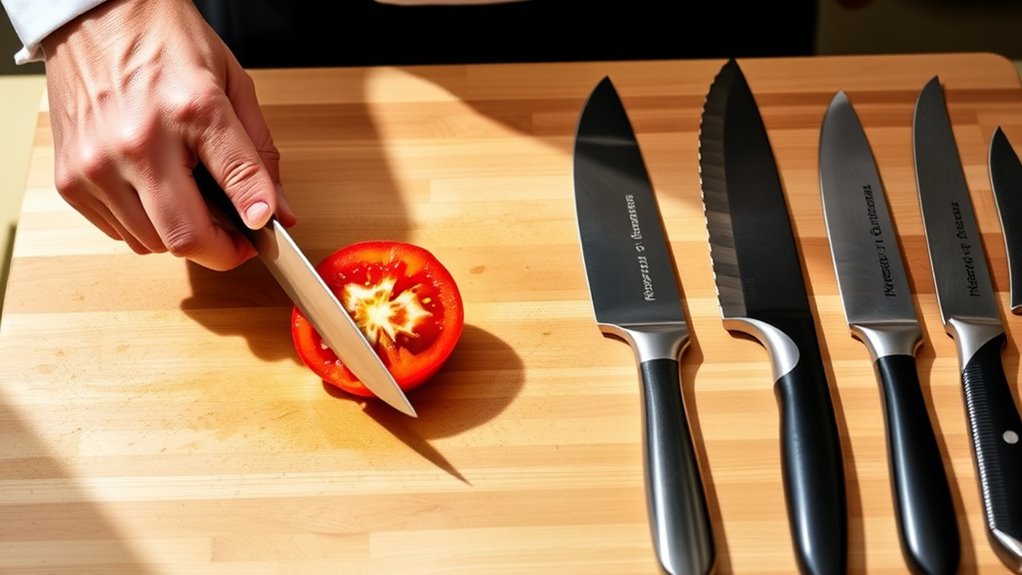
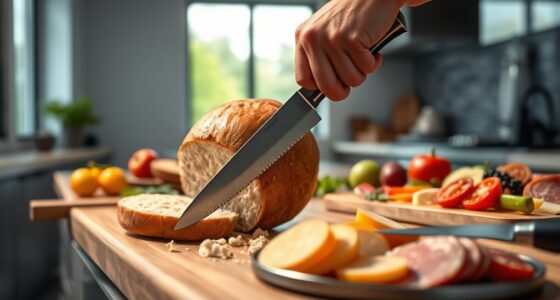
Choosing the right knife can make all the difference in how efficiently and safely you handle food prep. When selecting a knife, consider its purpose—paring knives for peeling, chef’s knives for chopping, and serrated knives for bread. Proper knife sharpening keeps blades sharp, making cuts cleaner and safer, so regularly maintain your knives for peak performance. Equally important is good knife storage; storing knives correctly—preferably in a knife block or on a magnetic strip—prevents dulling and accidental injuries. Avoid tossing knives into drawers where blades can chip or become dull. A well-chosen, sharp, and properly stored knife set ensures you work more precisely, reduces fatigue, and keeps your kitchen safer. Regularly inspecting and maintaining cutting tools extends their lifespan and ensures optimal safety. Invest in the right tools, and you’ll handle every task with confidence.
Mastering Basic Cutting Techniques

You need a proper knife grip to control your cuts and stay safe. Using uniform cutting methods guarantees even pieces and professional results. Mastering these basics builds confidence and improves your overall technique. Additionally, understanding proper technique can help prevent accidents and ensure a smoother process.
Proper Knife Grip
Mastering a proper knife grip is essential for safe and efficient cutting. An ergonomic grip helps reduce fatigue and increases control. To achieve this, focus on thumb placement: your thumb should rest lightly on the side of the blade or the handle, providing stability. Here are key tips:
- Grip the handle firmly but comfortably, avoiding excessive tension.
- Position your thumb on the side of the blade or handle for better leverage.
- Keep your fingers curled inward, guiding the knife without risking cuts.
This grip allows for precise control and smooth cuts. Remember, a secure yet relaxed hold minimizes slipping and maximizes safety. Practice maintaining an ergonomic grip with correct thumb placement to elevate your cutting skills like a pro.
Uniform Cutting Methods
To achieve consistent and efficient cuts, adopting uniform cutting methods is essential. Start by choosing the right cutting board—preferably one that’s stable and suited to the type of food you’re preparing. A good cutting board minimizes slipping and provides a smooth surface for safe cuts. Keep your knife sharp through regular knife sharpening; a sharp blade ensures cleaner cuts and reduces the risk of accidents. Use uniform techniques, such as slicing, julienning, or dicing, to ensure even cooking and presentation. Consistency in your cutting style helps with portion control and enhances dish aesthetics. Practice these techniques regularly to build muscle memory, making your prep faster and more precise. Mastering these basic methods sets a strong foundation for professional-level cutting and serving. Additionally, understanding cybersecurity vulnerabilities related to kitchen equipment or digital recipes can help protect your culinary data.
Proper Knife Handling and Safety Tips
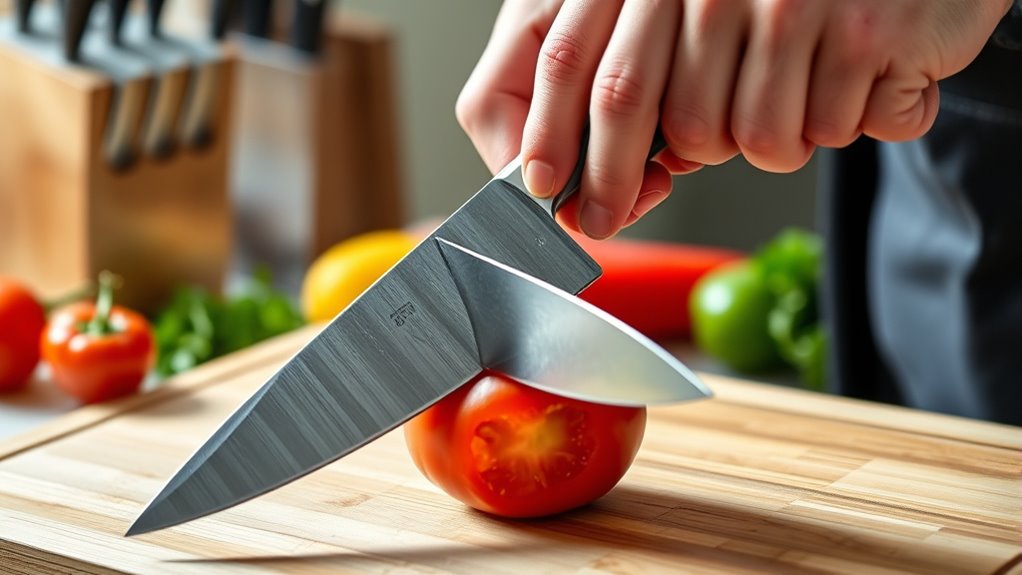
Handling knives properly is essential for safe and efficient cooking. Good knife safety starts with understanding handling techniques that prevent accidents. Always keep your fingers tucked under your knuckles to avoid cuts and maintain control. Use a firm grip on the handle, avoiding excessive force that can cause slips. Proper knife handling techniques are crucial for preventing injuries and ensuring safe food preparation. Here are three key tips:
- Keep your blades sharp; dull knives require more force and are more dangerous.
- Cut on a stable, non-slip surface to prevent slips.
- When not in use, store knives safely to avoid accidental cuts.
Preparing Ingredients for Consistent Results
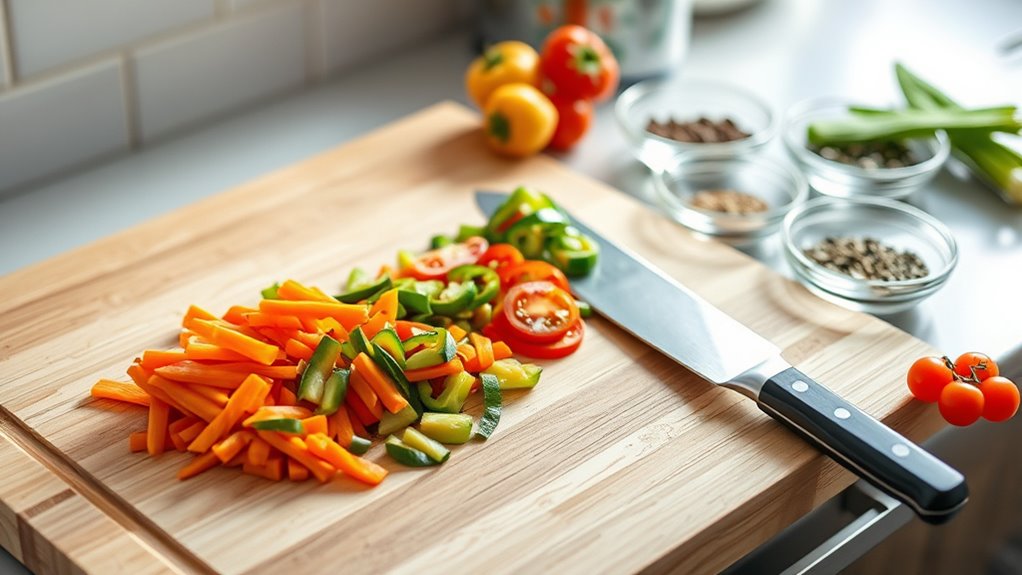
Preparing your ingredients properly sets the foundation for consistent, professional results. Effective ingredient prep guarantees that each piece cooks evenly and that flavors balance perfectly. Start by washing and drying produce thoroughly. Use uniform cuts to promote even cooking and improve presentation. For flavor balancing, measure ingredients accurately and consider pre-seasoning where needed. Use this simple table to guide your prep:
| Step | Tip |
|---|---|
| Washing & drying | Remove dirt, excess moisture for better flavor |
| Uniform cutting | Ensures even cooking and consistent texture |
| Measuring ingredients | Achieves balanced flavors and proper texture |
| Pre-seasoning | Enhances overall flavor without overpowering |
Additionally, paying attention to food safety during prep can prevent contamination and ensure your dishes are both delicious and safe to eat.
Cutting Vegetables and Fruits With Precision
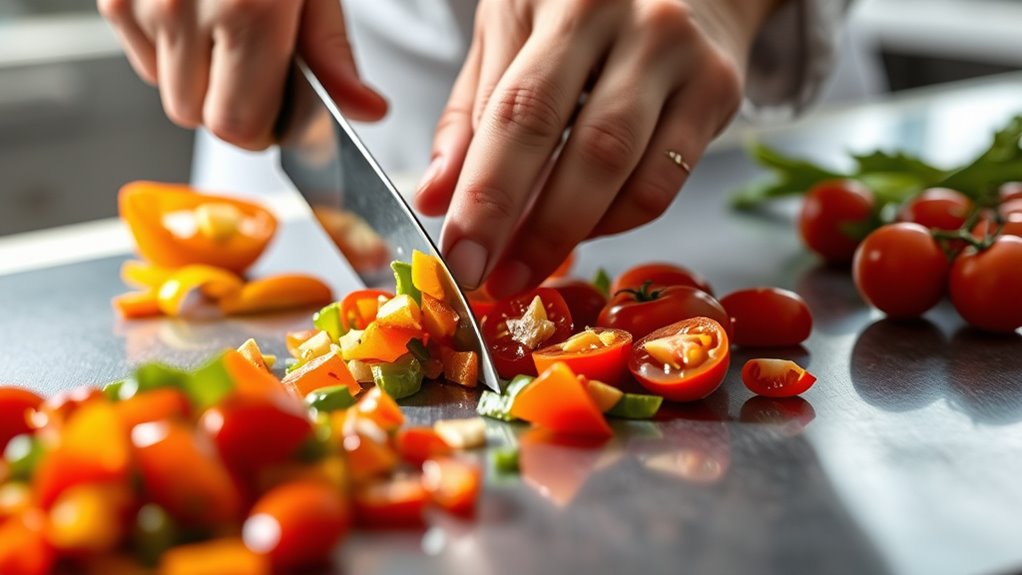
Mastering precise cuts is essential for even cooking and professional presentation. When you cut vegetables and fruits carefully, you ensure they cook evenly and look appealing on the plate. To achieve this, focus on techniques like making uniform vegetable julienne strips, perfect for stir-fries or salads, and creating delicate fruit chiffonade for garnish or salads. Incorporating consistent cutting techniques can also enhance your understanding of culinary science, leading to better flavor and texture outcomes.
Here are some key tips:
- Use a sharp knife to maintain control and precision.
- Keep your fingers tucked to avoid accidents and ensure consistent thickness.
- Practice different cuts regularly to develop muscle memory and speed.
Slicing Meats and Proteins Efficiently

Slicing meats and proteins efficiently requires a steady hand and the right technique. First, rest the meat after cooking to let the juices settle, guaranteeing cleaner cuts. When slicing, aim for even, thin slices, cutting against the grain to improve tenderness. Pay attention to meat marbling; well-marbled cuts are juicier and easier to slice smoothly. For tougher proteins, marinating them beforehand softens the tissue, making slicing more manageable. Use a sharp knife to prevent tearing or shredding, and control your pace to maintain precision. Properly sliced proteins not only look professional but also ensure even portioning and better mouthfeel. Additionally, choosing the appropriate cutting technique can significantly improve your efficiency and the quality of your slices. With practice, you’ll become adept at slicing various meats and proteins, maximizing flavor and presentation in every dish.
Plating and Serving for Visual Appeal

To create a visually appealing plate, focus on balance and contrast in your arrangement. Good food presentation catches the eye and enhances the dining experience. Use color coordination by pairing vibrant vegetables with neutral proteins to make each component pop. Keep your plating clean and uncluttered, allowing each ingredient to stand out. Here are three tips to elevate your presentation:
- Arrange items symmetrically or thoughtfully asymmetrically for visual interest.
- Use different textures and shapes to add depth and contrast.
- Garnish sparingly with herbs or edible flowers for a finishing touch. Consider incorporating elements of visual appeal to further enhance your presentation.]
Maintenance and Care of Your Knives
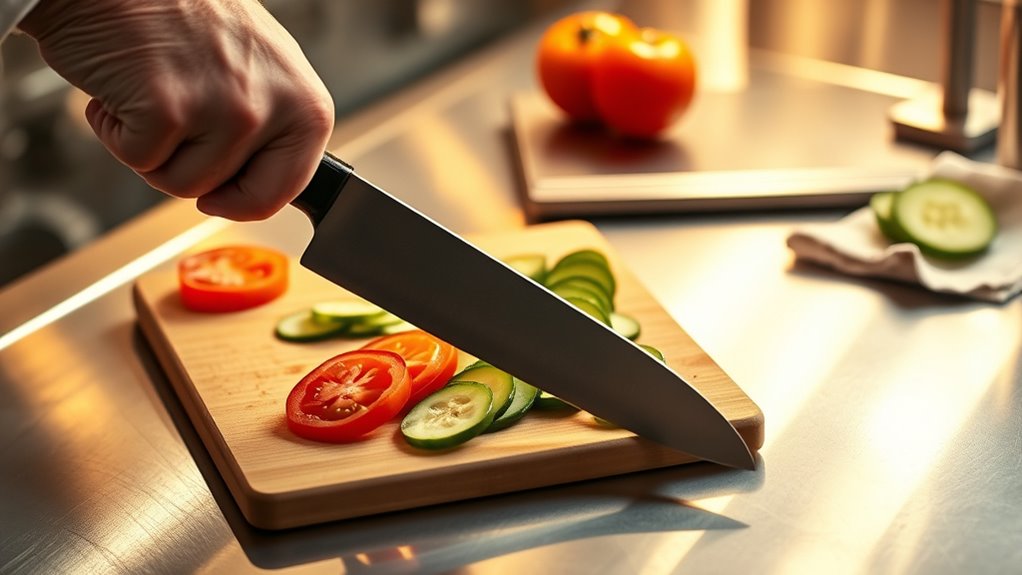
Proper maintenance and care are essential to keep your knives sharp, safe, and performing at their best. Regular knife sharpening ensures your blades cut smoothly, reducing effort and preventing accidents. Proper knife storage protects your edges and keeps your workspace safe. Avoid tossing knives into drawers; instead, use a knife block or magnetic strip. This prevents dulling and potential injuries. Remember to hand wash and dry your knives immediately after use to prevent corrosion. Use the following table to remind yourself of the emotional impact of proper care:
| Care Tip | Emotional Benefit |
|---|---|
| Regular knife sharpening | Confidence in your precise cuts |
| Safe knife storage | Peace of mind and safety |
| Hand washing & drying | Pride in maintaining quality |
| Avoiding drawers | Comfort in knowing your knives are protected |
Additionally, choosing the right best laundry detergents can help maintain the sharpness of your knives by preventing residue buildup that could affect their edges.
Frequently Asked Questions
How Often Should I Sharpen My Knives for Optimal Performance?
You should sharpen your knives every 1 to 3 months for ideal performance, depending on how often you use them. Regular knife maintenance keeps your blades sharp and safe, making cutting easier and safer. If you notice your knives feeling dull or requiring more effort, it’s time for sharpening. By maintaining a consistent sharpening frequency, you ensure your knives stay in top shape, enhancing your efficiency and safety in the kitchen.
What Are Common Mistakes to Avoid When Using a Chef’s Knife?
When using a chef’s knife, avoid common mistakes like improper knife safety and a poor grip. Always hold the knife with a proper grip to maintain control and prevent slips. Keep your fingers curled away from the blade to avoid cuts, and never rush your cuts. Stay focused, use a stable cutting surface, and make sure your knife is sharp to reduce the risk of accidents. These habits keep you safe and improve your cutting skills.
How Can I Tell if a Knife Is Suitable for My Skill Level?
You’ll know a knife suits your skill level when it feels like an extension of your hand—light, balanced, not a wrestling match. Check the knife material; softer steels are forgiving for beginners, while harder steels require precision. Handle comfort is key—if it’s ergonomic and fits your grip, you’ll cut confidently without fatigue. An unsuitable knife feels awkward or heavy, making you hesitant; a good fit boosts your skills instantly.
What Are the Best Storage Options to Prevent Knife Damage?
To prevent knife damage, you should prioritize proper knife storage. Use a knife block, magnetic strip, or blade guards to keep blades protected from scratches and dulling. Avoid tossing knives in drawers, as this risks blades hitting other utensils. Good knife storage guarantees blade protection, maintains sharpness, and extends your knife’s lifespan. Choose a storage method that suits your space and keeps your knives easily accessible and safe.
How Do I Handle Tricky Ingredients Like Hard Cheeses or Delicate Herbs?
When handling tricky ingredients like hard cheeses or delicate herbs, you should use proper techniques. For cheese grating, use a sharp grater and apply steady pressure to avoid slipping. For herb delicacy, gently chop or tear leaves to preserve flavor and appearance. Always use a sharp knife to prevent crushing herbs, and handle cheese carefully to avoid crumbling. These steps make sure your ingredients stay intact and look appetizing.
Conclusion
By mastering these techniques, you’ll transform everyday cooking into an art form. Think of your knives as your trusted tools—each cut bringing you closer to culinary perfection. With practice, you’ll slice, dice, and serve with confidence, turning ordinary ingredients into extraordinary dishes. Remember, every chef was once a beginner. So, sharpen your skills, care for your tools, and let your passion cut through the noise—because great food starts with great technique.