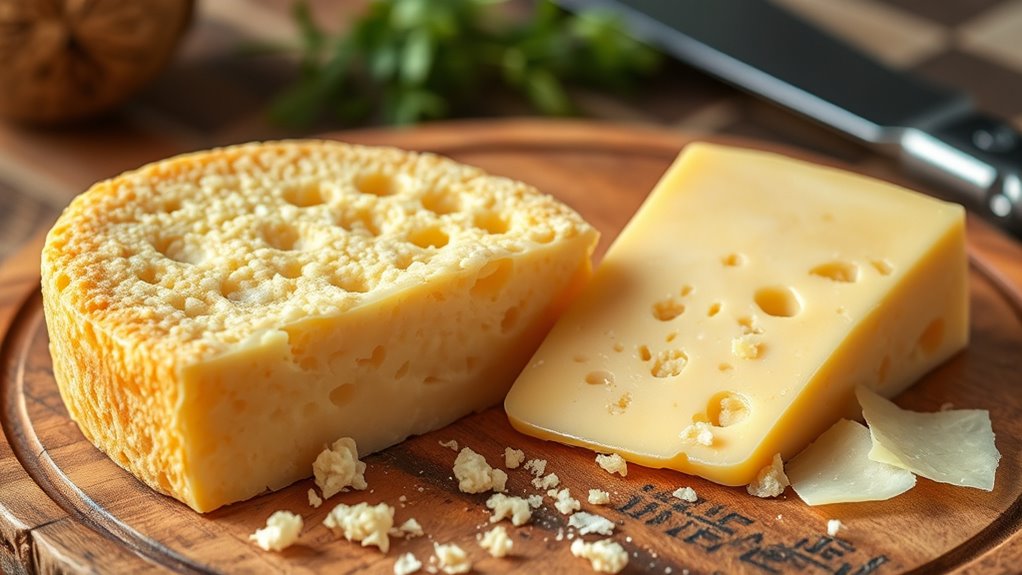

Using hard cheeses like Grana Padano and Parmesan adds bold, complex flavors and rich textures to your dishes. You can grate or shave them over pasta, salads, or soups for a savory boost, or enjoy them on cheese boards with fruits and nuts. Their aging develops nutty and umami notes that enhance any meal. If you continue exploring, you’ll discover even more ways to make the most of their culinary potential with these versatile cheeses.
Key Takeaways
- Grana Padano and Parmesan develop complex, nutty flavors through extended aging, enhancing their culinary richness.
- Finely grated cheeses distribute flavor evenly in pasta, soups, and salads for maximum taste impact.
- Thinly shaved slices elevate aroma and visual appeal, ideal for cheese boards and garnishes.
- Pair these cheeses with fruits, nuts, and wines to balance their salty, umami profiles.
- Incorporate grated or shaved cheese into dishes to add depth, texture, and a sophisticated flavor boost.
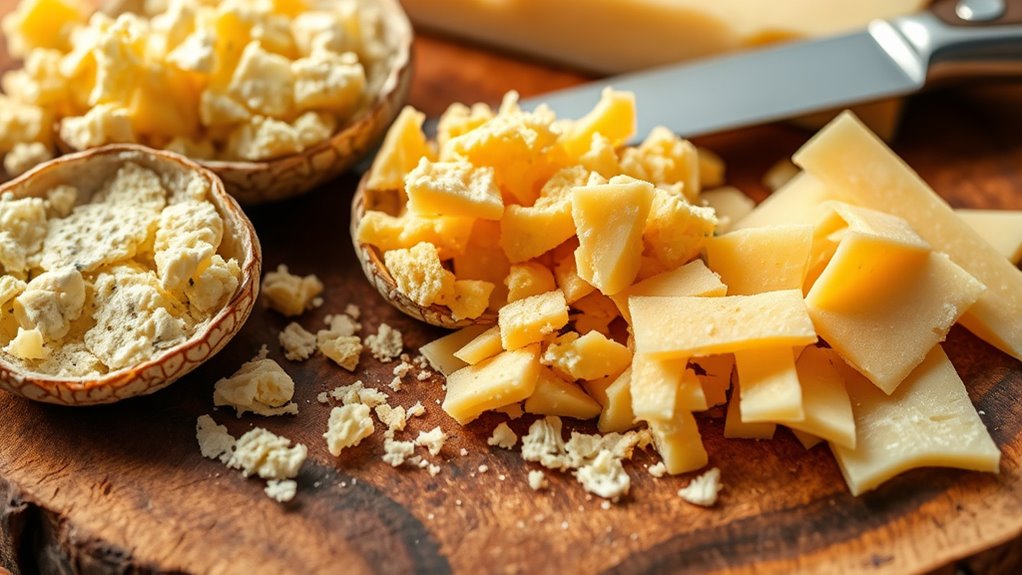
Hard cheeses are versatile ingredients that can elevate a wide range of dishes, from simple snacks to gourmet recipes. When working with cheeses like Grana Padano and Parmesan, understanding cheese aging and flavor pairing can make all the difference. These cheeses are aged for extended periods, which develops their complex flavors and firm textures. As they age, their taste intensifies, becoming nuttier, more savory, and with a granular texture that melts beautifully when grated. This aging process not only enhances their flavor but also makes them ideal for grating over pasta, salads, or soups. The longer the cheese ages, the sharper and more pronounced its flavor becomes, giving you a richer depth to your culinary creations.
Aged hard cheeses like Parmesan and Grana Padano develop complex, nutty flavors perfect for grating over dishes.
When considering flavor pairing, you’ll find that these hard cheeses complement a wide array of ingredients. Their umami richness pairs well with fresh fruits like pears or apples, creating a perfect balance between sweet and savory. Nuts such as walnuts or almonds add crunch and earthy notes that enhance the cheese’s depth. For beverages, a full-bodied red wine or a crisp white works beautifully, cutting through the cheese’s saltiness and highlighting its complex flavors. If you’re into craft pairings, try a drizzle of honey or a touch of balsamic vinegar to add a contrasting sweetness or acidity that elevates the cheese’s profile. These cheeses also work well with charcuterie, crusty bread, and even certain vegetables like roasted peppers or mushrooms, making them extremely adaptable in various dishes.
Using grated Parmesan or shards of Grana Padano not only boosts flavor but also adds texture and visual appeal. You’ll want to grate these cheeses finely for pasta dishes or soups, ensuring even distribution of flavor. For cheese boards, shaving thin slices allows their aroma and flavor to shine through, inviting your guests to savor each bite. Remember that the quality of the cheese influences the flavor pairing, so opt for well-aged, authentic varieties whenever possible. This ensures you get the full, rich taste that makes these cheeses so treasured globally.
Incorporating hard cheeses like Parmesan and Grana Padano into your cooking is both an art and a science. By paying attention to cheese aging and thoughtfully pairing flavors, you can transform simple ingredients into extraordinary dishes. Whether you’re grating them over a pasta or arranging them on a charcuterie board, these cheeses add a sophisticated touch that elevates your culinary experience. Their versatility and depth make them essential staples in any kitchen, ready to bring bold flavors and refined textures to your table.
Frequently Asked Questions
Can Hard Cheeses Be Suitable for Those With Lactose Intolerance?
Hard cheeses like Grana Padano and Parmesan can be suitable for those with lactose intolerance because their lactose content is typically low. During aging, most lactose is broken down, making these cheeses easier to digest. If you’re highly sensitive, consider dairy alternatives or check labels for lactose-free options. Always start with small amounts to see how your body reacts, and consult with a healthcare professional if unsure.
How Should I Store Grana Padano and Parmesan to Maintain Freshness?
You should store Grana Padano and Parmesan properly to keep their cheese storage effective and preserve freshness. Wrap the cheese tightly in parchment or wax paper, then place it in an airtight container or resealable bag. Keep it in the fridge’s coldest section, ideally around 39°F (4°C). This prevents moisture loss and mold growth, ensuring your cheese stays flavorful and fresh for longer, even if you’re concerned about spoilage.
Are There Specific Wine Pairings Recommended for These Cheeses?
For a perfect cheese and wine experience, opt for light white wines like Sauvignon Blanc or Pinot Grigio, which complement the nutty flavors of Grana Padano and Parmesan. You can also try a dry Prosecco or a crisp Chardonnay for added contrast. When selecting a wine pairing, consider the cheese’s saltiness and texture to enhance your cheese and wine tasting adventure. Cheers!
What Are the Differences in Flavor Profiles Between Grana Padano and Parmesan?
You’ll notice that Parmesan has a sharper, more intense flavor, thanks to a longer aging process of up to 24 months, compared to Grana Padano’s milder taste aged around 9-20 months. Regional variations influence their flavors, with Parmesan often being richer and nuttier from specific Italian regions. These differences make Parmesan ideal for bold dishes, while Grana Padano’s subtlety suits lighter recipes.
Can Hard Cheeses Be Used in Cooking Beyond Grating?
You can definitely use hard cheeses beyond grating, especially in cooking with cheese. They melt well and add richness to sauces, casseroles, and even bread. For example, you might melt Parmesan or Grana Padano into a creamy risotto or incorporate them into a cheese-stuffed pastry. Their savory flavor enhances many dishes, and their firm texture makes them easy to grate or shave for finishing touches or incorporated into cooked recipes.
Conclusion
Next time you reach for grana padano or parmesan, remember their rich flavors can elevate any dish. Did you know that hard cheeses like these contain up to 30% more concentrated flavor than soft cheeses? So, sprinkle or grate generously to enjoy their full depth. Incorporate them into your cooking, and you’ll be surprised how a small amount can transform your meals with bold, savory notes that delight your palate.