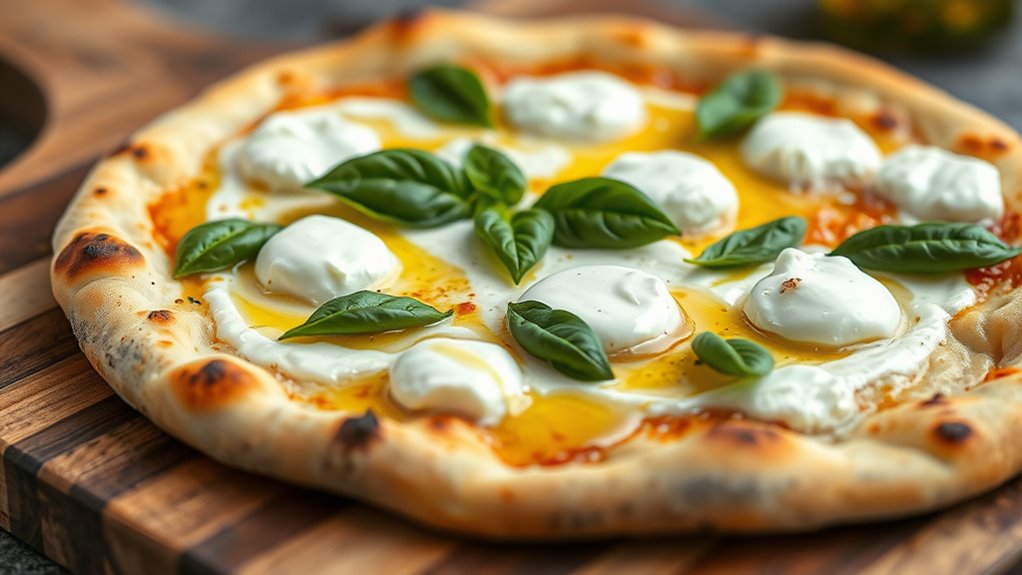
To make a sauceless white pizza with ricotta or cream, start by preparing a sturdy, elastic dough and letting it rest for about an hour. Spread a layer of ricotta or a creamy blend over the rolled-out dough, then top generously with mozzarella and other cheeses like Parmesan or blue cheese for added flavor. Bake at high heat until the crust is golden and the cheese is bubbly. If you want to master this tasty variation, keep exploring the details below.

Get baking supplies delivered free with Prime
- Fast, free delivery on millions of items
- Prime Video, Amazon Music and more included
- Member-only deals all year
Key Takeaways
- Use high-quality bread flour and knead until smooth for a sturdy crust that supports toppings.
- Spread ricotta or cream cheese evenly on the dough as the base sauce for a sauceless white pizza.
- Layer mozzarella and other cheeses like Parmesan for flavor and meltability; balance cheese flavors carefully.
- Bake at around 475°F (245°C) for 10-15 minutes until crust is golden and cheese is bubbly and browned.
- Experiment with cheese combinations and crust thickness to customize flavor and texture of your sauceless white pizza.
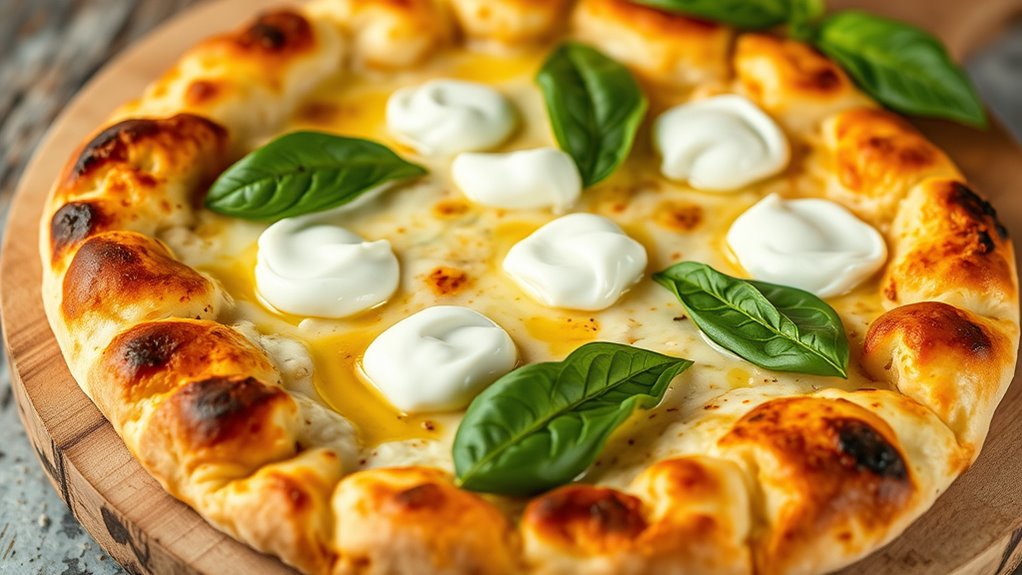
Have you ever wondered how to make a creamy, flavorful white pizza from scratch? It all starts with the dough preparation. You want a base that’s sturdy enough to hold the toppings and sauce but also tender and chewy. To achieve this, combine high-quality bread flour with a pinch of salt and a splash of olive oil. Mix in warm water and a pinch of yeast, then knead the mixture until it becomes smooth and elastic. Let it rest in a warm spot for about an hour until it doubles in size. This resting period develops gluten, giving your crust the perfect bite. Once ready, roll out the dough to your desired thickness, keeping in mind that thicker crusts will support more toppings, while thinner ones will be crispier.
Start with a sturdy, tender dough made from bread flour, salt, olive oil, yeast, and warm water.
When it comes to cheese varieties, you have lots of flavorful options that work beautifully on white pizza. Ricotta is a classic choice, offering a creamy, mild richness that balances well with other cheeses. You can dollop spoonfuls of ricotta across the dough or mix it with herbs and garlic for extra flavor. Mozzarella is essential for that gooey, melted texture, so choose a good-quality fresh or low-moisture mozzarella. For added complexity, sprinkle in some grated Parmesan or Pecorino Romano, which bring sharp, salty notes that elevate the overall taste. Some cooks like to add a touch of cream cheese for extra creaminess or even a dash of blue cheese if you want a bold flavor twist. The key is to blend cheeses in a way that complements the subtlety of the white sauce, so don’t overload with strong flavors unless it’s your preference.
Once your dough is prepared and your cheese choices are selected, spreading the cheese evenly over the crust is vital. Start with a layer of ricotta or a cream-based mixture, then add mozzarella and other cheeses on top. Since this isn’t a sauced pizza, your cheese becomes the main flavor component, so quality matters. Bake the pizza at a high temperature—around 475°F (245°C)—until the crust is golden and the cheeses are bubbly and slightly browned. It typically takes about 10-15 minutes, but keep an eye on it to prevent burning.
Making white pizza allows you to get creative with your cheese varieties and perfect your dough preparation. By focusing on these elements, you’ll craft a pie that’s rich, creamy, and full of flavor—without the need for a traditional tomato sauce. It’s all about balancing textures and flavors, so feel free to experiment until you find your perfect combination.
high quality bread flour for pizza
As an affiliate, we earn on qualifying purchases.
As an affiliate, we earn on qualifying purchases.
Frequently Asked Questions
What Are Some Gluten-Free Crust Options for White Pizza?
You can choose from various gluten-free crusts like cauliflower, almond flour, or rice flour bases for your white pizza. These gluten-free crusts provide a sturdy, tasty foundation without gluten. To enhance flavor, consider alternative cheese options like vegan cheese or nutritional yeast. Be sure to pre-bake your crust slightly to prevent sogginess, then add your ricotta or cream, and enjoy a delicious, gluten-free white pizza tailored to your preferences.
Can I Substitute Other Cheeses for Ricotta or Cream?
Yes, you can substitute other cheeses for ricotta or cream in your white pizza. Cheese alternatives like cottage cheese, mascarpone, or cream cheese work well, providing similar creaminess and flavor. If you’re seeking dairy-free options, try plant-based cheeses or blended silken tofu for a creamy texture. These substitutions let you customize your white pizza while accommodating dietary preferences, ensuring a delicious, personalized pie every time.
How Long Should I Bake a White Pizza?
You should bake your white pizza at 450°F for about 10-15 minutes. Yes, that crispy, golden perfection isn’t going to achieve itself—no magic wand here! Keep a close eye after 10 minutes; your crust and cheeses love to turn golden quickly. Remember, every oven’s a little different, so adjust baking duration accordingly. Trust your senses—look, smell, and listen for that satisfying crunch!
What Toppings Go Best With White Pizza?
You should choose toppings that complement the creamy base of white pizza. Meat toppings like chicken, bacon, or prosciutto add savory richness, while vegetable combinations such as spinach, mushrooms, and garlic provide freshness and depth. Feel free to mix and match based on your taste. These options enhance the flavor profile without overpowering the delicate ricotta or cream, creating a balanced and delicious white pizza.
Is White Pizza Suitable for Vegans?
Sure, white pizza can be vegan, if you’re willing to pretend cheese and dairy never existed. Swap traditional cheese for vegan cheese alternatives and opt for plant-based crusts to keep things cruelty-free. While it might not have the same cheesy charm, with the right toppings and a dash of humor, you’ll still enjoy a creamy, satisfying slice—just without the dairy drama. Who knew plant-based could be so deliciously rebellious?
As an affiliate, we earn on qualifying purchases.
Conclusion
Now that you know how to make a delicious white pizza without sauce, give it a try tonight. Imagine impressing friends with a creamy ricotta-topped pie, just like Sarah did on her first attempt—she loved how simple and flavorful it was. White pizza’s versatility means you can customize toppings to your taste, making it perfect for any occasion. So, go ahead, create your own sauceless masterpiece and enjoy a comforting, cheesy delight!
As an affiliate, we earn on qualifying purchases.
As an affiliate, we earn on qualifying purchases.
Halloween Picks
halloween
As an affiliate, we earn on qualifying purchases.