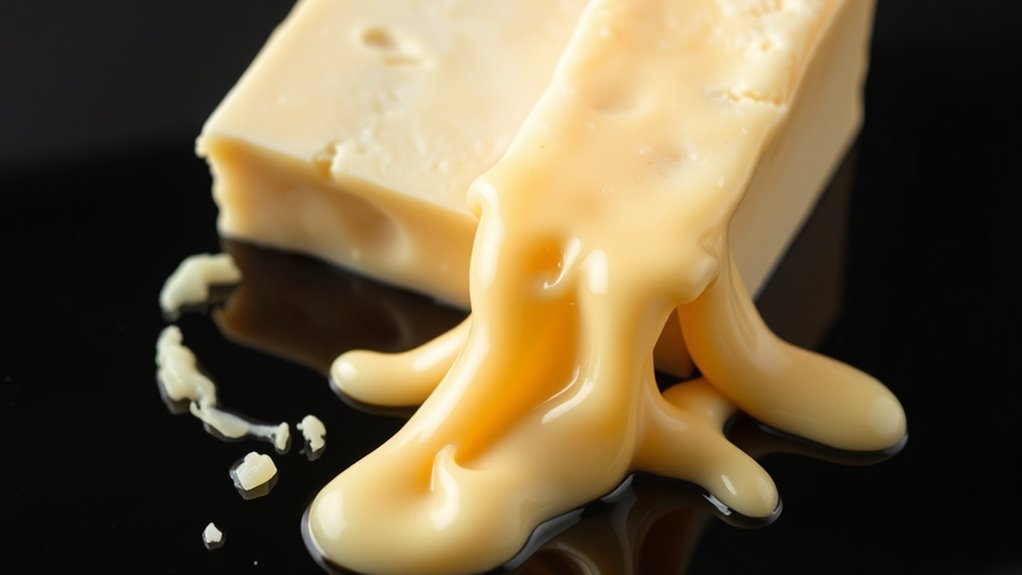

When cheese has higher fat content, it melts more smoothly and becomes stretchier, thanks to fats acting as lubricants and helping proteins loosen. Fat-rich cheeses develop a gooey, elastic texture when heated, making them ideal for melting applications like pizza or melted sandwiches. Lower fat cheeses tend to be crumbly or dry and melt less effectively. If you want to master perfect meltability and stretchiness, exploring how fat levels influence cheese behavior can give you useful insights.
Key Takeaways
- Higher fat content ensures smoother, more elastic melting and stretchiness in cheese.
- Fats melt first, creating an lubricated environment that enhances protein interaction and stretch.
- Lower fat cheeses tend to become crumbly or dry when melted, reducing stretch.
- Fat contributes to flavor richness and mouthfeel, influencing the overall melting experience.
- The distribution and amount of fat determine the cheese’s ability to melt and stretch effectively.
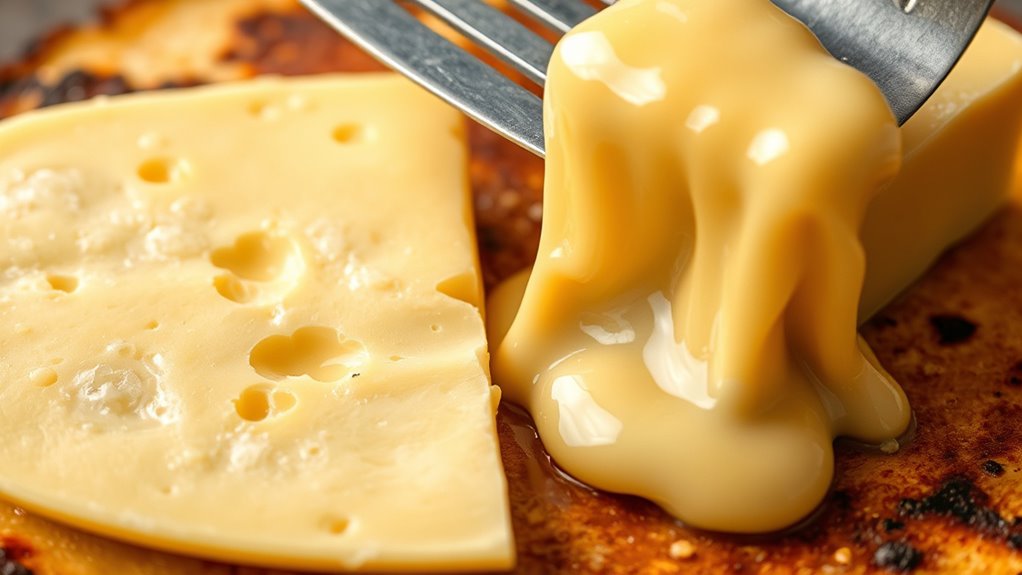
The fat content in cheese plays an essential role in shaping its flavor, texture, and overall quality. When it comes to melting and stretching, fat acts as a key ingredient that influences how cheese behaves when heated. Higher fat cheeses tend to melt more smoothly and develop a gooey, stretchy texture, which is why they’re preferred for dishes like pizza or grilled cheese. Conversely, cheeses with lower fat levels may not melt as uniformly, often becoming crumbly or dry. As you heat cheese, the fat melts first, creating that luscious, elastic pull you expect in many recipes. This fat-rich environment allows proteins and moisture to interact in a way that enhances meltability and stretchiness. Additionally, the moisture content in cheese also impacts how well it melts, with higher moisture cheeses generally melting more easily. The fat content also impacts the cheese’s flavor profile. Fats carry fat-soluble vitamins like A, D, E, and K, which are essential for your health and contribute to the cheese’s richness. When cheese melts, these vitamins are released and become more accessible, enriching the taste experience. The cheese aging process plays a crucial role here; as cheese matures, its fat content can change slightly, influencing how it melts. During aging, enzymes break down fats and proteins, developing complex flavors and improving meltability in some cases. Longer aging often results in a firmer texture and more concentrated flavors, but the fat’s behavior during heating remains central to achieving the desired melt and stretch. If you’re aiming for a cheese that melts beautifully, choosing higher fat varieties like mozzarella, fontina, or Gruyère is your best bet. These cheeses contain enough fat to guarantee a smooth, elastic melt. Lower fat options, such as part-skim mozzarella or ricotta, tend to melt less effectively, resulting in a different texture that may not stretch as much. The key is understanding that fat acts as a lubricant at the molecular level, allowing the proteins to loosen and stretch when heated. Without sufficient fat, cheese can become greasy or grainy, compromising the desired melt and stretch. Recognizing the fat distribution within cheese can help you select the right type for your culinary needs. In essence, the fat content determines how well cheese melts and stretches, making it integral to many culinary applications. It’s not just about flavor—fat influences the physical properties of cheese during heating, affecting texture, consistency, and even nutritional value through fat-soluble vitamins. When selecting cheese for melting, considering its fat content and how it’s processed during aging will help you achieve the perfect gooey, stretchy result you’re after.
Frequently Asked Questions
Does Lower Fat Cheese Melt Faster Than Higher Fat Varieties?
Yes, lower fat cheese tends to melt faster than higher fat varieties because fat reduction alters the cheese texture, making it less dense and more prone to melting quickly. When you choose lower fat options, you’ll notice a softer, more liquid consistency sooner. Keep in mind, though, that these cheeses may not stretch as well, so if stretchiness matters, higher fat cheeses might be your better choice.
How Does Fat Content Influence Cheese’s Flavor During Melting?
Fat content acts like a flavor highway, guiding how cheese’s flavor develops during melting. Higher fat levels bring out richer, creamier fat flavors that melt smoothly, enhancing the melting quality and delivering a more indulgent taste. Lower fat cheeses, with less fat flavor, often taste sharper or more delicate. So, as you melt cheese, consider how fat influences both flavor depth and melting behavior, shaping your culinary experience.
Can Fat Reduction Improve Cheese’s Meltability Without Losing Quality?
Yes, fat reduction can improve cheese’s meltability without sacrificing quality if you choose the right cheeses. Lowering fat content often results in a smoother, creamier texture, enhancing meltability and stretch. Opt for cheeses specifically designed for melting, like low-fat mozzarella or processed cheese, which maintain good texture and flavor. Carefully balancing fat reduction guarantees you get better meltability without compromising the overall quality and taste of your cheese.
What Role Does Moisture Content Play Alongside Fat in Melting?
Moisture in cheese acts like a sponge, directly influencing melt consistency. Higher moisture content helps the cheese melt smoothly and evenly, making it more pliable and stretchy. When moisture levels are low, the cheese tends to be dry and brittle, affecting melt quality. Together with fat, moisture influence determines how well cheese melts and stretches, so balancing both is key for achieving your desired melt texture.
Are There Specific Cheese Types That Melt Better Regardless of Fat Content?
You’ll find that cheeses like mozzarella and processed cheeses melt better regardless of their fat composition. These types are specially designed for ideal cheese melting, offering smooth, stretchy textures. Their unique protein structures allow for excellent meltability, even if their fat content varies. So, when selecting cheeses for melting, focus on their type and processing, not just fat content, to achieve the best melt and stretch in your dishes.
Conclusion
Remember, choosing a cheese with just the right fat content is like finding the perfect harmony in a melody. Too much fat can create a luscious, velvety melt that feels like a warm embrace, while too little might leave your dish a bit shy and reserved. By balancing the richness, you make sure your cheese stretches and melts like a sun-kissed horizon, inviting everyone to savor each gooey, golden bite.