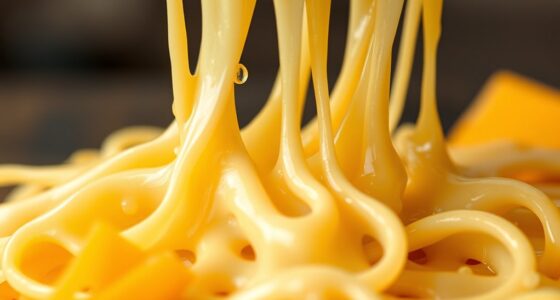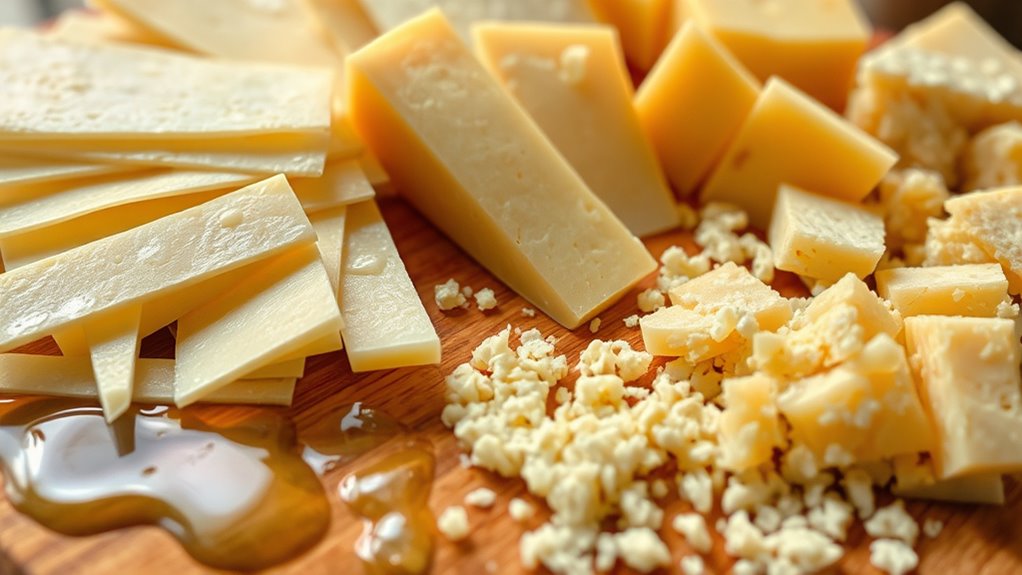

When you cut cheese into thin, uniform slices, it melts more evenly because heat penetrates quickly and consistently. Thicker pieces or irregular shapes can cause uneven melting, resulting in rubbery or unmelted parts. Soft cheeses should be handled delicately to prevent deformation, while hard cheeses benefit from precise, clean cuts with sharp tools. Paying attention to size and shape helps you achieve a smooth, attractive melt, and there’s more to learn on perfecting your cheese-cutting skills.

Get baking supplies delivered free with Prime
- Fast, free delivery on millions of items
- Prime Video, Amazon Music and more included
- Member-only deals all year
Key Takeaways
- Thin, uniform slices melt more evenly due to faster heat penetration.
- Larger or thicker chunks can cause uneven melting and a rubbery texture.
- Consistent size and shape ensure all pieces melt at the same rate.
- Shredded or sliced cheese promotes uniform meltability in dishes.
- Proper size and shape optimize flavor, texture, and visual appeal during melting.
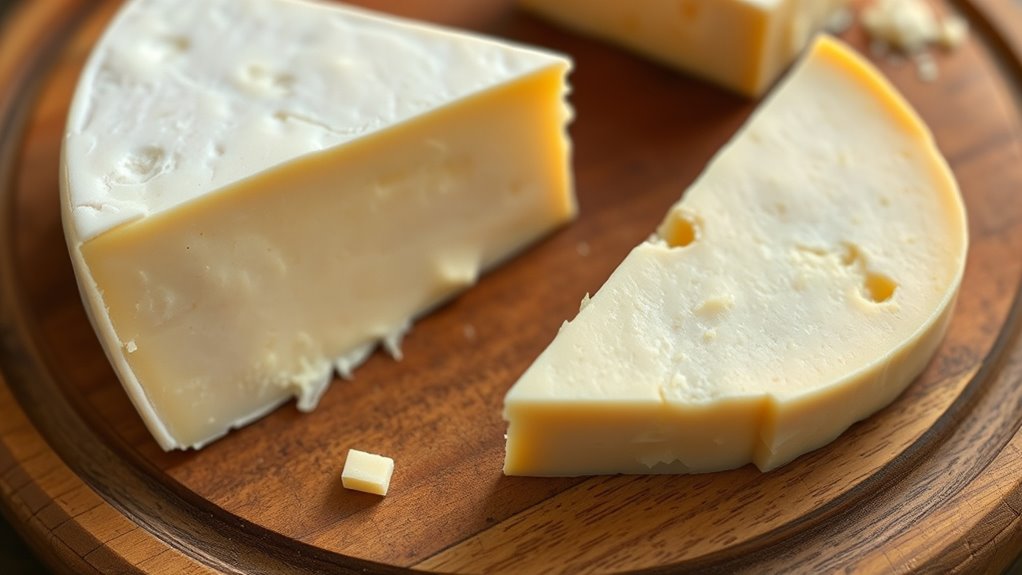
Have you ever struggled to cut cheese evenly or cleanly? If so, you’re not alone. Achieving the perfect slice depends on understanding the right cheese cutting techniques. Whether you’re preparing a cheese platter or cooking with melted cheese, how you cut and shape your cheese can considerably influence its meltability and presentation. The key lies in choosing the right tools and methods to guarantee your slices are uniform and your cheese melts smoothly without oiling out or becoming rubbery.
Proper cheese cutting ensures even melting and attractive presentation.
When it comes to ideal cheese slicing, the goal is to make even, consistent cuts that help the cheese melt evenly. For semi-hard and hard cheeses like cheddar, gouda, or Parmesan, a sharp knife or cheese wire works best. Using a dull knife crushes the cheese or creates uneven edges, which can interfere with the melting process. A wire cutter, on the other hand, slices through the cheese cleanly, preserving its structure and giving you precise, uniform pieces. For softer cheeses like brie or mozzarella, a gentle, serrated knife or even a cheese curler can help you achieve smooth, clean cuts without squishing the cheese.
In addition to the right tools, your cutting technique plays a crucial role in ideal cheese slicing. Always start with a cold cheese block; it’s firmer and easier to handle, reducing the risk of tearing or deforming the cheese. When slicing, apply even pressure and use a gentle sawing motion rather than pressing down hard. This prevents the cheese from cracking or crumbling, especially with softer varieties. For larger blocks, work in sections, slicing from the center outward to maintain control. If you’re cutting thin slices for melting, use a mandoline or a cheese slicer for maximum precision, ensuring each piece melts consistently without overcooking or under-melting. Proper handling of cheese can also minimize waste and preserve its quality during preparation.
The shape and size of your cheese pieces also influence melting behavior. Thin, uniform slices tend to melt more evenly because heat penetrates quickly and consistently. Thicker chunks might take longer to melt and can cause uneven heating, leading to oily or rubbery textures. When preparing cheese for melting, aim for slices or shreds that are as uniform as possible, regardless of the cheese type. This uniformity ensures that each piece melts at the same rate, giving you a smooth, creamy result whether you’re making grilled cheese, fondu, or sauce.
Ultimately, mastering cheese cutting techniques and understanding how size and shape influence melt will elevate your culinary game. With the right tools, a gentle touch, and attention to detail, you’ll consistently produce cheese slices that melt beautifully and look inviting. Achieving ideal cheese slicing isn’t just about aesthetics—it’s about enhancing flavor, texture, and overall enjoyment in every dish.
Frequently Asked Questions
Do Certain Cheese Types Melt Better Regardless of Shape?
Yes, certain cheese types melt better regardless of shape. For example, younger cheeses with less rind development and minimal aging tend to melt smoothly, while aged cheeses with complex rind development might resist melting. The cheese’s aging process influences moisture content and protein structure, which impacts meltability. So, choosing fresh, less aged cheese often guarantees better melting performance, no matter the shape or size you’d prefer.
How Does Temperature Affect Melted Cheese Consistency?
While cheese aging deepens flavor, temperature plays a pivotal role in its melt consistency. As you heat cheese, it reaches its melt point, transforming from firm to gooey. Too low, and it won’t melt properly; too high, and it risks separation. Proper temperature guarantees a smooth, even melt, highlighting the cheese’s natural qualities. Adjust heat carefully to achieve that perfect, velvety texture you desire.
Can Cutting Technique Influence Cheese Flavor Retention?
Your cheese cutting technique can substantially influence flavor retention. When you cut cheese carefully, using a sharp knife and smooth motions, you minimize surface damage and preserve its natural oils and aroma. Proper cutting reduces oxidation and moisture loss, helping the cheese retain its full flavor profile. By paying attention to your technique, you guarantee each slice maintains the cheese’s rich taste, enhancing your overall experience and enjoyment.
What Is the Ideal Cheese Shape for Even Melting?
For even melting, you should opt for cheese slicing into thin, uniform pieces. Thin slices promote melting uniformity because heat penetrates more evenly, preventing hot spots or under-melted areas. Avoid thick chunks, which take longer to melt and can cause uneven consistency. By choosing a consistent, flat shape, you guarantee better heat distribution, resulting in smoother, more uniform melted cheese perfect for sandwiches, toppings, or recipes.
How Does Cheese Moisture Content Impact Melting Behavior?
You might think moisture content is just a fancy term, but it’s actually the secret sauce in cheese melting. Higher moisture levels boost melting properties, making cheese gooey and smooth, perfect for pizza or grilled cheese. Low moisture cheese, on the other hand, resists melting and stays firm. So, if you want that perfect melt, pay attention to moisture content—it’s the key to cheesy perfection, not just size or shape.
Conclusion
As you cut your cheese, remember that its size and shape symbolize your choices in life—small or large, simple or intricate. Each slice reveals a new layer, just like your decisions shape who you are. The way it melts reflects how your actions influence your journey, transforming rough edges into smooth experiences. Embrace the process, knowing that every cut holds the potential to create something uniquely yours—melting together the past and future into a delicious, meaningful whole.
Halloween Picks
halloween
As an affiliate, we earn on qualifying purchases.