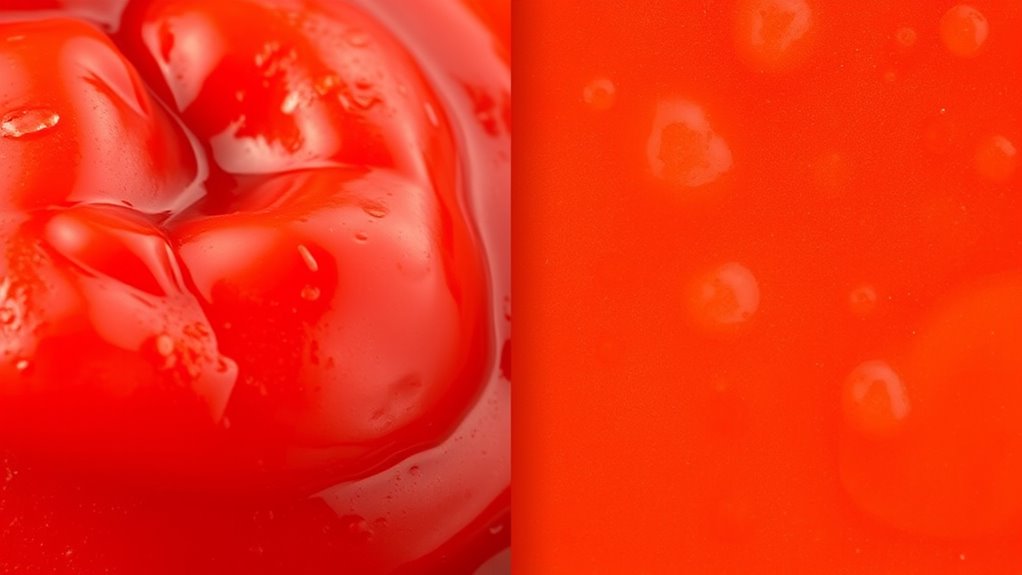

When choosing between tomato puree and watery tomato juice, your sauce’s texture and richness change. Puree gives a thicker, velvety consistency that enhances hearty, flavorful sauces and adds body. Watery juice results in a lighter, broth-like base, which may require reduction or thickening for a richer result. Understanding these differences helps you craft the perfect sauce, whether you want a thick, concentrated dish or a lighter, more delicate one. Explore how each affects your final creation to get the best results.

Get baking supplies delivered free with Prime
- Fast, free delivery on millions of items
- Prime Video, Amazon Music and more included
- Member-only deals all year
Key Takeaways
- Tomato puree creates a thick, velvety sauce, enhancing richness and body in dishes.
- Watery tomato juice results in a thinner, more liquid sauce that may need reduction.
- Puree naturally thickens during cooking, reducing the need for extra thickeners.
- Juice contributes a lighter, broth-like texture, suitable for delicate or soup-based dishes.
- The choice affects final sauce consistency, with puree offering depth and juice providing freshness.
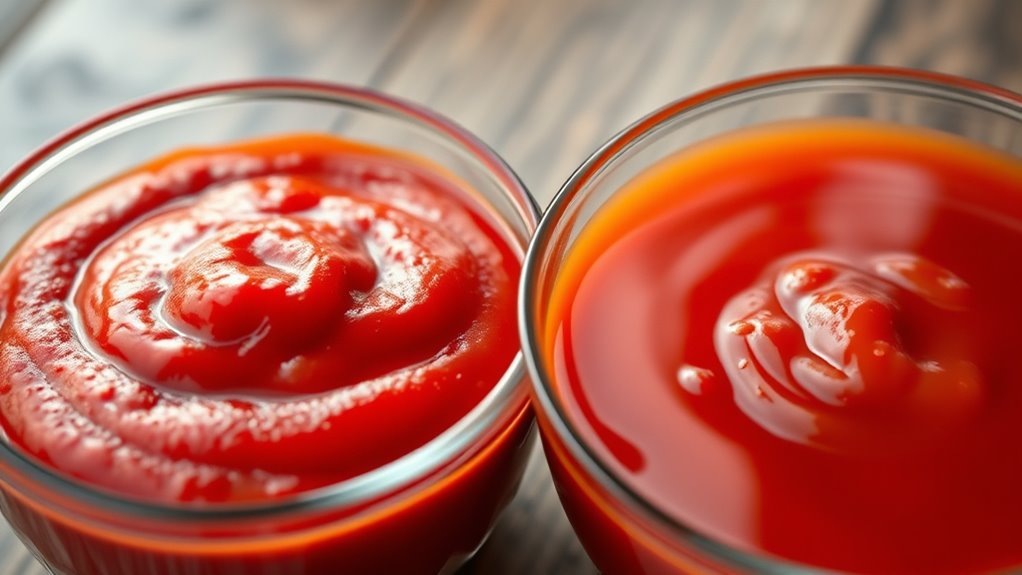
When choosing between tomato puree and watery juice, understanding their differences is essential for cooking and health benefits. The way each affects your sauce’s texture is significant, especially if you aim for a specific consistency or flavor profile. Tomato puree is thicker and more concentrated, making it ideal for creating rich, velvety sauces. On the other hand, clear tomato juice is much thinner, adding a lighter, more liquid component to your dish. Recognizing these distinctions helps you select the right ingredient based on your cooking techniques and desired flavor enhancement.
If you’re making a hearty marinara or a robust Bolognese, tomato puree is your best choice. Its viscosity allows it to thicken sauces naturally as it cooks, giving you that desirable, smooth texture without needing additional thickeners. When you use puree, you can focus on building layers of flavor through sautéing garlic, onions, and herbs, knowing the base will support that richness. The concentrated nature of puree also means you’ll get more tomato flavor per spoonful, which intensifies the overall taste, making your sauce more flavorful and satisfying.
Conversely, watery tomato juice is suitable for lighter dishes or when you want a more delicate, less intense tomato flavor. It’s often used in soups or stews where a less thick consistency is preferable. Since it’s thinner, you might need to cook it longer or add a thickening agent if you’re aiming for a sauce with a richer texture. Using watery juice in your cooking techniques demands a bit more attention; you might want to reduce it to concentrate flavors or combine it with other ingredients to achieve the desired consistency. This flexibility allows you to tailor your dishes to specific textures and flavor intensities.
Flavor enhancement depends heavily on your choice between the two. Tomato puree provides a deeper, more concentrated taste, which can elevate the richness of a sauce. Watery juice, however, offers a fresher, more subtle tomato flavor, ideal when you want a lighter, more invigorating dish. When you’re adjusting your recipes, consider how the liquid will interact with other ingredients and the final texture you want to achieve. If you want a sauce that clings to pasta or has a luxurious mouthfeel, puree is generally better. If you prefer a thinner, more broth-like consistency, watery juice works well.
Additionally, the processing methods of tomatoes influence the final texture and flavor profile of each ingredient, affecting your cooking outcome.
As an affiliate, we earn on qualifying purchases.
Frequently Asked Questions
How Does Acidity Differ Between Tomato Puree and Watery Juice?
You’ll notice that tomato puree generally has a higher acidity than watery juice, which affects flavor concentration and pH levels. Puree is more concentrated, often with a lower pH, making it tangier and more robust. Watery juice tends to be milder with higher pH levels, resulting in less acidity. This difference influences how tangy or balanced your sauce tastes, so choose accordingly based on the acidity level you prefer.
Can Watery Juice Be Used as a Substitute for Tomato Puree?
You can use watery juice as a substitute for tomato puree, but be prepared for a different flavor profile and texture. Watery juice acts like a splash of lightness, thinning your sauce and diluting its richness. To compensate, simmer it longer or add thicker ingredients to achieve your desired consistency. Adjust your cooking techniques accordingly, and you’ll end up with a sauce that still sings with flavor, even if the base is more delicate.
What Are the Shelf Lives of Tomato Puree Versus Watery Juice?
You’ll find that tomato puree typically has a longer shelf life due to its higher acidity and preservation techniques like canning. It’s usually safe for up to 12-18 months unopened when stored properly. Watery juice, however, has a shorter shelf stability, often lasting only a few days to a week in the fridge unless preserved through methods like freezing or canning. Always check expiration dates and storage guidelines for best results.
How Do Nutrient Contents Vary Between the Two?
You’ll find tomato puree packs about 20% more nutrients than watery juice. It retains higher vitamin levels, especially vitamin C and lycopene, which are crucial antioxidants. The mineral content is also richer in tomato puree, offering more potassium and magnesium. So, if you’re looking for a nutrient-dense option, opt for tomato puree to maximize your intake of essential vitamins and minerals.
Which Option Is Better for Long-Term Sauce Storage?
You should choose tomato puree for long-term sauce storage because it offers better flavor concentration and texture stability. Its thicker consistency prevents separation and spoilage, keeping your sauce smooth and flavorful over time. Watery juice, on the other hand, can cause the sauce to become thin and less stable, leading to a compromised texture and flavor. Using puree guarantees your sauce remains delicious and maintains its quality longer.
As an affiliate, we earn on qualifying purchases.
Conclusion
Choosing between tomato puree and watery juice can make or break your sauce. If you want a rich, velvety texture that feels like silk in every bite, opt for tomato puree. Watery juice might save time, but it’s like trying to paint a masterpiece with water—simply not enough to bring out the full flavor. Trust me, your taste buds will thank you when you use the right one, transforming your dish into a culinary masterpiece.
thickening tomato sauce products
As an affiliate, we earn on qualifying purchases.
As an affiliate, we earn on qualifying purchases.
As an affiliate, we earn on qualifying purchases.
Fall Picks
fall essentials
As an affiliate, we earn on qualifying purchases.