To keep food safe outdoors, use coolers with ice packs and keep perishable items below 40°F, avoiding direct sunlight. Prevent cross-contamination by using separate cutting boards and utensils for raw and cooked foods, and wash your hands often. Store leftovers in airtight containers and refrigerate promptly. Maintain proper temperatures for cooked foods with thermometers, and follow safe grilling practices. If you want detailed tips to guarantee your outdoor meals stay safe and enjoyable, there’s more to explore below.
Key Takeaways
- Keep perishable foods refrigerated below 40°F with coolers and ice packs to prevent bacterial growth.
- Use separate utensils and cutting boards for raw and cooked foods to prevent cross-contamination.
- Store leftovers in airtight containers and refrigerate within two hours, or one hour in hot weather.
- Maintain hot foods above 140°F using insulated containers or chafing dishes to prevent spoilage.
- Follow safe grilling practices: keep the grill stable, clean, and never leave it unattended during use.
What Are the Best Ways to Keep Perishable Foods Safe Outdoors?
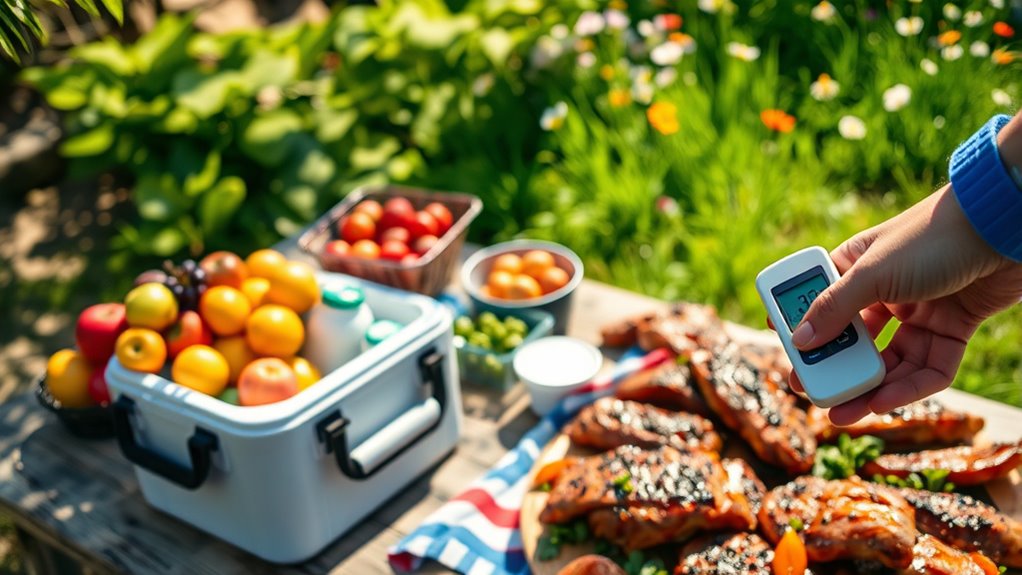
To keep perishable foods safe outdoors, you need to control temperature and minimize exposure to bacteria. Food preservation techniques are essential when you’re outside, especially since traditional refrigeration isn’t always available. Use coolers with plenty of ice packs or frozen gel packs to maintain a safe temperature, ideally below 40°F (4°C). If possible, incorporate outdoor refrigeration options like portable mini-fridges or insulated containers designed for food storage. Keep perishable items in these cool environments until you’re ready to serve. Avoid leaving food out in the sun or in warm conditions for extended periods. Regularly check the temperature inside your cooling devices and replenish ice as needed. Proper food preservation methods considerably reduce the risk of foodborne illnesses during outdoor meals. Additionally, understanding food safety guidelines helps in effectively managing food storage and preventing spoilage.
How Can I Prevent Cross-Contamination During Outdoor Meals?
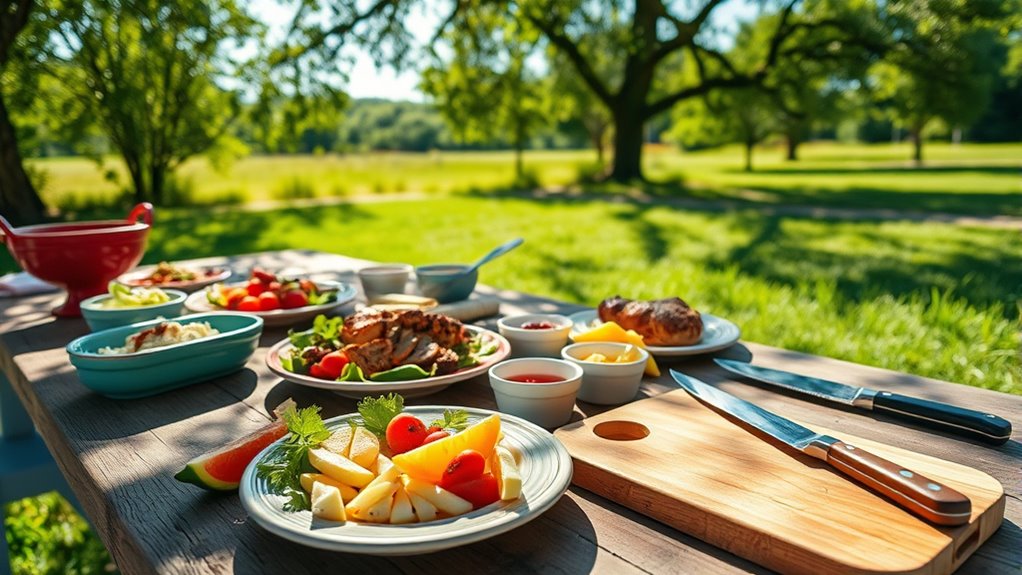
When serving food outdoors, preventing cross-contamination is key to keeping everyone safe. To do this, always use separate cutting boards and utensils for raw meats and ready-to-eat foods. Be mindful of food allergies by clearly communicating ingredients and checking food labeling when available. Keep allergenic foods away from others to avoid accidental exposure. Use different plates and serving utensils for different dishes, and wash your hands thoroughly between tasks. Cover foods to prevent insects or dirt from contaminating them. When dealing with special dietary needs, clearly label items, and ensure everyone knows which foods are allergen-free. Proper food safety practices also involve maintaining proper temperatures to inhibit bacterial growth, especially when foods are held outdoors for extended periods. By staying organized and attentive, you minimize the risk of cross-contact and protect your guests from potential food allergy reactions.
What Is the Proper Way to Store Leftovers When Camping or Picnicking?
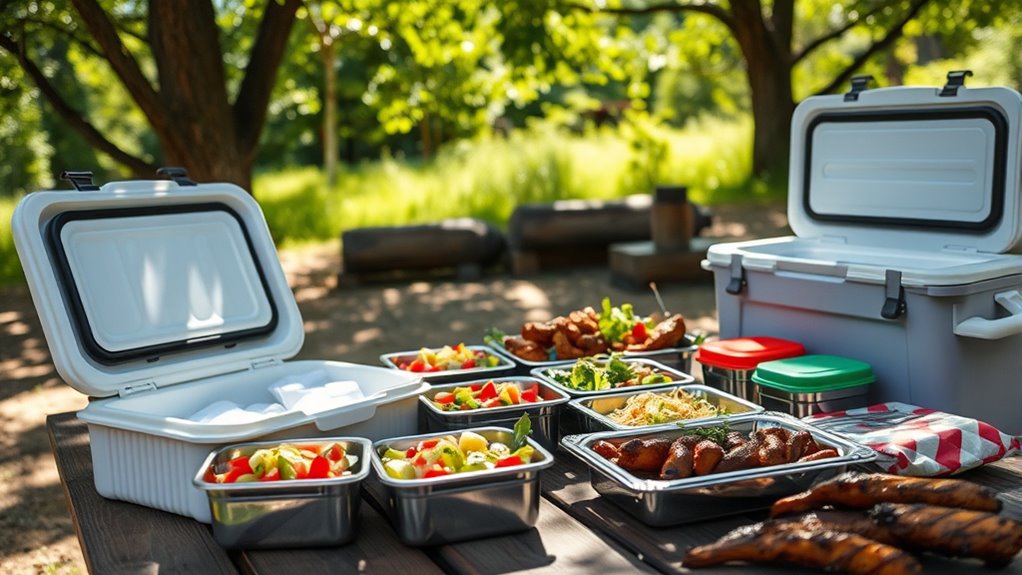
Properly storing leftovers while camping or picnicking is essential to prevent foodborne illnesses. To do this, use clean, airtight camping containers to keep leftovers fresh and prevent contamination. Always refrigerate leftovers within two hours of cooking, or one hour if it’s hot outside. Keep perishable foods cold by packing a cooler with ice packs. Label leftovers with the date to track freshness and avoid eating spoiled food. When storing, divide large quantities into smaller portions to cool quickly and make reheating easier. Remember, proper leftover storage reduces waste and keeps everyone safe. Additionally, understanding the importance of temperature control in food safety can further prevent spoilage and illness.
How Do I Maintain the Correct Temperature for Cooked Foods Outdoors?
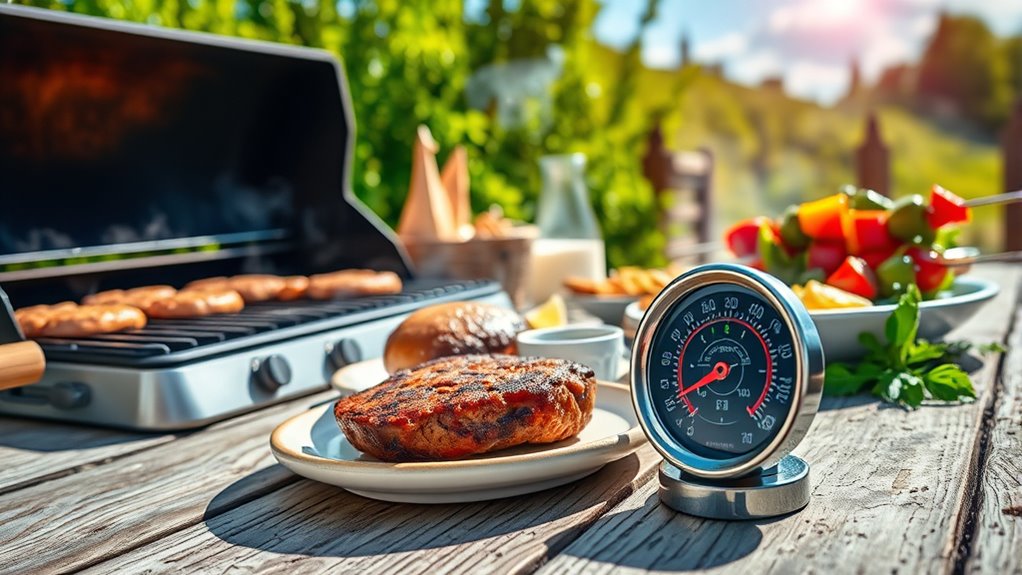
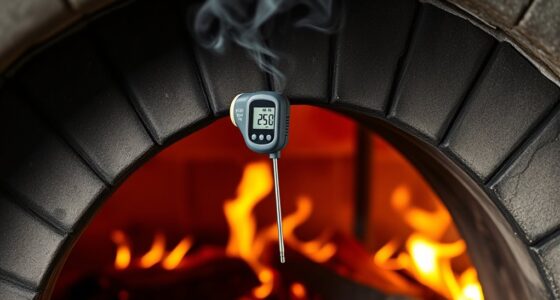
Maintaining the correct temperature for cooked foods outdoors is essential to prevent bacteria growth and foodborne illnesses. Effective outdoor cooking safety relies on proper food temperature management. Use a reliable food thermometer to check internal temperatures, ensuring meats reach safe levels—such as 165°F for poultry and 145°F for beef. Keep hot foods hot by placing them in insulated containers or chafing dishes, maintaining temperatures above 140°F. When serving, avoid leaving cooked foods at room temperature for extended periods. If you’re not eating right away, store leftovers in a cooler with ice packs or refrigerate them promptly. Proper storage practices can help prevent spoilage and foodborne illnesses, ensuring safer outdoor meals. By closely monitoring food temperatures and implementing proper storage, you reduce health risks and enjoy safer outdoor meals.
What Are Some Tips for Safely Grilling and Barbecuing Outdoors?

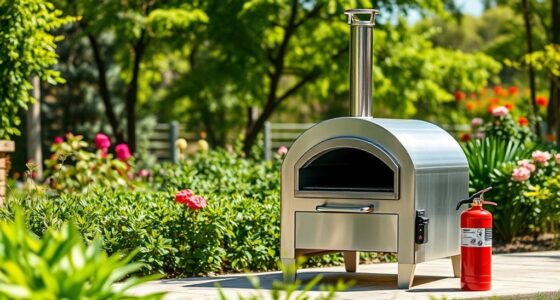
To grill and barbecue outdoors safely, start by preparing your equipment and workspace carefully. Make certain your grill is stable and clean to prevent flare-ups and food contamination. Keep a fire extinguisher or a bucket of water nearby for fire precautions. Always monitor your grill closely, avoiding distractions, and never leave it unattended. Use long-handled tools to keep a safe distance from heat and flames. Check that grill vents are open for proper airflow, reducing the risk of flare-ups. Follow these tips for grill safety:
- Maintain a safe distance from structures and trees
- Keep raw and cooked foods separate
- Never overload the grill with food
- Check fuel levels before starting
- Ensure all flames are extinguished after grilling
These practices help prevent accidents and promote safe outdoor cooking.
How Should I Handle and Dispose of Food Waste to Avoid Attracting Pests?
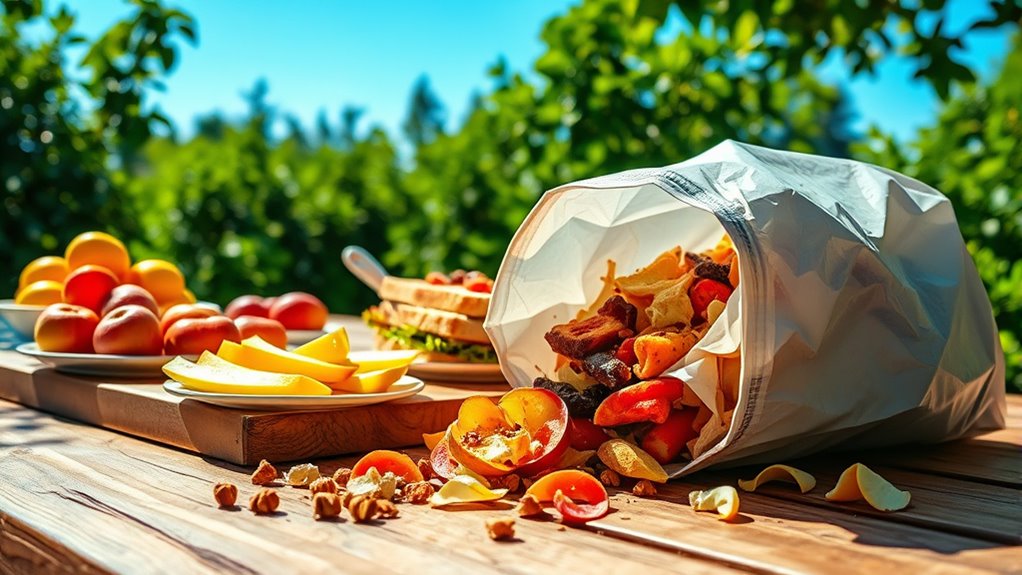
After grilling outdoors, managing food waste becomes key to keeping pests away. Proper garbage management reduces attractants that draw insects and rodents. Always secure leftover food and scraps in tightly sealed containers. Dispose of waste promptly in designated outdoor trash bins with tight-fitting lids. Keep your trash area clean and away from main dining spots to prevent pests from finding easy food sources. Consider using compost bins with lids or pest-proof covers for organic waste. Regularly clean up spills and crumbs around your picnic area. To boost pest prevention, avoid leaving food out unattended and never overfill trash cans. Using pest-proof bins can significantly improve your outdoor food safety efforts.
What Are Common Signs of Food Spoilage to Watch Out for in Outdoor Settings?
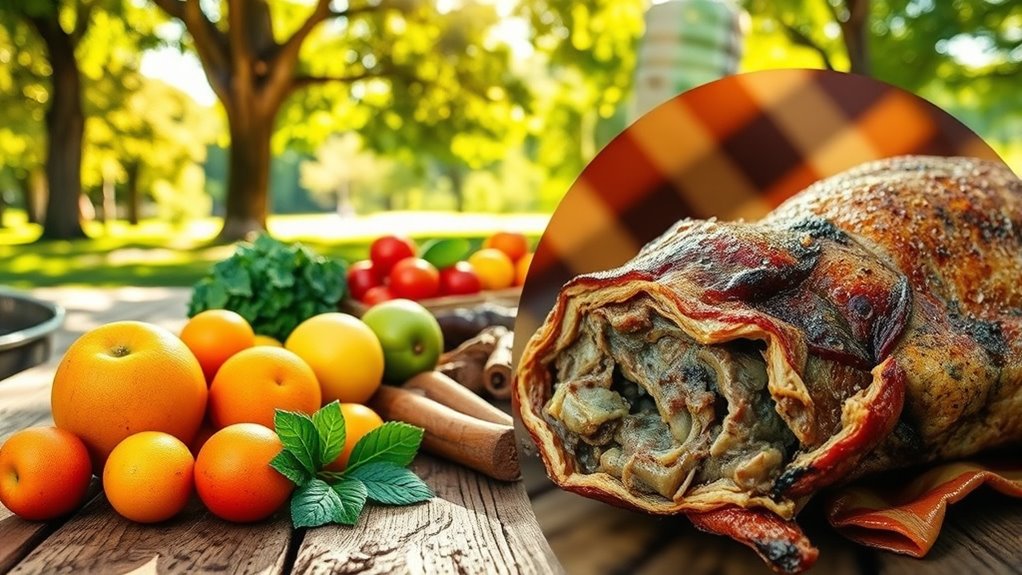
Outdoor settings can accelerate food spoilage due to higher temperatures, humidity, and exposure to insects, making it essential to recognize signs early. You should watch for obvious indicators that food has gone bad. Common signs include a sour or foul food odor, which signals bacterial growth. Texture changes, such as sliminess or mushiness, also indicate spoilage. Visible signs include mold, discoloration, or slimy surfaces. Additionally, packaging may be bloated or leaking, suggesting fermentation or bacterial activity. Always trust your senses—if food smells off, looks abnormal, or feels different, it’s safest to discard it. Recognizing these signs can prevent foodborne illness and help you avoid consuming unsafe food outdoors. Proper air quality monitoring and good hygiene practices further enhance outdoor food safety. Stay vigilant and prioritize safety during outdoor meals.
Frequently Asked Questions
How Can I Prevent Insects From Contaminating Outdoor Food?
To prevent insects from contaminating your outdoor food, focus on insect prevention by covering dishes with mesh or food covers. Keep outdoor pest control measures in place, like citronella candles or insect repellents. Clean up crumbs and spills promptly, and store food in airtight containers. Place your food away from standing water or trash, which attract pests. These steps help guarantee your outdoor dining stays pest-free and safe.
What Are the Best Ways to Clean Outdoor Cooking Equipment?
Just like a knight cleans their armor after battle, you should thoroughly clean your outdoor cooking equipment. Use warm water and outdoor cleaning supplies to scrub grilling accessories, grates, and surfaces. Remove grease and food residues to prevent flare-ups. For stubborn spots, a brush or scraper helps. Rinse well and dry completely to avoid rust. Regular cleaning keeps your equipment safe, efficient, and ready for your next outdoor feast.
How Do Weather Conditions Affect Outdoor Food Safety?
Weather conditions greatly impact outdoor food safety. High temperatures can cause bacteria to grow quickly, so you need to focus on temperature control by keeping perishable foods cold with coolers or ice packs. Humidity management is also essential; excessive humidity can promote mold and spoilage. Conversely, cold, dry weather helps preserve food, but you should still monitor temperatures closely to prevent foodborne illnesses. Always stay vigilant and adapt your practices to the weather.
What Are Safe Methods for Marinating Food Outdoors?
Ever wondered how to keep your marinating techniques safe outdoors? You should always marinate food in a cooler with ice packs to guarantee safe storage. Use a non-reactive container like glass or stainless steel, and never reuse marinade that has touched raw meat unless you boil it first. Cover your food tightly, and avoid leaving it out in the sun. These steps help prevent bacteria and keep your outdoor feast safe.
How Can I Ensure Safe Drinking Water During Outdoor Activities?
To guarantee safe drinking water during outdoor activities, you should use water filtration systems to remove bacteria and debris. Additionally, consider chemical purification methods like water purification tablets or drops to kill viruses and pathogens. Always choose a clean water source, and if unsure, combine filtration with chemical treatment for extra safety. This way, you can enjoy your outdoor adventures without worrying about waterborne illnesses.
Conclusion
Think of outdoor food safety like tending a garden—you need to stay vigilant to keep pests away and plants healthy. I once saw a picnic spoiled in minutes because leftovers weren’t stored properly, turning a fun day into a food safety lesson. By following simple tips, you can enjoy outdoor meals without worries. Remember, a little caution now keeps food safe and your outdoor adventures enjoyable for everyone.