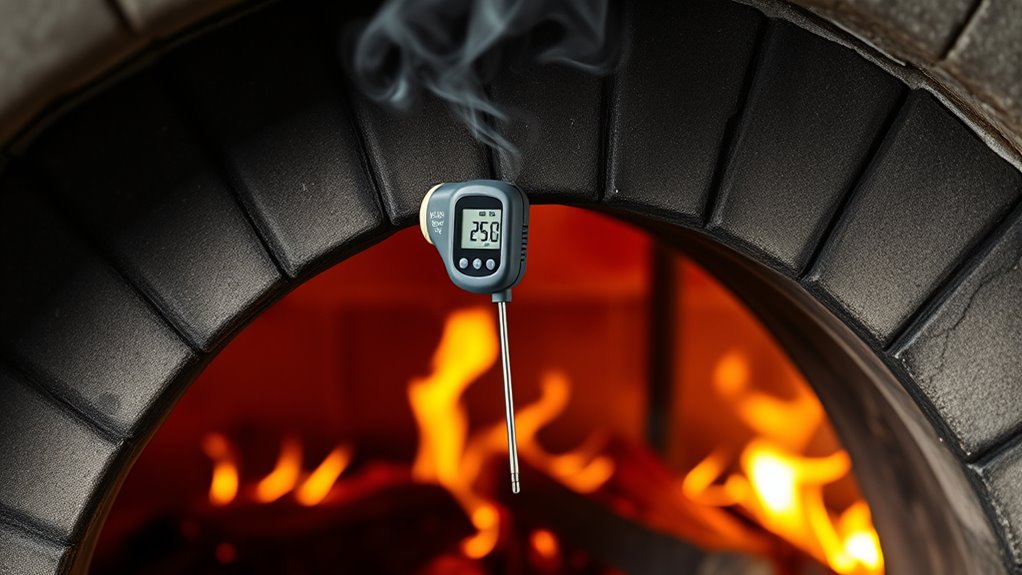

To prevent overheating in your wood-fired oven, regularly calibrate your thermocouples for accurate temperature readings. Use real-time sensors to monitor internal heat levels closely and identify hot spots. Adjust fire-building techniques and airflow to maintain consistent temperatures, preventing sudden spikes that could cause safety hazards. Consistent heat distribution and proper monitoring help guarantee safe, efficient operation. Keep exploring for more tips on maintaining ideal oven temperature and safety practices.

Get baking supplies delivered free with Prime
- Fast, free delivery on millions of items
- Prime Video, Amazon Music and more included
- Member-only deals all year
Key Takeaways
- Regularly calibrate thermocouples to ensure accurate temperature readings and prevent overheating.
- Implement real-time temperature monitoring to detect sudden spikes and adjust fire management accordingly.
- Analyze heat distribution to identify hot spots and refine fire-building or airflow techniques.
- Use integrated sensors for automated or manual adjustments to maintain safe, consistent oven temperatures.
- Follow industry best practices by continuously monitoring, calibrating, and optimizing heat control methods.
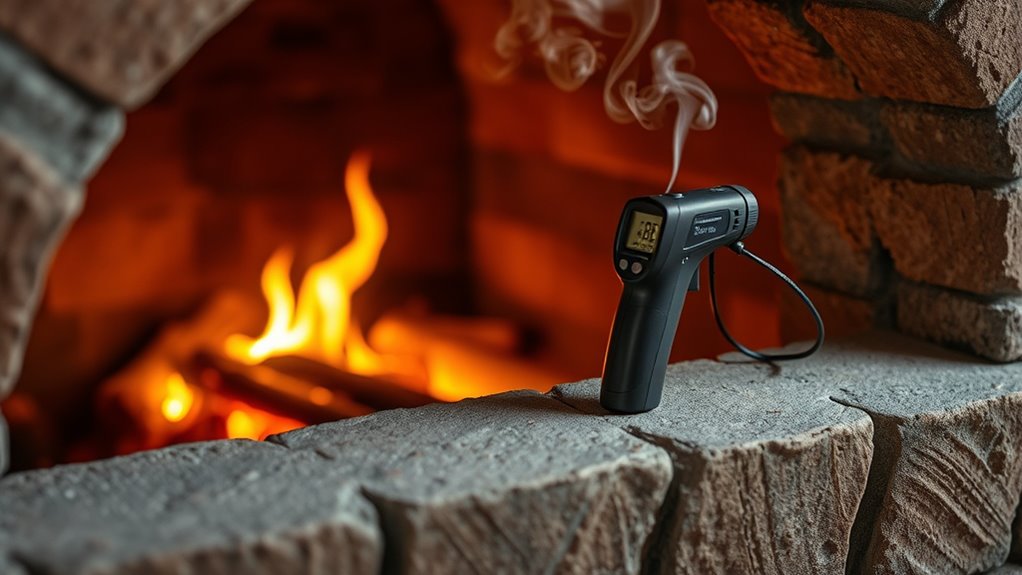
Monitoring temperature is indispensable for maintaining ideal conditions in various environments, from industrial processes to personal health. When it comes to wood-fired ovens, keeping a close eye on temperature isn’t just about achieving perfect cooking results—it’s about safety, efficiency, and preserving the integrity of your oven. Proper thermocouple calibration plays a crucial role here, ensuring that your temperature readings are accurate and reliable. If your thermocouples aren’t correctly calibrated, you risk misjudging the heat, which can lead to overheating or undercooking. Regular calibration checks help you maintain precise temperature control, giving you confidence that your oven operates within safe limits.
Accurate thermocouple calibration ensures safe, reliable temperature control in wood-fired ovens.
In a wood-fired oven, heat distribution analysis is equally important. Unlike modern electric ovens with even heat spread, traditional wood-fired models can develop hot spots, which may cause uneven cooking or, worse, dangerous overheating in certain areas. By analyzing heat distribution, you can identify these hot spots and adjust your fire-building techniques or airflow to promote more uniform heat. This process allows you to optimize how your oven heats up and retains heat, reducing the risk of overheating that can damage the oven’s structure or compromise safety.
Monitoring temperature in real-time helps you prevent overheating by providing immediate feedback on the oven’s internal conditions. Using accurate thermocouples, you can track temperature changes as the fire burns, making adjustments to airflow or adding more wood to maintain a steady, safe heat level. This proactive approach minimizes the chances of sudden temperature spikes that could cause safety hazards or damage your oven. Consistent monitoring also helps you fine-tune your cooking process, ensuring food is cooked evenly and efficiently without risking burnt or undercooked dishes.
Furthermore, integrating reliable temperature sensors with your oven setup allows for better heat control through automation or manual adjustments. When you understand how your heat distributes across the oven space, you can implement targeted strategies—like repositioning firewood or adjusting vents—to ensure consistent temperatures. This control not only improves the quality of your cooking but also prolongs the lifespan of your oven by preventing thermal stress caused by overheating. Additionally, understanding industry trends related to temperature management can help you adopt new techniques and tools for even better control and safety.
wood-fired oven temperature monitor
As an affiliate, we earn on qualifying purchases.
As an affiliate, we earn on qualifying purchases.
Frequently Asked Questions
How Often Should I Check the Oven Temperature During Cooking?
You should check the oven temperature every 15 to 20 minutes during cooking to avoid overheating. Use a reliable thermometer and guarantee it’s calibrated correctly for accurate readings. Implement heat retention techniques like proper door sealing to maintain consistent temperatures. Regular checks help you adjust fire size or vent openings as needed, ensuring your food cooks evenly without risking overheating, and keeps your oven performing at its best throughout your cooking session.
What’s the Ideal Temperature Range for Different Types of Food?
For ideal results, keep your oven temperature between 350-450°F for most cooking techniques. For baking bread or pizzas, aim for 450-500°F, while slow roasting needs around 300-350°F. Proper oven insulation helps maintain consistent heat, preventing overheating. Adjust your fire as needed, and use a reliable thermometer to monitor temperature. This guarantees your food cooks evenly and prevents damage to your oven caused by temperature fluctuations.
Can I Use a Smartphone App to Monitor Oven Temperature Remotely?
Yes, you can use a smartphone app to monitor your oven temperature remotely. Many modern wood-fired ovens come with smartphone integration and wireless sensors that send real-time data directly to your device. This setup allows you to keep an eye on the temperature from anywhere, helping you prevent overheating. Just make certain your sensors are compatible with your app and that your oven supports this technology for seamless monitoring.
How Do Ambient Weather Conditions Affect Oven Temperature Control?
Weather fluctuations and humidity impact your oven’s temperature control. When the weather changes unexpectedly, your oven’s heat can spike or dip, making it tricky to maintain consistent temperatures. Humidity adds a hazy heaviness, hindering airflow and heat retention. To tame these tricky tempests, monitor weather forecasts, adjust firewood and airflow, and keep an eye on ambient conditions, ensuring your oven stays steady despite shifting skies.
What Are the Signs of an Overheating Wood-Fired Oven?
You’ll notice signs of an overheating oven when the firebrick shows discoloration, turning dark or even black from excessive heat. Smoke billowing excessively indicates that the fire is too hot, causing combustion issues. If you see these signs, reduce the fire size immediately and regulate airflow. Monitoring these indicators helps prevent damage, ensuring your oven maintains a safe temperature for cooking and prolongs its lifespan.
thermocouple calibration kit for ovens
As an affiliate, we earn on qualifying purchases.
As an affiliate, we earn on qualifying purchases.
Conclusion
By regularly monitoring your oven’s temperature, you prevent overheating and ensure perfect results. Ignoring this step risks burnt bread and cracked stones, a costly mistake. Yet, with vigilance, you enjoy steady flames and consistent cooking, turning chaos into control. It’s a simple act that transforms unpredictability into precision. In the dance of fire and stone, your attention keeps the rhythm steady—proving that small measures make the biggest difference in mastering your wood-fired oven.
real-time oven temperature sensor
As an affiliate, we earn on qualifying purchases.
As an affiliate, we earn on qualifying purchases.
heat distribution analysis tools for ovens
As an affiliate, we earn on qualifying purchases.
As an affiliate, we earn on qualifying purchases.
Fall Picks
fall essentials
As an affiliate, we earn on qualifying purchases.