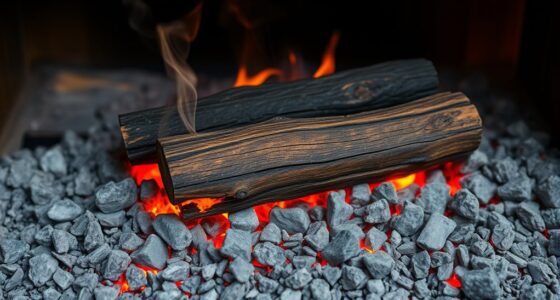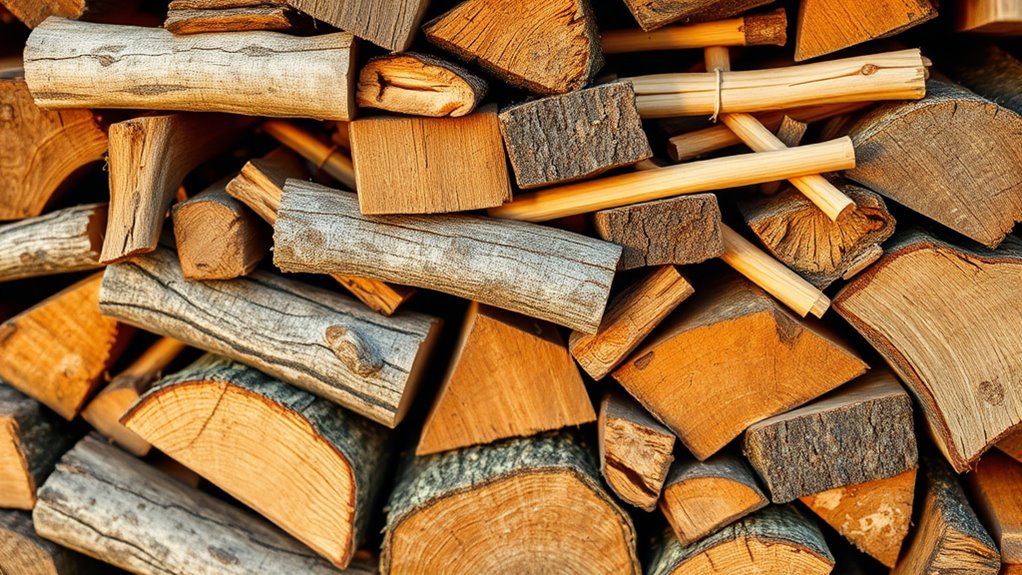
To build a stable base for your fire with kindling, start by clearing a safe, open area free of leaves and debris. Create a solid foundation by arranging kindling in a crisscross or teepee shape, ensuring proper airflow. Place larger logs nearby but spaced to maintain ventilation. Light the kindling at multiple points and gently blow on the base to encourage flames. For more tips on maintaining a reliable fire, keep exploring the essentials of building and managing your flames.
Key Takeaways
- Create a stable, flat base with dry kindling arranged in a crisscross or teepee structure for good airflow.
- Place larger, well-dried wood pieces nearby, spaced to prevent airflow obstruction.
- Light the kindling at multiple points to ensure an even, reliable ignition.
- Gently blow on the fire’s base to introduce oxygen and help the flames develop.
- Maintain proper ventilation throughout to support combustion and prevent smoke buildup.
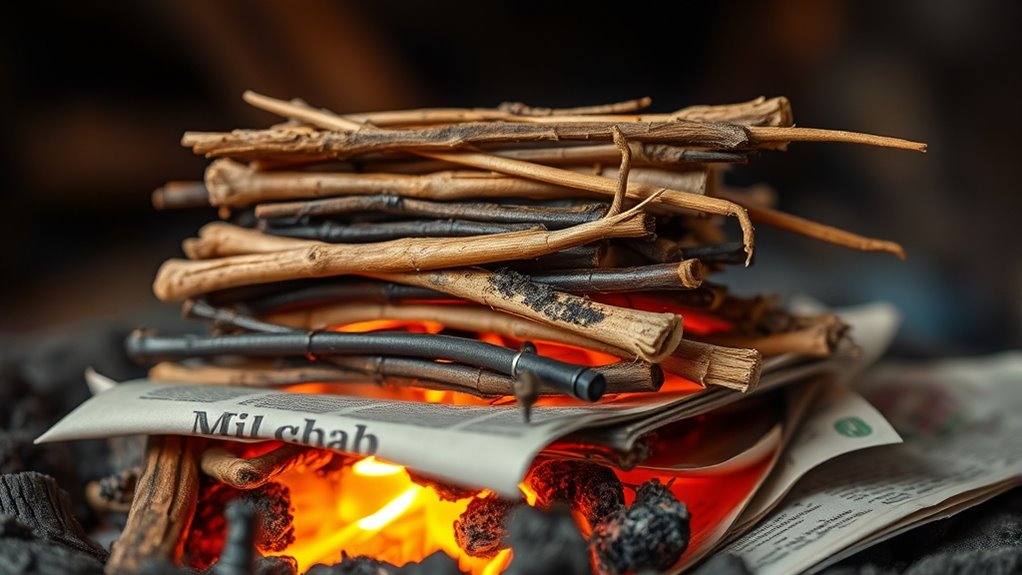
Starting a fire with kindling is a simple yet vital skill for camping, outdoor cooking, or creating a cozy fire at home. When you’re working with fire, safety should always be your top priority. Making certain of proper fire safety means paying attention to your surroundings, keeping a fire extinguisher or water nearby, and never leaving the fire unattended. Before you start, clear the area of any dry leaves, twigs, or other flammable debris to prevent accidental spread. You should also check your local regulations and fire bans to avoid legal issues or unintended wildfires.
Prioritize safety: clear debris, stay vigilant, and keep water nearby when starting a fire with kindling.
Once you’re ready to light the fire, focus on creating a stable base with your kindling. Proper ventilation is essential during this step because it allows enough oxygen to flow to the fire, helping it ignite and burn efficiently. If you’re indoors, make sure your chimney or fireplace damper is open. Outdoors, position your kindling in a way that allows air to circulate freely around it. Building the fire in an open, well-ventilated area minimizes smoke buildup and reduces the risk of harmful fumes accumulating, which can be dangerous if inhaled.
When stacking your kindling, use a crisscross or teepee formation. This structure promotes good airflow, making it easier for the fire to catch and sustain itself. Place larger pieces of wood nearby, but don’t crowd them too close to the kindling, as this can stifle airflow and hinder ignition. As you light the kindling, do so at multiple points if possible, to ensure an even, robust start. Once the kindling begins to burn steadily, gently blow on the base of the fire to introduce more oxygen, which encourages a stronger, more consistent flame.
Remember, a well-ventilated fire not only burns more efficiently but also produces less smoke and fewer harmful emissions. Proper ventilation also helps prevent dangerous buildup of carbon monoxide, especially indoors. As the fire grows, gradually add larger logs, maintaining airflow by arranging them loosely. Always monitor your fire closely, and keep a safe distance while it’s burning. If you notice excessive smoke or the fire isn’t catching, double-check that your ventilation is adequate and that your kindling is dry and properly arranged.
Additionally, using appropriate fire starters can help ensure a quick and clean ignition, reducing the need for excessive kindling or accelerants. Starting a fire with kindling might seem straightforward, but paying attention to fire safety and proper ventilation guarantees a safe, efficient, and warm fire that’s ready to serve your needs.
Frequently Asked Questions
What Are the Safest Materials to Use as Kindling?
You should use fire-resistant materials like dry, seasoned wood, or natural fire retardant materials such as cardboard or pinecones. Avoid highly flammable items like paper or leaves that can easily ignite uncontrollably. Fire retardant materials help prevent accidental spreading, making your fire safer. Always check that your kindling is dry and free of chemicals, and store fire-resistant materials properly to guarantee safety when building your fire.
How Do Weather Conditions Affect Starting a Fire With Kindling?
Ironically, weather’s your best friend when starting a fire—unless it’s too humid or windy. High humidity levels make it harder for kindling to catch and stay lit, while wind influence can blow out your flame or spread sparks unpredictably. To succeed, choose a calm, dry day, shield your fire from gusts, and guarantee your kindling is dry. Weather conditions truly test your patience and skill.
Can You Use Natural Debris as Kindling Effectively?
You can use natural debris as kindling effectively if you select fire-resistant landscaping materials and follow wildfire prevention tips. Gather small, dry twigs, leaves, and bark that ignite easily, but make certain they’re away from flammable structures. Always clear the area of excess debris, and keep a safe distance from fire-prone zones. Using natural debris responsibly helps maintain safety and reduces wildfire risks while providing reliable kindling for your fire.
What Are Common Mistakes to Avoid When Building a Fire?
When building a fire, you want to avoid common mistakes like overcrowding the fire and neglecting fire safety. Always guarantee proper ventilation to allow airflow, which helps the fire burn efficiently and safely. Don’t use damp or green materials, as they produce smoke and creosote buildup. Keep a safe distance from flammable objects, and never leave the fire unattended. Properly extinguish it when done to prevent accidents.
How Can I Tell if My Fire Is Burning Efficiently?
You can tell your fire burns efficiently by observing the fire size and smoke color. For example, a steady, small to medium flame indicates good combustion, while large, uncontrollable flames suggest excess fuel. Clear, bluish smoke signals efficient burning, whereas thick, gray smoke means incomplete combustion. If your fire produces minimal smoke and maintains a consistent size, you’re on the right track for ideal heat and energy use.
Conclusion
Now that you know how to start fires with kindling, you’re well on your way to staying warm and cozy. Did you know that using properly arranged kindling can increase your fire’s efficiency by up to 30%? That means less effort and more heat with fewer sparks. So next time you build a fire, remember to use small, dry pieces and a solid base. You’ll be warming up in no time—efficiently and safely.