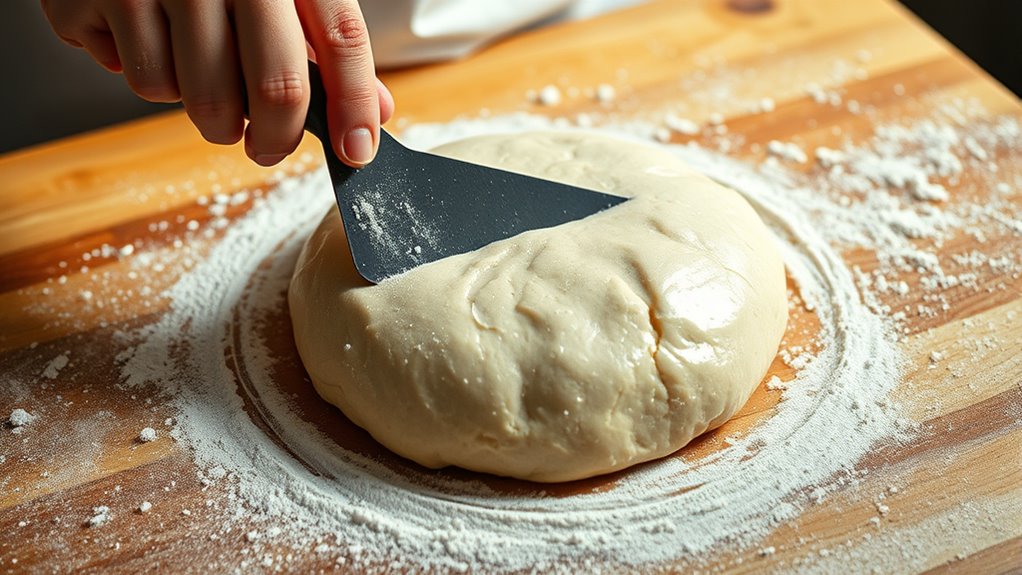

When handling sticky dough, lightly dust your work surface with a small amount of flour to prevent sticking. Use a dough scraper to lift, fold, and turn the dough gently, which helps develop gluten and manage its stickiness without overworking it. Avoid adding too much flour, as this can alter the dough’s texture. Practicing these techniques will improve your handling skills and lead to better baking results—discover more tips to perfect your process.
Key Takeaways
- Use a dough scraper to lift, fold, and turn sticky dough without over-flouring, preventing tearing and maintaining gluten structure.
- Lightly dust the work surface and scraper with minimal flour to prevent sticking while preserving dough hydration.
- Refrain from excessive kneading; instead, fold and stretch the dough using the scraper to develop gluten gently.
- Keep hands and tools lightly floured to avoid sticking, but avoid adding too much flour that can alter dough consistency.
- Recognize dough’s texture and adjust handling techniques accordingly to improve manageability and dough elasticity.
Dealing with sticky dough can be frustrating, but with the right techniques, you can handle it easily. The key lies in understanding dough consistency and how to manage it effectively. When dough is too sticky, it often feels impossible to work with, but a few simple steps can turn that sticky mess into a manageable, smooth dough. The first step is to assess the dough’s consistency. If it’s overly wet and sticking to your hands or work surface, you need to adjust your approach by applying flour thoughtfully.
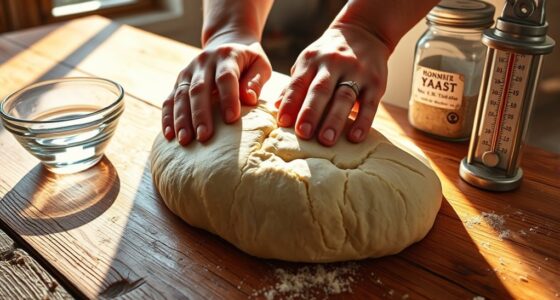
Applying flour correctly is essential. Instead of sprinkling a lot of flour all at once, start by dusting your work surface lightly. Use a small amount of flour and spread it evenly. This creates a barrier between the dough and the surface, preventing sticking without overly altering the dough’s hydration. When you’re working with the dough, occasionally dust your hands or the dough itself with a little flour to prevent it from sticking to your fingers or tools. But be cautious—using too much flour can change the dough’s texture and affect the final product’s quality. The goal is to maintain just enough flour to keep things manageable without compromising the dough’s intended consistency.
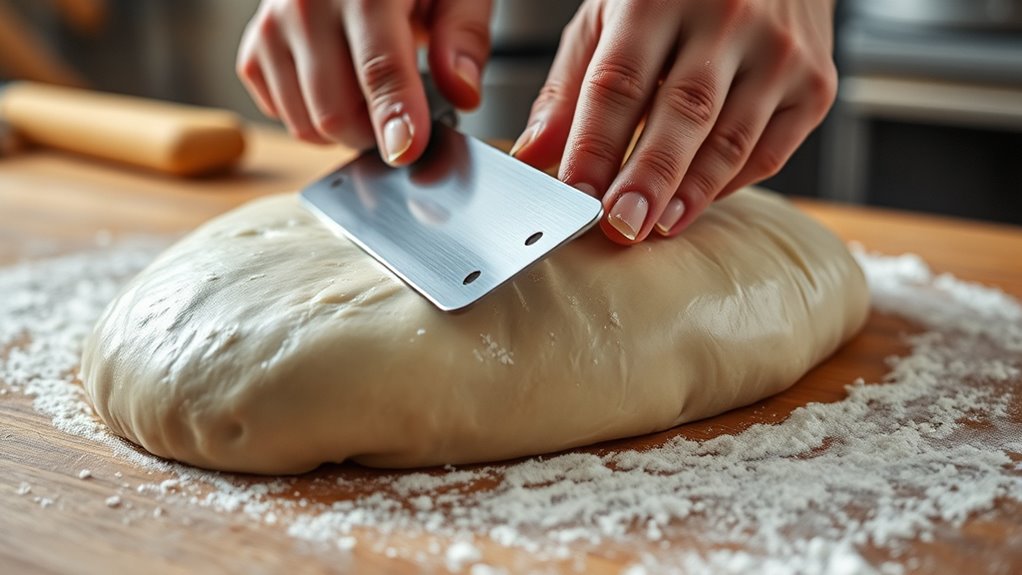
A dough scraper becomes your best friend in this situation. It’s a versatile tool that helps lift and fold sticky dough without tearing it apart. When the dough sticks to your work surface or your hands, use the scraper to gently lift and fold it. This technique not only prevents sticking but also helps develop gluten structure, resulting in a better rise and texture. When handling sticky dough, don’t try to knead it excessively on a floured surface; instead, use the scraper to lift, fold, and turn the dough. This keeps the dough from becoming overly dry or dense while still managing its stickiness. Additionally, understanding the gluten development process can help you achieve the desired dough elasticity and manage stickiness more effectively.
Frequently Asked Questions
Can I Use a Plastic Scraper Instead of a Metal One?
Yes, you can use a plastic scraper instead of a metal one. Plastic scraper alternatives are flexible and gentle on your dough, making them a good option for handling sticky dough. However, when comparing metal versus plastic, metal scrapers are more durable and sturdy for tougher tasks. Choose a plastic scraper if you prefer a gentler touch or need a lightweight, less abrasive tool for delicate work.
How Often Should I Flour My Work Surface During Kneading?
Think of your dough as a delicate dance partner—you don’t want to trip over sticky spots. You should flour your work surface just enough to keep the dough from sticking, adding a light dusting whenever it begins to cling too much. Keep an eye on the dough’s consistency, and apply flour sparingly, like seasoning, so it stays manageable without becoming dry or tough. This balance makes kneading smooth and effective.
Is It Okay to Add More Flour if Dough Remains Sticky?
Yes, it’s okay to add more flour if your dough remains sticky. Flour addition helps adjust dough consistency, making it easier to work with. Just sprinkle a little at a time, knead gently, and monitor the texture. Too much flour can make the dough tough, so add gradually. This way, you’ll keep the dough manageable without compromising its elasticity and flavor.
What Types of Flour Work Best for Sticky Dough?
Most people think only specialized flours work for sticky dough, but ironically, all-purpose flour is your best bet. It’s versatile, absorbs moisture well, and allows gluten development without making your dough overly tough. Bread flour can work too, thanks to its higher protein content, but avoid cake or pastry flour—they lack the gluten structure needed. Keep in mind, choosing the right flour helps control stickiness while enhancing gluten development.
How Do I Clean My Dough Scraper Properly?
To clean your dough scraper properly, start by rinsing it with warm water immediately after use. Use a brush or sponge to scrub away any dough residue, paying attention to the edges and corners. For thorough dough scraper maintenance, avoid soaking it for long periods, and dry it completely to prevent rust or corrosion. Regular cleaning keeps your tool in great shape and ready for your next baking session.
Conclusion
Think of handling sticky dough like steering a boat through choppy waters—you need the right tools and a steady hand. Using a dough scraper and bench flour transforms a sticky mess into smooth sailing. I once struggled with sticking dough until I realized a little flour and patience made all the difference. Now, with these techniques, baking feels like a breeze, turning chaos into creation. Embrace the mess; mastery is just a scraper away.