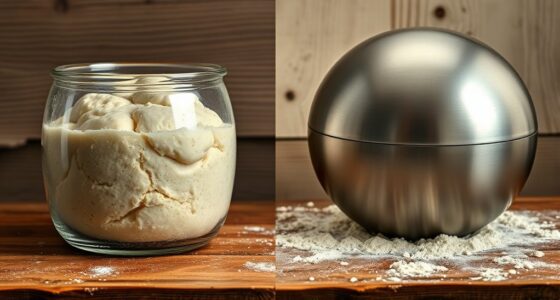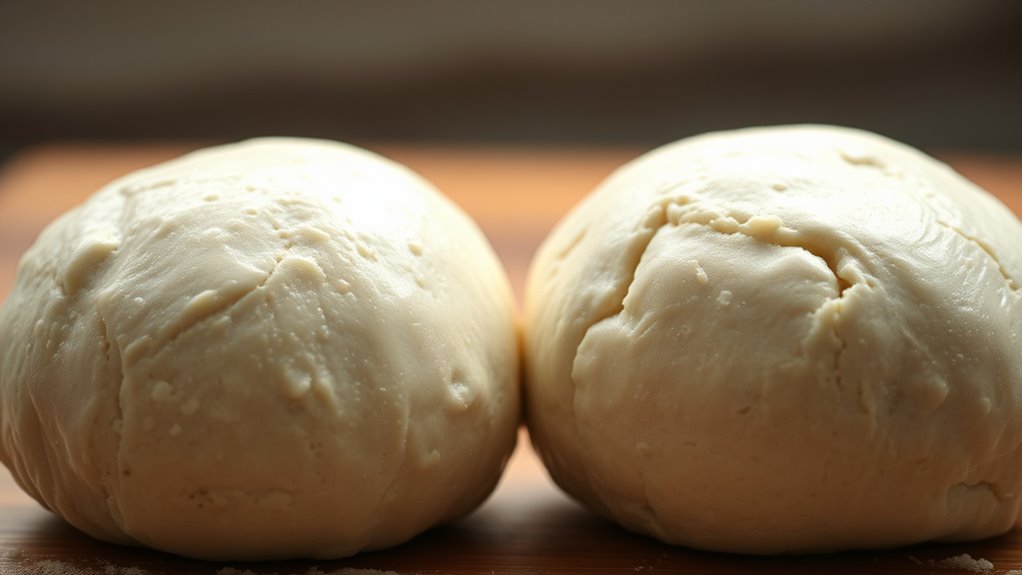

Understanding how water percentage affects dough elasticity is key to baking success. When you add the right amount of water, gluten proteins form a strong, stretchy network that gives dough its flexibility and resilience. Too little water makes it stiff and hard to handle, while too much creates a sticky, difficult dough. Mastering hydration guarantees your bread develops proper structure and texture. If you keep exploring, you’ll discover more ways hydration influences your baking outcomes.
Key Takeaways
- Optimal hydration promotes gluten network formation, resulting in dough that is elastic and easy to handle.
- Low water content leads to stiff, less extensible dough with poor elasticity.
- Excessive water causes sticky dough, reducing elasticity and making it difficult to shape.
- Proper hydration ensures balanced fermentation, enhancing dough resilience and stretchability.
- Adjusting water percentage directly influences dough’s elasticity, texture, and final baked product quality.
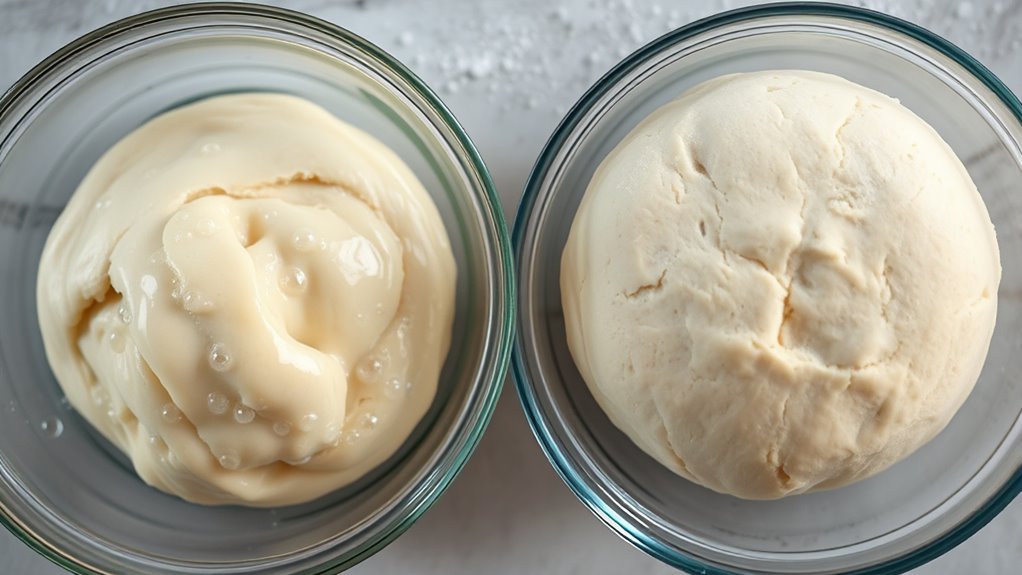
Staying properly hydrated is crucial for maintaining your overall health and well-being. When it comes to baking, especially bread-making, hydration levels directly influence how your dough behaves. Water content in your mixture affects gluten development, which is the foundation of dough elasticity and strength. As you add water to flour, gluten proteins begin to form networks, giving the dough its stretchiness. The amount of water determines how well these proteins can interact, creating a flexible yet resilient structure. Too little water results in a stiff, difficult-to-work dough, while too much can make it overly sticky and hard to handle. Striking the right hydration balance ensures your dough reaches ideal gluten development, resulting in a good rise and a pleasing crumb.
Proper hydration is key to optimal gluten development and ideal bread texture.
Hydration also plays a pivotal role in fermentation dynamics. As yeast consumes the sugars in your dough, it produces carbon dioxide and alcohol, which cause the dough to rise. Adequate water content helps facilitate these fermentation processes by creating an environment where yeast can thrive and produce gases efficiently. When hydration levels are just right, fermentation progresses smoothly, leading to a well-risen loaf with a desirable crumb structure. On the other hand, if your dough lacks sufficient water, fermentation slows down because yeast struggles to move and interact within a dense matrix. Conversely, excessive hydration may cause over-fermentation, weakening the gluten network and risking a collapse or overly open crumb. Understanding the relationship between water percentage and fermentation dynamics allows you to control the timing and quality of your bake.
Furthermore, hydration impacts the dough’s handling properties. A properly hydrated dough feels tacky but workable, making kneading easier and more effective. This tactile feedback is a good indicator of proper gluten development and fermentation activity. As you develop your skills, you’ll notice that adjusting water content can fine-tune the dough’s elasticity and extensibility, critical for shaping and scoring. Remember, the environment also influences hydration; humidity and flour type matter. Adapt your water amount accordingly to maintain consistent results, especially when experimenting with different flours or baking conditions. Additionally, understanding how hydration levels influence dough behavior can help you troubleshoot and refine your baking techniques more effectively.
In the end, understanding how water percentage influences gluten development and fermentation dynamics empowers you to produce better bread. It’s not just about following a recipe but recognizing how hydration affects each stage of dough formation and fermentation. By mastering this, you’ll improve your baking precision and consistently create loaves with ideal texture, flavor, and structure. Hydration is the foundation of successful bread baking — pay attention to it, and your baked goods will reflect your skill and understanding of these vital processes.
Frequently Asked Questions
How Does Hydration Level Influence Fermentation Speed?
Higher hydration levels speed up fermentation because they improve hydration consistency, allowing yeast to access nutrients more easily. With more water, fermentation dynamics accelerate, resulting in quicker rise times. Conversely, lower hydration slows fermentation, making dough take longer to develop flavor and elasticity. So, adjusting hydration influences how fast fermentation occurs, impacting dough’s overall texture and flavor development. Keep in mind, the right hydration balances fermentation speed and dough handling.
Can Adjusting Water Content Improve Dough Flavor?
Increasing water content can boost dough flavor by enhancing flavor compounds through better water absorption. Studies show higher hydration levels often lead to more complex, richer tastes in baked products. By adjusting water content, you improve flavor enhancement because the dough retains more natural flavors and allows fermentation byproducts to develop fully. So, yes, tweaking water amounts can markedly improve your bread’s taste, making it more aromatic and delicious.
What Role Does Hydration Play in Gluten Development?
Hydration plays a vital role in gluten development by facilitating the formation of a strong gluten network. When you add the right amount of water, the dough becomes more extensible, allowing gluten strands to stretch and align properly. This results in better dough elasticity and structure. Too little water, and gluten won’t develop fully; too much, and the dough may become overly sticky. Balancing hydration is key for maximum gluten formation and dough performance.
How Does Hydration Affect Dough Temperature During Mixing?
You’ll notice that hydration consistency directly influences dough temperature during mixing. Higher hydration levels generate more heat because of increased friction, especially if you use vigorous mixing techniques. Conversely, lower hydration keeps the dough cooler. To control temperature, adjust your mixing speed and duration based on your dough’s hydration level. This way, you prevent overheating, ensuring ideal dough development and consistency for your baked goods.
Is There an Optimal Hydration Percentage for Different Bread Types?
Yes, there’s a ideal hydration percentage for different bread types. You should aim for hydration consistency that suits each bread’s desired dough texture. For example, lean baguettes need lower hydration for a firm crumb, while ciabatta benefits from higher hydration for openness. Adjust hydration carefully to balance elasticity and handling, ensuring your dough maintains the right texture for your specific bread, leading to better crust and crumb.
Conclusion
As you explore the world of dough, remember that water’s role isn’t just about moisture—it’s about unleashing flexibility and strength when you least expect it. Sometimes, a simple splash can transform your bread’s texture, revealing how small changes lead to big results. So, keep experimenting, trusting that the right hydration level might surprise you, just like a perfect loaf appearing when you least anticipate it. The magic’s often in the unexpected moments.