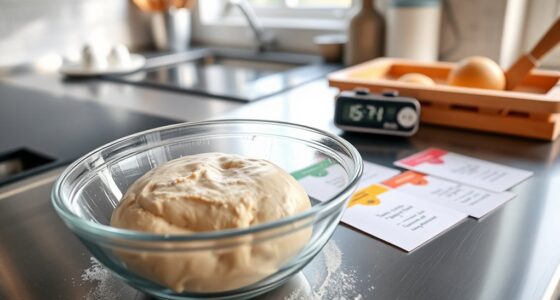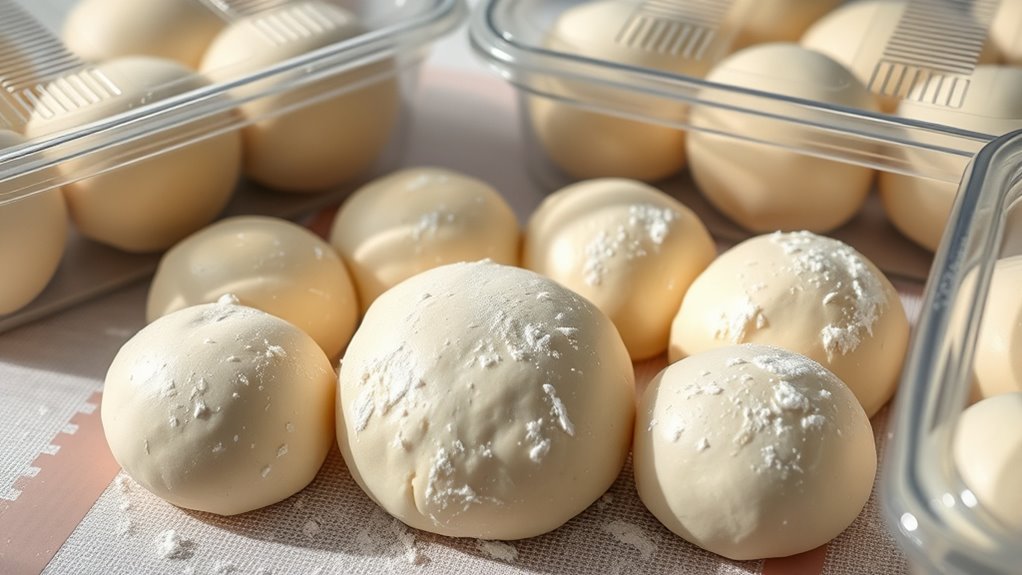
To properly store dough balls, place them in airtight proofing boxes or containers that retain moisture and prevent dehydration. Space each dough ball sufficiently to allow for expansion and prevent uneven fermentation. Label containers with the storage date and regularly monitor temperature and humidity to guarantee ideal proofing conditions. Managing hydration levels, avoiding overcrowding, and maintaining consistent environments help achieve the best results. Keep exploring these tips to master perfect dough storage techniques.

Get baking supplies delivered free with Prime
- Fast, free delivery on millions of items
- Prime Video, Amazon Music and more included
- Member-only deals all year
Key Takeaways
- Use airtight proofing boxes or containers with tight-fitting lids to retain moisture and prevent dehydration.
- Space dough balls adequately in containers or proofing boxes to allow for proper expansion during proofing.
- Label containers with storage date to monitor fermentation time and avoid over-proofing.
- Maintain consistent temperature and humidity settings in proofing environments to ensure uniform fermentation.
- Cover dough with plastic wrap or damp cloth if not stored in sealed containers to preserve hydration.
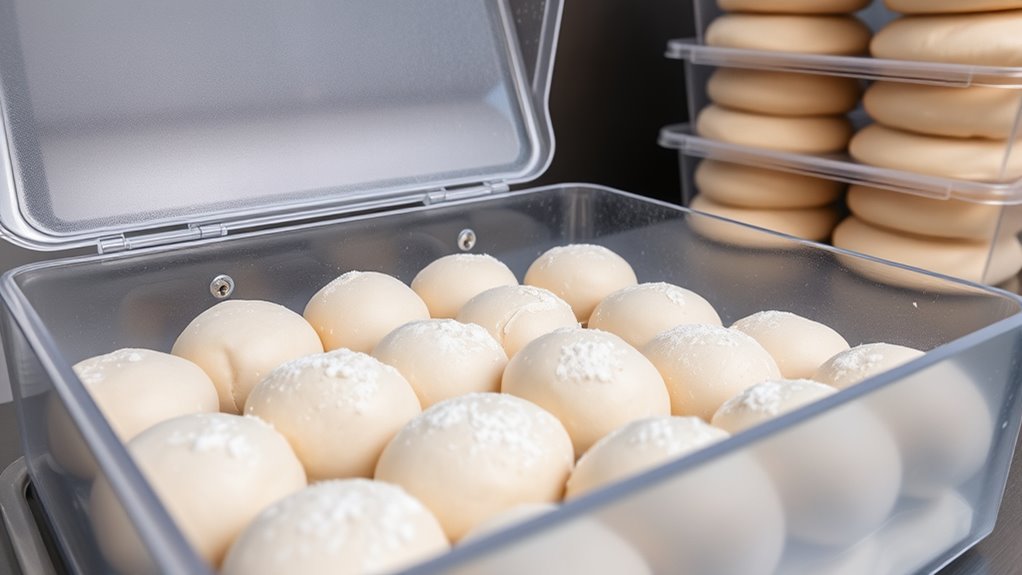
Storing dough balls properly is essential to maintaining their freshness and ensuring a perfect final product. When it comes to proofing boxes and containers, your primary goal should be to create an environment that supports fermentation control and preserves dough hydration. Proper storage isn’t just about keeping the dough warm; it’s about managing how the yeast ferments and how much moisture remains within the dough, both of which critically influence the texture and flavor of your baked goods.
Proper dough storage balances fermentation control and moisture retention for optimal baking results.
To begin with, fermentation control is key. When dough ferments too quickly or unevenly, it can lead to inconsistent results. Using proofing boxes with adjustable temperature and humidity settings helps you regulate this process. A slightly warmer environment accelerates fermentation, but too warm can cause over-proofing. Conversely, cooler temperatures slow it down, giving you more control over timing. Maintaining consistent conditions ensures the yeast ferments at an ideal rate, producing a dough with good flavor and structure. Proper storage also prevents unwanted microbial activity that could spoil the dough or alter its characteristics. Additionally, understanding storage conditions can help optimize fermentation and prevent spoilage.
Dough hydration plays a crucial role in how well the dough stores and proofs. Hydration levels determine how moist and elastic the dough remains during storage. If the dough is too dry, it becomes stiff and difficult to work with later, while overly hydrated dough can become sticky and challenging to handle. When storing dough balls, make sure they are covered adequately to retain moisture. Using airtight containers or proofing boxes with tight-fitting lids prevents dehydration. This helps maintain the right dough hydration, ensuring it remains pliable and ready for baking without losing its desirable texture.
Positioning your dough balls within the storage container is also important. Space them sufficiently apart to allow for expansion during fermentation; overcrowding can hinder proper proofing and lead to uneven fermentation. If you’re storing multiple dough balls, consider using individual proofing boxes or sections within a larger container to avoid cross-contamination and uneven fermentation. Additionally, always pre-shape the dough into balls before storage to promote uniform fermentation and easier handling later.
Finally, don’t forget to label your containers with the date of storage. This helps you monitor fermentation progress and avoid keeping dough for too long, which can compromise quality. Regularly check the environment—if it’s too dry or too humid, adjust your proofing box settings accordingly. By paying close attention to fermentation control and dough hydration, you’ll ensure each stored dough ball maintains its ideal condition, leading to consistently excellent baked results every time.
airtight proofing boxes for dough
As an affiliate, we earn on qualifying purchases.
As an affiliate, we earn on qualifying purchases.
Frequently Asked Questions
How Long Can Dough Balls Be Stored Before They Spoil?
You can typically store dough balls for up to 24 to 72 hours before dough preservation becomes an issue. Keep them in a sealed container or proofing box in the refrigerator to extend their storage duration. After this period, the dough might lose its quality or spoil. Always check for signs of spoilage, such as an off smell or mold, before using stored dough.
Can Proofing Boxes Be Used for Freezing Dough?
Imagine you’re freezing dough for future use. Yes, proofing boxes can be used for freezing dough, but guarantee they’re airtight to prevent freezer burn. Using proper freezing techniques, you can extend dough preservation up to three months. Just place the dough in the proofing box, seal it tightly, and label it with the date. This helps maintain dough quality and makes thawing easier when you’re ready to bake.
What Materials Are Best for Proofing Containers?
You should choose proofing container materials that are food safe plastics, such as polyethylene or polypropylene, to guarantee safety and durability. These materials resist moisture and temperature changes, making them ideal for proofing dough. Avoid non-food-safe plastics, which can contaminate your dough. Using food safe plastics also makes cleaning easier and helps maintain the quality of your dough during the proofing process.
How Do I Prevent Dough From Drying Out in Storage?
Think of your dough as a delicate bloom needing a gentle, protective embrace. To prevent drying out, you must maintain proper dough hydration and keep your storage temperature just right. Cover your dough with a damp cloth or airtight lid, ensuring moisture stays in. Keep it at a consistent, cool temperature to slow evaporation, safeguarding its softness and elasticity. This way, your dough remains lively and ready for baking.
Is Refrigeration Necessary for Dough Proofing?
Refrigeration isn’t necessary for dough proofing, but it can slow dough fermentation and yeast activity, which helps develop flavor. If you want a slower rise or plan to proof the dough over an extended period, refrigerate it to regulate yeast activity. Otherwise, proof at room temperature for quicker fermentation. Just make certain your dough is covered properly to prevent drying out during proofing, regardless of the temperature.
dough proofing containers with humidity control
As an affiliate, we earn on qualifying purchases.
As an affiliate, we earn on qualifying purchases.
Conclusion
Properly storing your dough balls is key to achieving perfect bread. Using proofing boxes and containers keeps the dough at ideal temperatures and humidity levels, ensuring consistent results. Did you know that dough can rise up to 50% more effectively in the right environment? By mastering storage techniques, you’ll not only save time but also elevate your baking game. Keep experimenting and enjoy the delicious, bakery-quality bread you create!
dough storage containers with lids
As an affiliate, we earn on qualifying purchases.
As an affiliate, we earn on qualifying purchases.
proofing box with adjustable temperature
As an affiliate, we earn on qualifying purchases.
As an affiliate, we earn on qualifying purchases.
Halloween Picks
halloween
As an affiliate, we earn on qualifying purchases.