In hot weather, you should reduce your dough’s hydration by decreasing the amount of water or liquids in the recipe. This helps prevent the dough from becoming too sticky and difficult to handle. Additionally, cut back on yeast or use cooler ingredients to slow fermentation and avoid overproofing. Managing temperature and hydration carefully keeps your dough stable and easy to work with. Keep exploring for even more tips to perfect your dough in the heat.
Key Takeaways
- Reduce the amount of water or liquids in your dough recipe to prevent stickiness in hot weather.
- Use cooler or chilled water during mixing to slow yeast activity from the start.
- Limit the amount of yeast or switch to slower-acting varieties to control fermentation speed.
- Keep dough in a cooler environment or refrigerate during proofing to prevent overfermentation.
- Monitor dough closely and adjust hydration and yeast levels as needed for optimal handling.
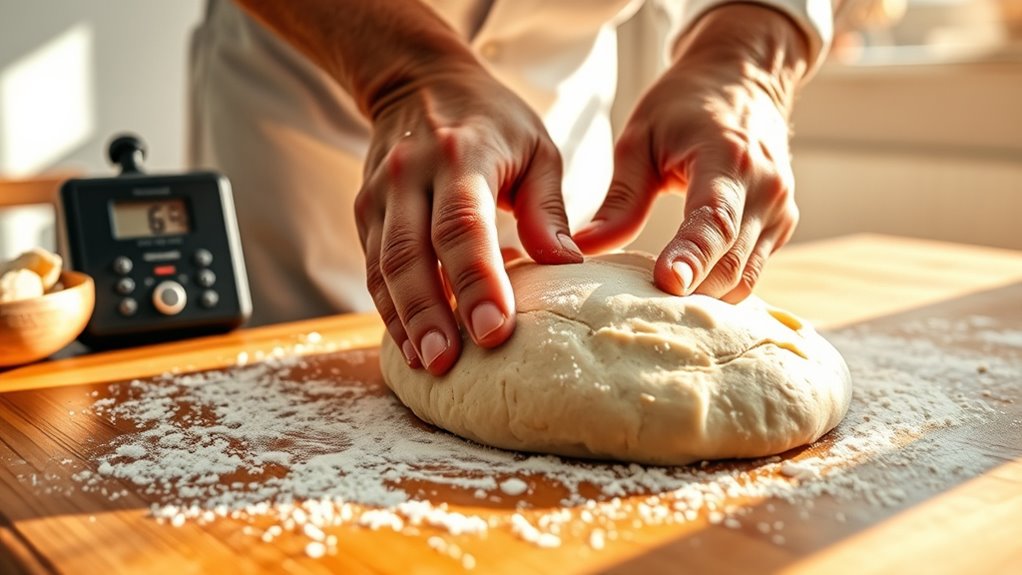
When the temperature rises, managing dough becomes more challenging because heat speeds up fermentation and can cause your dough to overproof or become sticky. To keep things on track, temperature control is essential. High temperatures boost yeast activity, making the dough ferment faster than usual. If you don’t adjust your process, your dough might overproof, losing its structure and resulting in a dense or sour final product. Therefore, controlling the environment where your dough rests is crucial. You can do this by chilling your dough in the refrigerator during proofing or by working in a cooler space. Keeping the dough cool slows down yeast activity, giving you more control over fermentation time and preventing overproofing. Additionally, using appliance maintenance plans like a refrigerator or climate-controlled proofing box can help maintain a consistent temperature environment. Reducing hydration is another effective strategy. When it’s hot, your dough tends to absorb moisture quickly and can become overly sticky, making it difficult to handle. Cutting back on water or other liquids in your recipe helps prevent this problem. A slightly stiffer dough is easier to work with in hot weather because it’s less prone to spreading or sticking to surfaces. This adjustment also helps maintain gluten structure, which can be compromised if your dough is too wet and warm. Remember, the goal is to strike a balance: enough hydration for proper gluten development, but not so much that it becomes unmanageable in the heat. Monitoring yeast activity is vital during hot weather. Yeast reacts rapidly to increased temperatures, accelerating fermentation. To slow this process, you might opt for a smaller amount of yeast or switch to a cooler proofing environment. Using cooler water when mixing dough can also temper yeast activity from the start. Additionally, consider using a different type of yeast, such as a refrigerated or cold-start variety, which is less active at higher temperatures. By controlling yeast activity, you prevent your dough from overproofing, which can lead to a weak gluten network, poor oven spring, and dense texture.
Frequently Asked Questions
How Does Humidity Affect Dough Management in Hot Weather?
Humidity challenges in hot weather can make it tricky to control dough consistency. When humidity is high, your dough may become too sticky and difficult to handle, requiring you to adjust the hydration levels carefully. You might need to reduce water slightly or incorporate more flour to maintain the right texture. Keep an eye on environmental conditions, and don’t hesitate to tweak your recipe to guarantee your dough remains manageable and ideal for baking.
Can Alternative Yeast Types Improve Dough Stability in Heat?
Yes, using alternative yeast types can improve dough stability in heat. For example, employing slow-fermenting or cold-active yeasts helps control fermentation, preventing over-proofing and dough collapse. These yeasts work better in warmer conditions, allowing you to maintain consistent dough quality. By choosing the right yeast, you can reduce the risk of over-rising and achieve a more stable, manageable dough despite high temperatures.
What Are the Signs of Overproofed Dough in High Temperatures?
If your dough is overproofed in high temperatures, you’ll notice it loses elasticity and becomes overly soft, making it difficult to shape. The dough may also develop a dull appearance, and you might see irregular or overly thick crust formation after baking. These signs indicate the yeast has over-activated, causing the gluten to weaken, which affects both the dough’s elasticity and the final crust quality.
How Does Temperature Impact Fermentation Timing and Control?
Did you know that for every 10°F increase, fermentation speed doubles? Temperature control is vital because it directly impacts fermentation pace. When it’s hot, yeast works faster, so you need to monitor and adjust your timing to prevent overproofing. Cooler temperatures slow down fermentation, giving you more control. By managing temperature carefully, you guarantee consistent dough development, avoiding surprises and achieving perfect results every time.
Are There Specific Ingredients to Help Manage Dough Hydration?
You can manage dough hydration by adjusting ingredients like flour and water. Use slightly less water or add absorbent ingredients such as dry milk powder or a small amount of flour to control hydration. These adjustments help stabilize dough consistency in hot weather. By tweaking ingredient ratios, you keep the dough manageable, prevent over-fermentation, and maintain ideal texture and fermentation control during warm conditions.
Conclusion
As the sun blazes overhead, imagine your dough resting peacefully, its surface smooth and resilient against the heat. By reducing hydration and yeast, you’re guiding it to stay strong and elastic, even under the fiery sky. Feel the satisfaction of mastering these adjustments, knowing your bread will rise beautifully despite the scorching weather. Embrace the challenge, and let your dough flourish like a cool breeze on a hot day—calm, steady, and perfectly crafted.