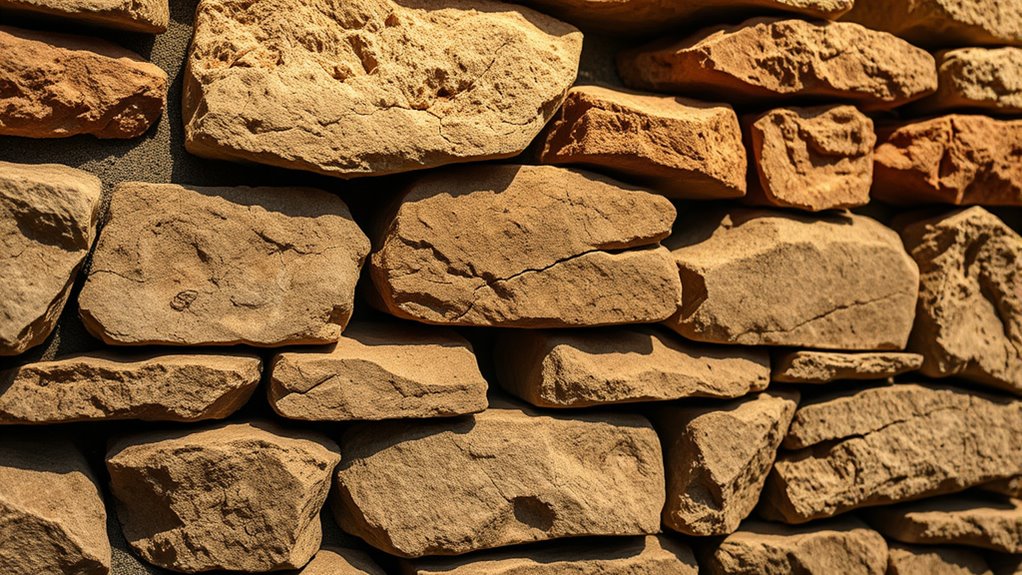

Stones and bricks act as thermal mass by absorbing heat during the day and releasing it slowly, helping you keep indoor temperatures stable. Dense materials can store more heat, which they slowly release when it gets cooler. Insulation plays a key role by helping these materials retain heat longer. If you want to understand how to optimize their use for energy efficiency, keep exploring the details behind thermal mass and material properties.

Get baking supplies delivered free with Prime
- Fast, free delivery on millions of items
- Prime Video, Amazon Music and more included
- Member-only deals all year
Key Takeaways
- Stones and bricks are dense materials with high thermal mass, allowing them to absorb and store significant heat.
- Their high density enables them to absorb heat during the day and release it slowly at night.
- Proper insulation enhances their ability to retain heat and regulate indoor temperatures effectively.
- The effectiveness depends on material density and insulation quality, influencing heat retention and release.
- Using stones and bricks as thermal mass reduces reliance on artificial heating by naturally stabilizing indoor temperatures.
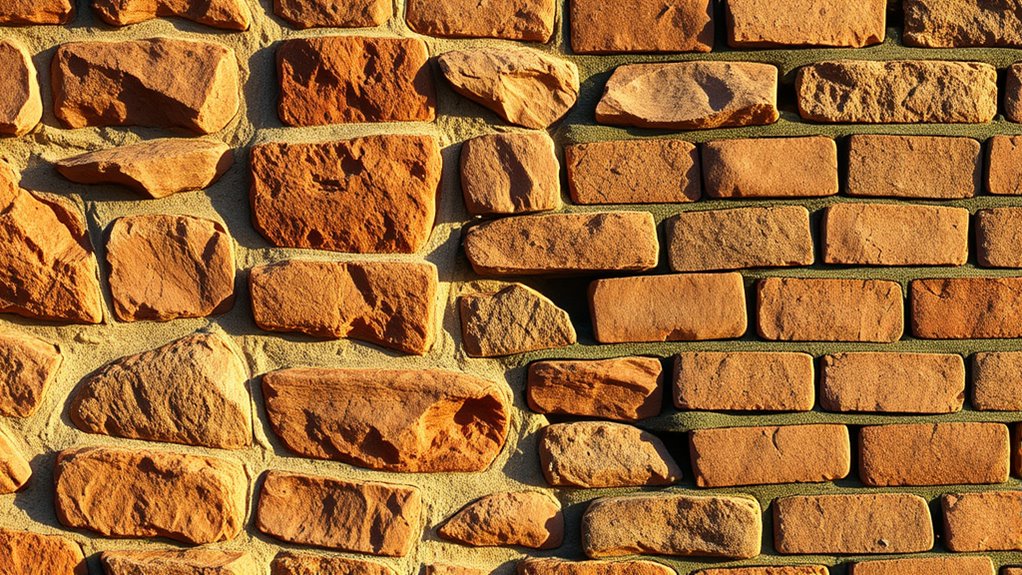
Thermal mass refers to the ability of a material to absorb, store, and release heat, playing a essential role in regulating indoor temperatures. When you consider materials like stones and bricks, their thermal mass can help create a more stable indoor environment by evening out temperature fluctuations. These materials absorb heat during the day when temperatures are high and release it slowly as it cools off, reducing the need for artificial heating or cooling. Their effectiveness depends on several factors, including insulation effects and material density.
Insulation effects are critical because they determine how well the thermal mass interacts with the surrounding environment. If a material is poorly insulated, it might lose the heat it absorbs quickly, diminishing its ability to regulate indoor temperatures effectively. Conversely, well-insulated thermal mass can retain heat longer, providing a more consistent indoor climate. This is why construction choices often include insulating layers behind or around thermal mass materials to maximize their benefits.
Material density also plays a crucial role in how thermal mass functions. Denser materials, like solid bricks or stones, have a higher capacity to store heat due to their greater mass per unit volume. This means they can absorb more heat during the day and release it gradually over time. Lighter materials, such as certain types of lightweight bricks or foam insulations, have less material density and therefore lower thermal mass. They may still contribute to insulation effects but won’t substantially influence indoor temperature stability through heat storage.
The relationship between material density and insulation effects influences how you might design a building. For instance, if you want to leverage thermal mass for passive solar heating, choosing dense materials with high heat capacity makes sense. These materials will absorb the sun’s heat during the day and release it slowly at night, maintaining a comfortable temperature. On the other hand, if your goal is to minimize heat transfer altogether, lighter materials with better insulation properties might be preferable, reducing heat flow and keeping the indoor space cool.
Understanding how these elements work together helps you optimize your building’s energy efficiency. Dense materials with effective insulation can serve as a thermal buffer, reducing reliance on mechanical heating and cooling systems. By selecting the right combination of material density and insulation effects, you can create a space that stays comfortable naturally, saving energy and reducing costs over time.
Products Worth Considering

Ninja Artisan 5-in-1 Portable Electric Pizza Oven, Blue & Gold

Cuisinart 6-Quart Basket Air Fryer with Viewing Window, Stainless Steel and Black (AIR-200NAS)

Cuisinart Portable Tabletop Propane Patio Heater, 11,000 BTU, Red
As an affiliate, we earn on qualifying purchases.
Frequently Asked Questions
How Does Thermal Mass Affect Indoor Air Quality?
Thermal mass improves indoor air quality by stabilizing temperature fluctuations, helping you maintain thermal comfort. When materials like stones and bricks absorb and release heat slowly, they reduce drafts and cold spots, creating a healthier environment. Plus, their durability ensures long-lasting performance, contributing to consistent indoor conditions. This steady temperature regulation minimizes stress on HVAC systems, leading to better air quality and comfort for you.
Can Thermal Mass Contribute to Energy Savings in Summer?
Think of thermal mass as your home’s silent guardian during summer. It absorbs heat like a sponge, then releases it slowly, enabling passive cooling and steady heat regulation. This process helps keep indoor temperatures stable, reducing your reliance on air conditioning. By harnessing the natural properties of stones and bricks, you save energy, lower bills, and create a more comfortable, eco-friendly environment without sacrificing comfort.
What Are the Best Types of Stones for Thermal Mass?
You should choose dense stones like granite or limestone for ideal thermal mass, as their high density and brick properties allow them to absorb and slowly release heat. When selecting stone, consider durability and heat retention, ensuring it’s suitable for your climate. These stones’ thermal properties help regulate indoor temperatures efficiently, reducing energy costs. Proper stone selection enhances your home’s thermal performance, making it more comfortable and energy-efficient year-round.
How Does Thermal Mass Influence Building Insulation?
Your thermal mass acts like a superhero, dramatically improving thermal regulation in your building. It influences insulation by absorbing, storing, and slowly releasing heat, reducing the need for extra insulation layers. Material selection matters—sturdy stones and bricks with high thermal mass help balance indoor temperatures. This means you can enjoy cozy warmth in winter and cool comfort in summer, making your space energy-efficient and more comfortable year-round.
Are There Environmental Benefits to Using Thermal Mass Materials?
Using thermal mass materials offers significant environmental benefits by promoting sustainable construction. You reduce energy consumption because these materials naturally regulate indoor temperatures, cutting down on heating and cooling needs. Plus, choosing eco-friendly materials like recycled bricks or locally sourced stones minimizes your carbon footprint. Incorporating thermal mass helps create more energy-efficient buildings, supporting eco-conscious design and reducing environmental impact over the structure’s lifespan.
Conclusion
Now that you understand how stones and bricks act as thermal mass, you see how they can make your home more energy-efficient. By absorbing heat during the day and releasing it at night, they help keep your space comfortable without extra energy. It’s a win-win situation—you get cozy living and save on bills. So, don’t let this knowledge go to waste; it’s time to put your plans into action and make the most of what thermal mass can do for you.