

Your dough temperature greatly impacts yeast activity. Using ice water keeps the dough cold, slowing fermentation for better flavor development and controlled proofing. Warm water, on the other hand, speeds up yeast activity, reducing rising time but risking over-proofing or killing the yeast if too hot. Finding the right balance helps make certain results. If you continue exploring, you’ll discover how to perfectly adjust your water temperature for ideal dough fermentation.

Get baking supplies delivered free with Prime
- Fast, free delivery on millions of items
- Prime Video, Amazon Music and more included
- Member-only deals all year
Key Takeaways
- Using ice water keeps dough cold, slowing yeast activity for longer, slow fermentation, and better flavor development.
- Warm water raises dough temperature, accelerating yeast activity and shortening proofing times.
- Maintaining dough within 75°F to 78°F optimizes yeast activity for consistent rising.
- Adjusting water temperature helps control fermentation speed in different room temperatures.
- Proper temperature management prevents over-proofing or under-proofing, ensuring better dough structure and flavor.
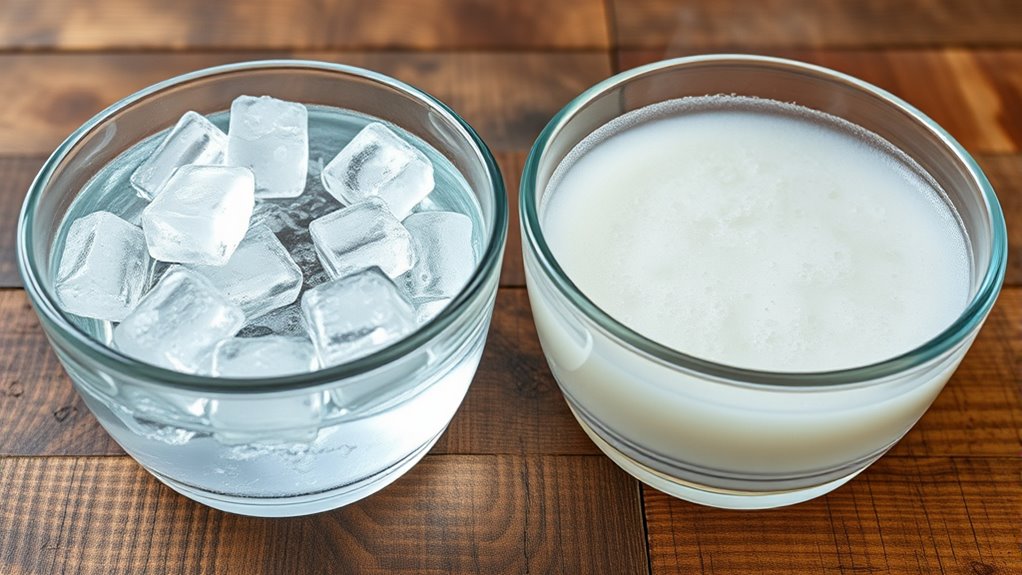
Understanding how dough temperature affects yeast activity is essential for successful baking. When you’re working with yeast, the temperature of your dough plays a critical role in determining proofing times and fermentation rates. If your dough is too cold, yeast activity slows down drastically, leading to longer proofing times and sluggish fermentation. Conversely, if the dough is too warm, yeast becomes overly active, which can result in over-proofing, a loss of structure, and uneven rise. Maintaining the right dough temperature ensures that yeast performs ideally, giving you consistent, predictable results.
Using ice water or cold ingredients can help you keep dough cool, especially in warm environments or when working with enriched doughs that ferment quickly. Cold dough slows down yeast activity, giving you more control over proofing times. This can be particularly beneficial if you want a slow, steady fermentation that develops complex flavors. When you use ice water, yeast activity is suppressed initially, but it will ramp up as the dough warms during fermentation. This method allows for more precise timing, preventing over-proofing and ensuring your dough develops the right texture and flavor profile. Additionally, understanding dough temperature can help bakers troubleshoot issues like uneven rises or dense textures.
On the other hand, warm water or ingredients can accelerate fermentation and proofing times. If you’re in a cooler space or need to speed up the process for convenience, using warm water can jump-start yeast activity. However, you need to be cautious not to raise the dough’s temperature too high, as excessive warmth can kill the yeast or cause overly rapid fermentation. When yeast ferments faster, proofing times shorten, but you risk over-proofing if you’re not attentive. Over-proofed dough can collapse or become overly airy, losing its structure and resulting in dense or uneven baked goods.
To harness the benefits of controlled fermentation, you should aim for a dough temperature around 75°F to 78°F (24°C to 26°C). This range supports steady yeast activity, ensuring consistent proofing times and reliable fermentation rates. If your kitchen is warm, consider using ice water or refrigerating ingredients to bring the dough to this temperature. If it’s cooler, warm water can help bring the dough into the ideal range. By managing your dough’s temperature carefully, you can fine-tune proofing times and fermentation rates, leading to better rise, improved flavor, and a more professional finish in your baked goods. Ultimately, understanding and controlling dough temperature empowers you to produce consistently excellent results, no matter what recipe you’re working on.
instant read kitchen thermometer
As an affiliate, we earn on qualifying purchases.
As an affiliate, we earn on qualifying purchases.
Frequently Asked Questions
How Does Dough Temperature Influence Bread Flavor Development?
You notice that dough temperature directly influences bread flavor development by affecting fermentation aroma and flavor complexity. Warmer dough speeds up yeast fermentation, producing more aroma compounds and richer flavors, but can risk over-fermentation. Cooler dough slows fermentation, resulting in a subtler aroma and simpler flavor. By controlling dough temperature, you can enhance the depth and richness of your bread’s flavor, creating a more enjoyable and aromatic loaf.
Can Adjusting Dough Temperature Improve Fermentation Speed?
Surprisingly, adjusting dough temperature can indeed boost fermentation speed—cold dough slows yeast, while warm dough speeds it up. By controlling dough temperature, you optimize fermentation, saving time and enhancing dough development. So, if you need quicker proofing, warm water is your friend. Just don’t forget, too warm can overproof, while too cold stalls yeast. It’s a delicate dance, but fine-tuning dough temperature gives you that perfect rise faster.
What Are the Signs of Improperly Fermented Dough?
You’ll notice improperly fermented dough if it shows inconsistent fermentation indicators or temperature fluctuations. Signs include a lack of rise, dense texture, or overly sour smell. If the dough doesn’t double in size or feels overly sticky and slack, it’s a sign fermentation slowed or stalled. Keep an eye on these indicators to guarantee your dough is fermenting correctly, and adjust temperature control methods to maintain steady fermentation indicators.
How Do Different Yeast Types Respond to Temperature Variations?
Did you know that some yeast strains can tolerate temperatures up to 40°C, while others struggle above 30°C? Your yeast strain differences markedly influence how they respond to temperature variations. For instance, Saccharomyces cerevisiae thrives in warmer environments, boosting fermentation, whereas wild yeasts prefer cooler temps. Understanding your yeast’s temperature tolerance helps you optimize dough fermentation, ensuring better rise and flavor development based on the specific strain you’re using.
Is There an Ideal Dough Temperature for Sourdough Starters?
The ideal dough temperature for sourdough starters is around 75°F to 78°F. This range optimizes yeast activity, ensuring your starter ferments steadily without overproofing. If it’s too cold, yeast slows down, delaying fermentation. Too warm, and it speeds up too much, risking overproofing or off-flavors. Keep your dough within this temperature window to balance yeast activity, produce consistent rises, and develop the best flavor in your sourdough.
As an affiliate, we earn on qualifying purchases.
Conclusion
Understanding dough temperature is like tuning an instrument—just the right note makes the symphony of rising yeast sing. Whether you choose icy waters or warm, your decision sets the stage for your bread’s rise, shaping its texture and flavor. Think of it as nurturing a delicate garden; the right warmth awakens the yeast’s life force, transforming simple ingredients into a masterpiece. Master this balance, and you’ll craft bread that rises with soul and character, every time.
As an affiliate, we earn on qualifying purchases.
As an affiliate, we earn on qualifying purchases.
Halloween Picks
halloween
As an affiliate, we earn on qualifying purchases.