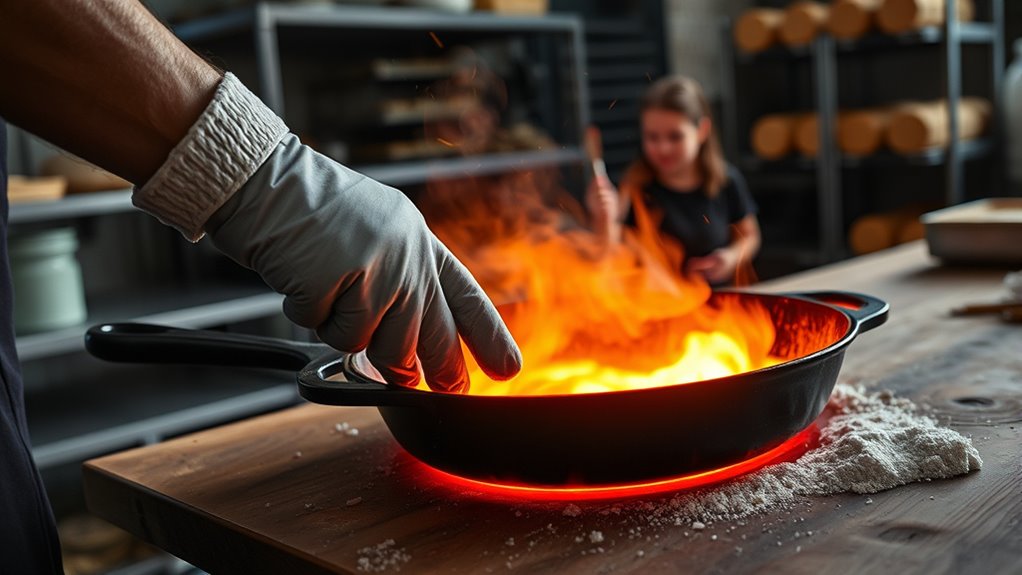

To recover heat quickly between bakes, make sure your oven is well-insulated with reflective liners and sealed tightly to prevent heat leaks. Use heat-retaining tools like pizza stones or baking steels, which act as reservoirs and help stabilize temperature. Preheat just enough to minimize heat loss, and avoid opening the door unnecessarily. These recharge techniques boost heat retention and quicken recovery, so if you keep exploring, you’ll uncover more ways to optimize your oven’s efficiency.

Get baking supplies delivered free with Prime
- Fast, free delivery on millions of items
- Prime Video, Amazon Music and more included
- Member-only deals all year
Key Takeaways
- Preheat the oven just enough to reach the desired temperature quickly before baking.
- Use heat-retaining items like pizza stones or baking steels to absorb and release heat steadily.
- Seal gaps around the door and walls to prevent heat loss and improve insulation.
- Incorporate reflective oven liners to bounce heat back into the cavity, enhancing heat retention.
- Minimize opening the oven door during baking to maintain temperature and speed up heat recovery.

Ever feel drained after a long day and wonder how to quickly restore your energy? The same principle applies when you’re working with an oven—maintaining consistent heat is vital for perfect baking, and that’s where effective recharge techniques come into play. One of the most important factors in recovering heat swiftly between bakes is understanding how oven insulation and heat retention materials work. Good insulation keeps the heat contained inside the oven, minimizing heat loss when you open the door or pause between batches. When your oven is well-insulated, it doesn’t need to work as hard to reheat, saving you time and energy, and ensuring a steady temperature for your next batch.
Proper insulation helps your oven recover heat faster, saving energy and ensuring consistent baking results.
If your oven isn’t properly insulated, heat escapes rapidly once you open the door, forcing the oven to work overtime to regain temperature. Upgrading or adding high-quality oven insulation can make a significant difference. Modern heat retention materials are designed to trap heat efficiently, reflecting it back into the oven cavity and preventing it from dissipating quickly. These materials, such as ceramic fiber blankets or specialized insulating bricks, are lightweight but highly effective. By lining the oven with these heat retention materials, you create a thermal barrier that helps hold onto heat longer, so your oven can bounce back faster after each opening.
Another practical tip involves pre-warming the oven just enough so that it’s hot enough to recover quickly after the door is opened. Using an oven thermometer can help you monitor the temperature accurately, ensuring you don’t waste energy by overheating. When you’re ready to start baking, make sure the oven is properly preheated, and consider using a pizza stone or baking steel. These items absorb and retain heat well, acting as heat reservoirs that help maintain a consistent oven temperature even when you load multiple trays or open the door during baking.
Additionally, consider the placement of heat retention materials and insulation around the oven’s door and walls. Sealing gaps and ensuring the oven door closes tightly prevents unwanted heat leaks. Some bakers even use reflective oven liners, which bounce heat back into the oven cavity, further aiding in rapid heat recovery. Understanding the role of insulation and heat retention materials can significantly improve your oven’s efficiency. Combining these strategies—upgrading insulation, using heat retention materials, and optimizing oven settings—enables you to recover heat quickly, keep your baking consistent, and reduce energy consumption. Ultimately, understanding how to properly insulate and retain heat in your oven empowers you to work more efficiently, ensuring each bake turns out just right without long waits for the oven to catch up.
As an affiliate, we earn on qualifying purchases.
Frequently Asked Questions
How Long Does It Typically Take to Recover Heat Between Bakes?
It usually takes about 15 to 30 minutes to recover heat between bakes, depending on your oven’s efficiency and preheating methods. To speed this up, use proper insulation techniques around your oven and guarantee you preheat thoroughly before baking. Keeping the oven door closed during recovery helps retain heat. With these tips, you’ll minimize downtime and maintain consistent baking temperatures, saving you time and energy.
Can External Factors Affect Heat Recovery Efficiency?
External factors can definitely throw a wrench in your heat recovery process. Ambient interference, like drafts or cold air, acts like a thief stealing your oven’s warmth, while poor insulation quality lets heat escape like a leaking faucet. These conditions slow down your oven’s ability to recover heat quickly between bakes. To keep your oven humming efficiently, minimize ambient interference and invest in high-quality insulation.
Are There Specific Tools That Help With Quicker Heat Restoration?
Yes, you can use tools like heat conducting materials and infrared heat lamps to restore heat faster. Heat conducting materials, such as metal racks or stones, absorb and transfer heat efficiently, helping your oven or kiln regain temperature quickly. Infrared heat lamps deliver focused heat directly to the surface, speeding up recovery. Incorporating these tools into your process guarantees quicker heat restoration, reducing downtime and improving baking consistency.
Does the Type of Oven Influence Heat Recovery Times?
Yes, the type of oven affects heat recovery times. You might notice that well-insulated ovens with efficient heating elements heat up faster and recover heat more quickly between bakes. Cheaper or poorly insulated models tend to lose heat faster, making recovery slower. So, investing in an oven with good insulation and high-quality heating elements can markedly reduce your bake-to-bake downtime, ensuring consistent results and saving you time.
How Can I Tell if My Oven Has Regained Proper Temperature?
You can tell if your oven has regained proper temperature by using an oven thermometer to check the internal temperature. If it matches your desired setting, your oven calibration is accurate. Otherwise, it might have faulty temperature sensors or need calibration. Regularly testing with a thermometer helps guarantee your oven heats correctly, so you can confidently bake without worrying about temperature inconsistencies.
As an affiliate, we earn on qualifying purchases.
Conclusion
Just like a seasoned baker who knows when to let the oven rest and when to reheat, mastering recharge techniques keeps your baking seamless. Imagine a chef who quickly recovers heat between bakes, turning a busy kitchen into a well-oiled machine. With these methods, you’ll minimize downtime and maximize efficiency. Think of it as saving seconds in a race—every moment counts, and with the right recharge, you’re always ready to deliver perfect results.
As an affiliate, we earn on qualifying purchases.
As an affiliate, we earn on qualifying purchases.
Fall Picks
fall essentials
As an affiliate, we earn on qualifying purchases.