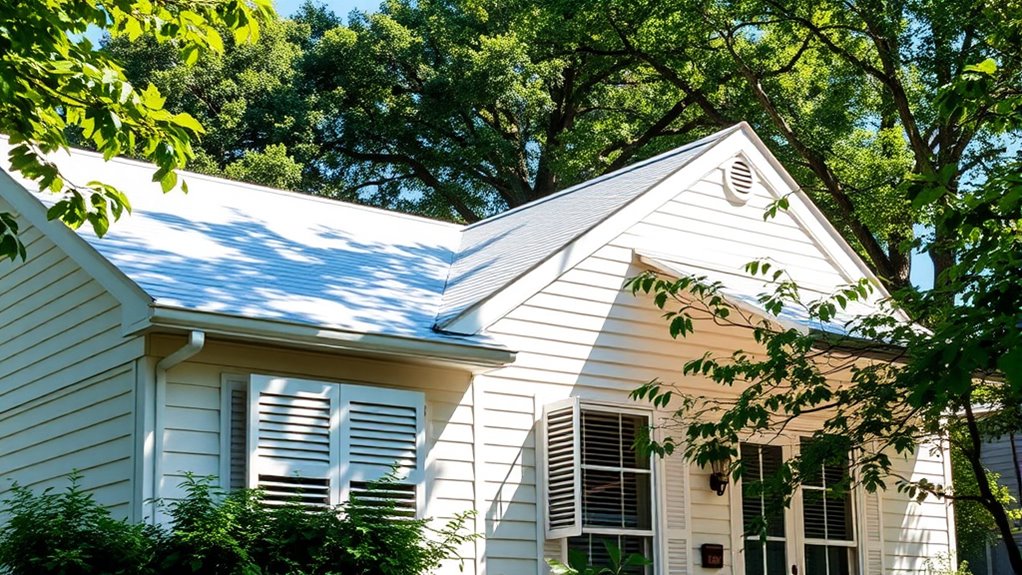

To maximize summer energy efficiency and minimize heat loss, focus on sealing gaps around windows, doors, and openings to prevent warm air infiltration. Insulate walls, ceilings, and floors to keep cool air inside and reduce the cooling load on your AC. Incorporate shading devices like awnings or reflective films to block direct sunlight. Good ventilation helps remove excess heat and humidity, making your home cooler and more comfortable. Keep exploring to discover more practical ways to optimize your home’s energy performance.
Key Takeaways
- Insulate walls, ceilings, and floors with high-quality materials to reduce heat transfer into the home.
- Seal gaps around windows, doors, and openings to prevent warm air infiltration.
- Use shading devices like awnings, blinds, or reflective films to block direct sunlight and reduce solar gain.
- Enhance ventilation through exhaust fans and cross-ventilation to remove indoor heat and humidity.
- Combine insulation, sealing, and shading strategies for a cost-effective approach to minimize heat gain during summer.
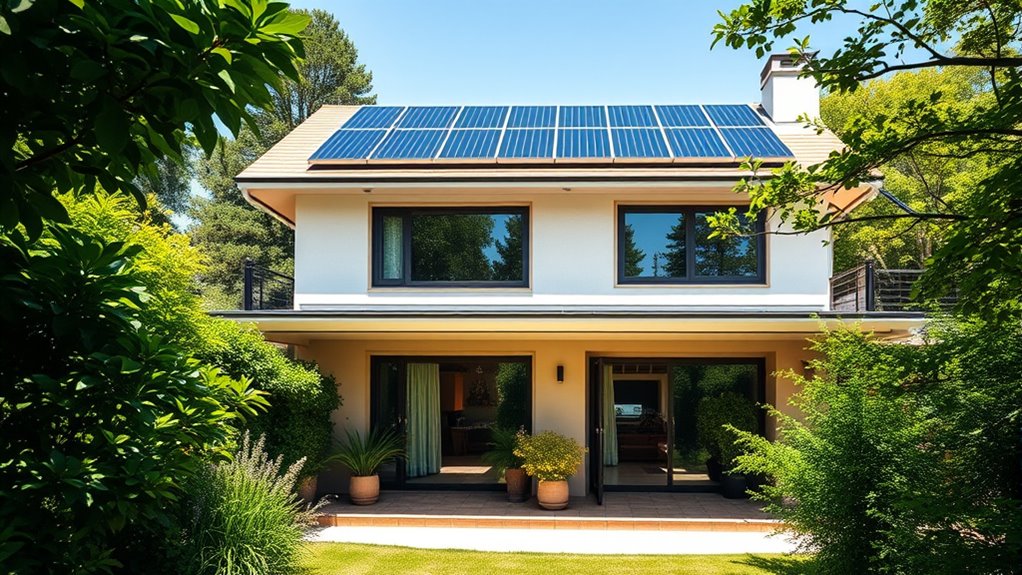
Summer’s heat can considerably increase your energy bills, but with some simple strategies, you can stay cool and save energy at the same time. One of the most effective ways to do this is to focus on minimizing heat transfer into your home. This involves implementing insulation techniques that keep the cool air inside and the hot air outside. Proper insulation not only reduces the workload on your air conditioning system but also maintains a more consistent indoor temperature. Pay attention to areas like walls, ceilings, and floors, ensuring they are well-insulated with high-quality materials. Sealing gaps around windows, doors, and other openings further prevents warm air from seeping in, making your home more energy-efficient. Additionally, incorporating technology-driven solutions can enhance your home’s energy performance, such as smart thermostats that optimize cooling cycles.
Insulate and seal your home to keep cool air in and hot air out during summer.
Alongside insulation techniques, ventilation strategies play a crucial role in maintaining a comfortable indoor environment during summer. Good ventilation helps remove excess heat and humidity, preventing indoor temperatures from rising excessively. You should consider using exhaust fans in kitchens and bathrooms to vent out warm, moist air. Additionally, cross-ventilation can be highly effective if you open windows on opposite sides of your home during cooler parts of the day, such as early mornings or evenings. This natural airflow helps replace hot indoor air with cooler outdoor air, reducing reliance on air conditioning. Installing attic vents or ridge vents can also help cool the upper parts of your home, preventing heat buildup that can radiate downward.
Using shading devices like awnings, blinds, or reflective window films can further reduce heat gain from direct sunlight. Keep curtains or blinds closed during the hottest parts of the day to block out solar heat, which can substantially raise indoor temperatures. Combining shading with proper insulation and ventilation ensures your home stays cooler naturally, decreasing your dependence on mechanical cooling systems. When doing these, remember that the goal is to create a balanced system where insulation keeps heat out, ventilation removes excess warmth, and shading minimizes solar gain.
Incorporating these strategies into your home doesn’t have to be complicated or expensive. Simple improvements, like sealing leaks, adding insulation, and optimizing airflow, can make a big difference in energy efficiency. Not only will you save money on cooling costs, but you’ll also reduce your environmental impact. Staying cool in summer without overworking your air conditioning is all about smart design and proactive measures. By focusing on insulation techniques and ventilation strategies, you can enjoy a more comfortable, energy-efficient home throughout the hot months.
Frequently Asked Questions
How Can Window Treatments Reduce Heat Gain in Summer?
You can reduce heat gain in summer by using window treatments like window tinting and drapery fabrics. Window tinting blocks out much of the sun’s heat before it enters your home, while reflective or light-colored drapery fabrics help reflect sunlight away. Combining these options keeps your space cooler, reduces your AC use, and enhances energy efficiency. Make sure to choose treatments that suit your style and provide effective heat protection.
Are Reflective Roof Coatings Effective for Heat Reduction?
Think of reflective roof coatings as a mirror for your roof, bouncing away the sun’s fierce rays. They’re highly effective for heat reduction, especially against roof heat absorption. By reflecting sunlight instead of absorbing it, these coatings keep your building cooler and lessen your AC load. If you want to beat the summer heat, applying reflective coatings can be a smart, energy-efficient move to keep your space comfortable.
What Indoor Plants Help Cool Indoor Air Naturally?
You can cool indoor air naturally with plants like snake plants, peace lilies, and pothos. These plants help through plant transpiration, releasing moisture that cools the air, and they also improve air purification. As they absorb pollutants and release oxygen, they create a fresher, cooler environment. Regularly caring for these plants boosts their transpiration and air-cleaning benefits, helping you stay comfortable during hot summer days.
How Does Insulation Impact Summer Heat Loss?
Thermal insulation considerably reduces summer heat loss by slowing heat transfer between your indoor and outdoor spaces. When you add insulation to walls, roofs, or windows, it acts as a barrier, keeping the cool air inside and preventing hot outdoor air from entering. This helps your cooling systems work less, lowers energy bills, and keeps your home more comfortable during hot summer days. Proper insulation is essential for energy efficiency.
Can Outdoor Shading Devices Improve Indoor Temperature Control?
Yes, outdoor shading devices can substantially improve indoor temperature control by blocking direct sunlight and reducing heat gain. When combined with solar panel integration and outdoor ventilation, these devices enhance your home’s energy efficiency. You’ll notice cooler indoor temperatures, lower cooling costs, and better comfort. By strategically placing shading and enabling proper ventilation, you optimize natural cooling, making your space more comfortable and eco-friendly during hot summer days.
Conclusion
By focusing on minimizing heat loss, you can keep your home cool and energy-efficient all summer long. Think of your house as a fortress, shielding you from the scorching sun outside. Sealing leaks, insulating properly, and shading windows are your weapons against unnecessary heat gain. When you take these steps, you’re not just saving energy—you’re creating a sanctuary that stands strong against summer’s fiery assault, keeping you comfortable without breaking the bank.