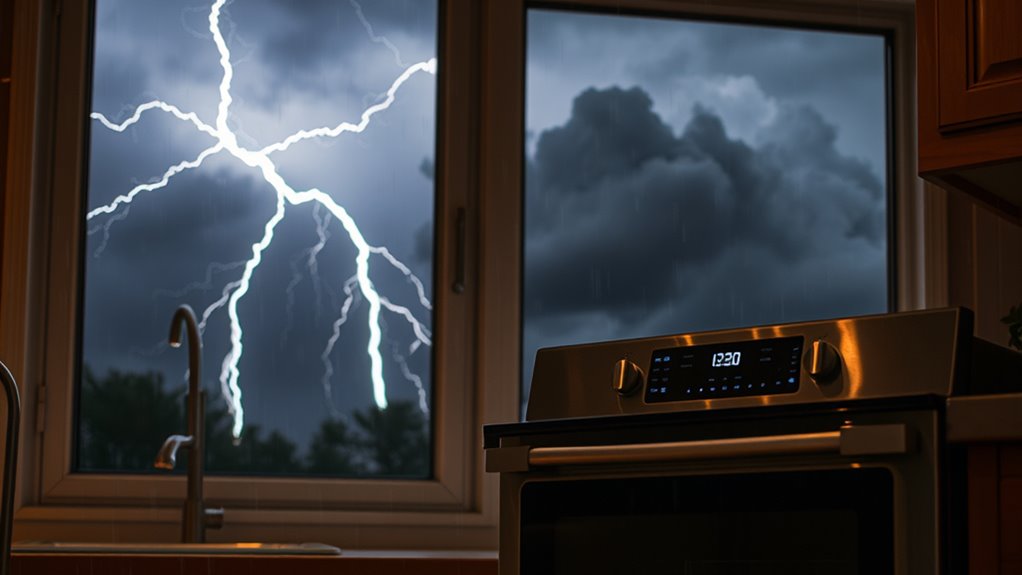

During thunderstorms, it’s safest to turn off and unplug your oven to prevent electrical fires and shocks caused by lightning strikes or power surges. Lightning can travel through wiring and plumbing, increasing risks. By unplugging appliances and shutting off the main power if needed, you reduce potential hazards. Taking these precautions helps protect your home and family. To learn more about staying safe during storms, keep exploring this important topic further.
Key Takeaways
- Turn off and unplug the oven before a thunderstorm to prevent electrical surges and fire hazards.
- Shutting down appliances reduces the risk of electrical shock if lightning strikes your wiring.
- Unplugging the oven minimizes potential damage from power fluctuations caused by lightning.
- Always disconnect high-power devices during storms to ensure safety from electrical hazards.
- Incorporate unplugging appliances into your storm safety routine for overall electrical safety.
Have you ever wondered what steps you can take to stay safe during a storm? One important action is to be mindful of electrical hazards in your home, especially when severe weather strikes. Storms can cause power surges, downed lines, and electrical outages, which pose serious risks. To protect yourself and your loved ones, you need to incorporate emergency preparedness into your routine. This means knowing how to minimize electrical hazards and ensuring that your home is ready for storm-related emergencies.
A key step is to understand that electrical systems and appliances can become dangerous during thunderstorms. Lightning strikes can cause power surges that damage electronics or even start fires. When the power goes out or fluctuates unexpectedly, it’s essential to unplug sensitive devices to prevent damage. Also, avoid using electrical appliances, including your oven, during a storm. Not only does this reduce the risk of electrical shock, but it also prevents potential fire hazards if lightning strikes nearby. Remember, lightning can travel through wiring and plumbing, so staying away from electrical outlets and appliances during a storm is a critical component of emergency preparedness.
Shutting down your oven during thunderstorms isn’t just about convenience; it’s about safety. While it might seem harmless to leave the oven on, electrical hazards can escalate quickly if lightning strikes your home’s wiring or power lines. Turning off major appliances, especially those connected to your electrical system, minimizes the risk of electrical fires or shocks. Before the storm hits, check that your oven and other high-power appliances are turned off and unplugged if possible. This small step can make a big difference in preventing unnecessary accidents.
In addition to turning off appliances, it’s wise to review your home’s electrical safety measures regularly. Make sure your circuit breakers are functioning properly and consider installing surge protectors to shield your electronics from power surges caused by lightning. Understanding electrical safety and how your home’s wiring responds to lightning strikes can help you take proactive steps to protect your property. Keeping a flashlight, batteries, and a cordless phone nearby ensures you can stay connected and safe if the power goes out. Being prepared for emergencies means having a plan in place—know how to shut off your main electrical supply if needed, and keep emergency contact numbers handy.
Frequently Asked Questions
Can Lightning Cause Ovens to Explode?
Lightning strikes can cause electrical surges that travel through your home’s wiring, potentially damaging or even causing your oven to explode. When lightning hits nearby, it can send a sudden surge of electricity through your outlets, overwhelming your appliance’s circuitry. To protect yourself and your appliances, it’s best to unplug the oven during thunderstorms. This prevents any dangerous electrical surges from causing damage or explosions.
Is It Safe to Use an Electric Oven During a Thunderstorm?
Imagine your electric oven as a sturdy ship sailing through a storm. During a thunderstorm, lightning’s power can strike nearby, risking electrical safety. You should turn off your oven to protect the appliance and prevent electrical hazards. This simple action shields your appliances from power surges and potential damage, ensuring safety for you and your home. Always err on the side of caution during storms to keep everything secure.
Do Gas Ovens Pose a Specific Risk During Storms?
Gas ovens do pose specific risks during storms, especially if there’s a gas leak or if a power surge affects the gas lines. For your safety, always practice storm precautions by turning off your gas supply if you notice any smell of gas or hear a hissing sound. Regular gas safety checks and being vigilant during storms help prevent accidents. It’s best to avoid using your gas oven until conditions are safe again.
How Can I Tell if My Oven Is Safe After a Storm?
After a storm, you can check your oven for appliance safety by inspecting for visible storm damage like burn marks, loose wires, or water intrusion. If you notice any issues, avoid using it and contact a professional for a thorough inspection. Don’t risk potential hazards—storm damage can compromise your oven’s safety, so verifying its condition guarantees it’s safe to operate again. Always prioritize safety first.
Should I Unplug Appliances Besides the Oven During Storms?
Yes, you should unplug appliances besides the oven during storms to guarantee appliance safety and enhance storm preparedness. Lightning and power surges can damage devices, so unplugging computers, TVs, and chargers minimizes risks. Always turn off and unplug sensitive electronics before a storm hits. This simple step helps protect your devices from power surges and prevents potential fire hazards, making your home safer during severe weather conditions.
Conclusion
Remember, safety starts with awareness. Turn off your oven, unplug appliances, and stay indoors just as storms roll in. Protect your home, protect your loved ones, protect yourself. By taking simple steps, you prevent accidents, avoid hazards, and guarantee your safety. During storms, stay vigilant, stay cautious, stay safe. Your actions matter—keep safety at the forefront, and you’ll weather any storm with confidence and care.