
To keep your pizza stones dry and warm in snowy conditions, start by insulating the setup with fire bricks or ceramic tiles and elevate it on platforms with insulating layers underneath. Remove snow regularly and use waterproof tarps underneath to prevent moisture seepage. Shield the area with windbreaks and use hot coals or heaters nearby to maintain heat. Proper insulation and snow management are key—continue exploring these tips to perfect your outdoor pizza setup.
Key Takeaways
- Place the pizza stone on insulated surfaces like fire bricks or ceramic tiles to retain heat and prevent moisture absorption.
- Cover the stone with insulating blankets or reflective foil to trap warmth and shield from snow and cold air.
- Use waterproof tarps or plastic sheets underneath the setup to protect against melting snow and moisture seepage.
- Elevate the pizza stone on insulated platforms to minimize ground cold transfer and maintain consistent temperature.
- Remove snow promptly and create windbreaks with bricks or metal sheets to prevent snow buildup and reduce heat loss.
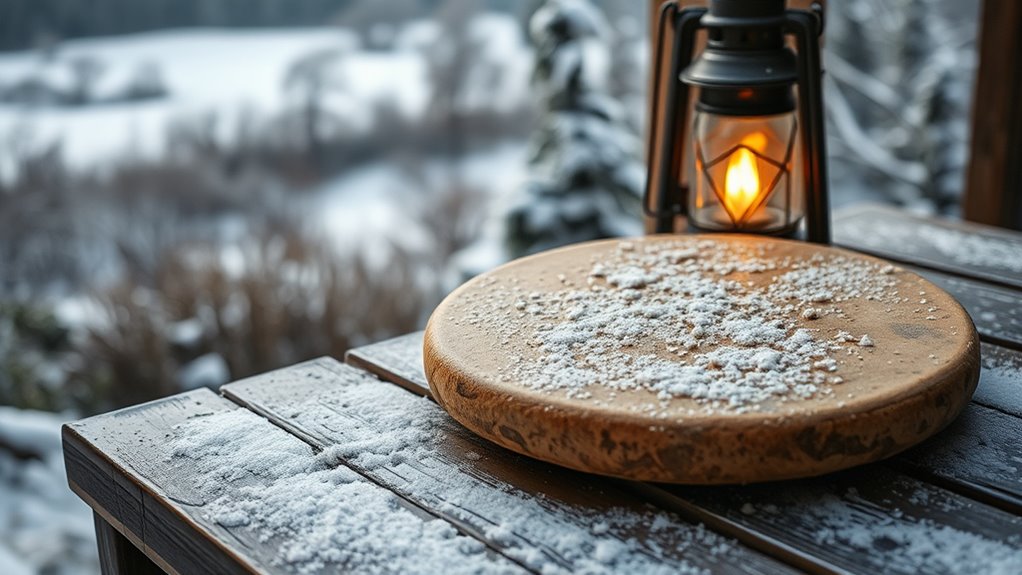
Cooking pizza outdoors during snowy conditions can be challenging, especially when using a pizza stone. Cold weather and snow can sap heat quickly, making it difficult to achieve that perfect crust. To keep your pizza stone dry and warm, you need to implement effective insulation techniques and snow melting strategies. These approaches help maintain consistent heat and protect your equipment from moisture, ensuring your outdoor pizza sessions are successful even in wintery conditions.
First, focus on insulation techniques. Proper insulation prevents heat loss and shields your pizza stone from snow and cold air. You can place the stone on a sturdy, insulated surface like a thick wooden table or a heat-resistant workbench covered with insulating materials such as fire bricks or ceramic tiles. Wrapping the base of your pizza oven or grill with insulating blankets or reflective foil can also help trap heat. These barriers reduce the transfer of cold air and snow moisture, keeping the stone dry during cooking. Additionally, elevating your setup on a platform with insulating layers underneath minimizes ground cold transfer, maintaining temperature stability. Using support hours and scheduling your cooking during warmer parts of the day can also improve your chances of success.
Snow melting strategies are equally essential. Before starting your fire or heating element, clear the area around your setup thoroughly. Use a snow shovel or broom to remove any snow that might drift onto or around your cooking zone. To prevent snow from melting and seeping into your equipment, consider placing a waterproof tarp or heavy-duty plastic sheet beneath your setup. This acts as a barrier against melting snow and moisture infiltration. When you’re ready to cook, keep a supply of hot coals or a portable heater nearby to generate consistent heat, even if the ambient temperature drops. This helps melt any snow that may come into contact with your setup, preventing water from accumulating and damaging your pizza stone.
Another snow melting strategy involves creating a makeshift windbreak around your cooking area. Using fireproof materials like bricks or metal sheets, you can shield your setup from cold gusts that accelerate heat loss and snow buildup. This not only helps keep snow at bay but also retains the heat necessary for cooking. Do keep in mind that moisture from melting snow can dampen your pizza stone, so regularly check for water pooling and wipe it off if needed. Maintaining a dry, heated environment is key to successful outdoor pizza making in snowy conditions.
Frequently Asked Questions
Can Pizza Stones Be Used Directly on Snow-Covered Surfaces?
You shouldn’t use pizza stones directly on snow-covered surfaces because snow protection is essential. Snow can cause uneven heating and damage your stone. Instead, apply insulation techniques like placing the stone on a heat-resistant surface or elevated stand, and cover it with a fireproof barrier. This way, you protect the stone from moisture and cold, ensuring it heats evenly and stays in good condition during snowy conditions.
How Quickly Does Moisture Damage Pizza Stones?
Moisture absorption can damage your pizza stone in just a few hours of exposure to water. When moisture seeps in, it weakens the material, making it more prone to thermal shock—cracks caused by sudden temperature changes. If you don’t dry your stone thoroughly, you risk compromising its integrity, which could lead to cracking or breaking during use. So, always keep it dry and avoid rapid temperature shifts.
Are There Specific Storage Containers for Snowy Conditions?
Yes, for snowy conditions, you should use seasonal storage solutions like insulated containers to protect your pizza stones. These containers keep moisture and cold out, ensuring your stones stay dry and warm. Make sure to choose a well-ventilated, airtight insulated container, and store the stones in a dry place inside it. This prevents damage from snow, dampness, or freezing temperatures, keeping your pizza stones in top condition year-round.
Can Pizza Stones Be Heated Outdoors Safely?
Yes, you can safely heat pizza stones outdoors if you follow proper procedures. Did you know that outdoor heating can increase temperatures quickly when using suitable snow insulation? Always start with a gradual heat-up, avoid direct contact with snow, and use insulated covers or thermal blankets to protect the stone. This way, you prevent cracking and guarantee even heating, making your outdoor pizza experience both safe and enjoyable.
What Are Signs of Moisture Damage on a Pizza Stone?
You’ll notice moisture damage on a pizza stone if it shows glaze or dark spots from moisture absorption, which can weaken its structure. Cracks or chips might also appear, often due to sudden temperature changes or moisture inside the stone. These signs indicate the stone has absorbed too much moisture, risking crack formation. Regularly inspect your stone before use, and avoid exposing it to excess moisture to prolong its life.
Conclusion
To keep your pizza stone cozy in snowy conditions, embrace gentle patience and mindful care. By shielding it from the chill and ensuring it stays warm and dry, you’re nurturing a quiet harmony that transforms simple ingredients into delightful creations. Remember, even in the coldest moments, a little tender attention turns the mundane into something truly special. With care, your pizza stone will patiently wait, ready to help you craft warmth and comfort in every slice.