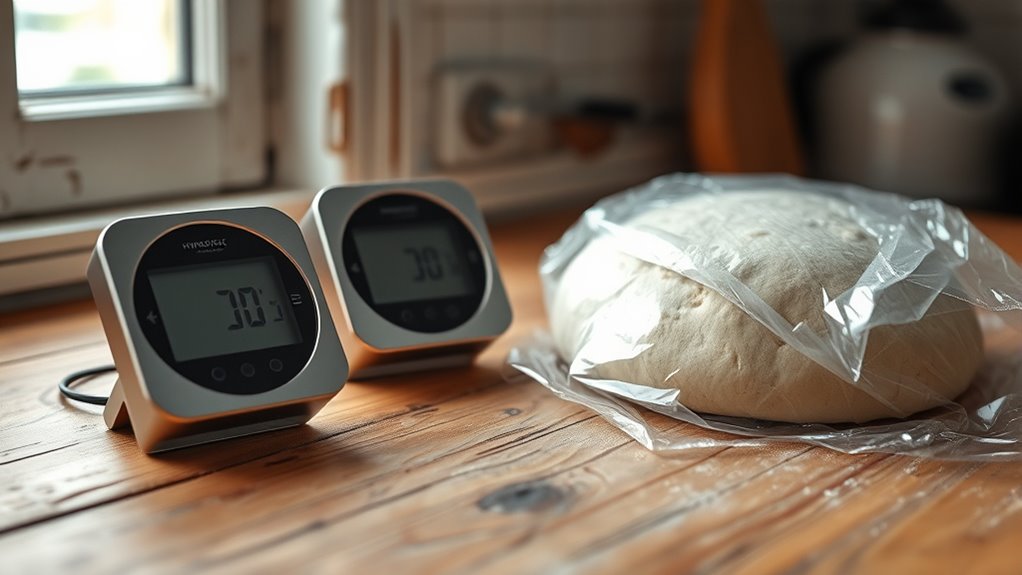

To effectively monitor humidity with a hygrometer for dough, place the device in your fermentation area to get accurate readings of moisture levels. Keep an eye on fluctuations, and adjust humidity accordingly by covering the dough more or increasing airflow. Maintaining consistent humidity helps your dough rise properly and produces reliable results. If you want to learn more about optimizing your environment for perfect dough, keep exploring how hygrometers can enhance your process.
Key Takeaways
- Use hygrometers to measure ambient humidity accurately during dough fermentation.
- Monitor real-time humidity levels to detect fluctuations affecting dough consistency.
- Adjust environmental conditions based on hygrometer readings to maintain optimal dough moisture.
- Consistent humidity readings help reproduce ideal fermentation environments for reliable results.
- Regularly track humidity to prevent issues like dough drying out or becoming overly sticky.

Maintaining the right humidity levels is essential for successful dough fermentation, and hygrometers are valuable tools for this purpose. When you’re working with dough, the fermentation environment plays a critical role in how your dough develops. Too much moisture can make the dough sticky and difficult to handle, while too little can cause it to dry out and inhibit proper rising. By keeping an eye on humidity with a hygrometer, you gain a precise understanding of your environment, allowing you to make adjustments as needed for ideal fermentation conditions.
A stable fermentation environment promotes consistent dough behavior. If the humidity fluctuates wildly, your dough’s consistency can become unpredictable, leading to uneven fermentation and inconsistent final products. Using a hygrometer helps you monitor these changes in real-time. When you notice the humidity dropping below suitable levels, you can increase moisture through methods like covering the dough more tightly or adding a damp cloth to the proofing area. Conversely, if humidity gets too high, you can improve airflow or reduce moisture sources to prevent overly sticky dough.
Dough consistency is directly influenced by humidity levels. Proper moisture content ensures gluten development and gas retention, which are crucial for good rise and texture. When humidity is just right, your dough maintains its elasticity, is easy to shape, and ferments evenly. If the environment is too dry, the dough can become firm and resistant, making it hard to work with. Overly humid conditions can cause the dough to become overly soft or sticky, which hampers shaping and handling. With a hygrometer, you can track these changes accurately, so you’re always aware of what adjustments are needed to keep the dough at its suitable consistency.
Another benefit of monitoring humidity with a hygrometer is the ability to replicate successful conditions. Once you find the ideal humidity level for your specific dough recipe, you can consistently recreate that environment, producing uniform results each time. This is especially helpful if you’re baking in different seasons or environments where humidity naturally varies. By maintaining a controlled fermentation environment, you ensure your dough ferments predictably, improving both the quality and reliability of your baked goods.
Additionally, understanding air & heat conditions alongside humidity can further optimize your fermentation environment, leading to better dough development and baking results.
Frequently Asked Questions
How Often Should I Calibrate My Hygrometer?
You should calibrate your hygrometer at least once every six months to guarantee accuracy. Regular calibration helps maintain the device’s reliability and extends its lifespan. If you notice inconsistent readings, calibrate more frequently. Using a salt test or a commercial calibration kit can help you check and adjust it properly. Proper calibration keeps your dough’s humidity levels precise, leading to better fermentation and baking results.
Can Hygrometers Measure Humidity Levels in Different Dough Types?
A hygrometer is like a versatile tool in your bakery toolkit, capable of measuring humidity levels in different dough types. It helps you monitor dough moisture accurately, ensuring proper fermentation and texture. In your bakery environment, hygrometers provide real-time insights, so you can adjust humidity settings as needed. This consistency leads to better baking results, regardless of whether you’re working with bread, pastry, or other doughs.
Are Digital Hygrometers More Accurate Than Analog Ones?
Digital hygrometers are generally more accurate than analog ones, especially if you calibrate them regularly. You should check calibration frequency to guarantee consistent readings, as digital models often have features for easy recalibration. While analog hygrometers can be reliable, digital devices provide quicker, more precise measurements, making them ideal for monitoring dough humidity levels where accuracy is essential. Just remember to calibrate both types frequently for the best results.
How Does Humidity Affect Dough Fermentation Times?
Humidity directly impacts dough fermentation times by influencing yeast activity and fermentation speed. When humidity is high, moisture levels support yeast growth, leading to faster fermentation. Conversely, low humidity can slow down yeast activity, extending fermentation times. You should monitor and adjust humidity with hygrometers to optimize fermentation, ensuring your dough rises properly and develops the desired texture and flavor. Proper humidity control helps maintain consistent baking results.
What’s the Ideal Humidity Range for Different Bread Recipes?
Imagine your proofing environment as a cozy greenhouse for yeast activity. For most bread recipes, keep humidity between 75-85% to foster ideal fermentation. Higher humidity prevents crust dryness and boosts dough elasticity, while lower levels can slow yeast activity. Adjust the hygrometer to match your recipe’s needs, ensuring your dough’s environment stays just right—like a gentle rain nurturing the perfect rise.
Conclusion
Just as bakers rely on a steady hand and keen eye, using a hygrometer keeps your dough’s moisture in check, much like a captain trusts his compass. By monitoring humidity accurately, you ensure perfect rise and texture every time. Think of your hygrometer as your secret weapon—guiding your dough through the tempest of variables. With it, you’re not just baking; you’re mastering an art, echoing the timeless wisdom of those who’ve perfected their craft through vigilance.