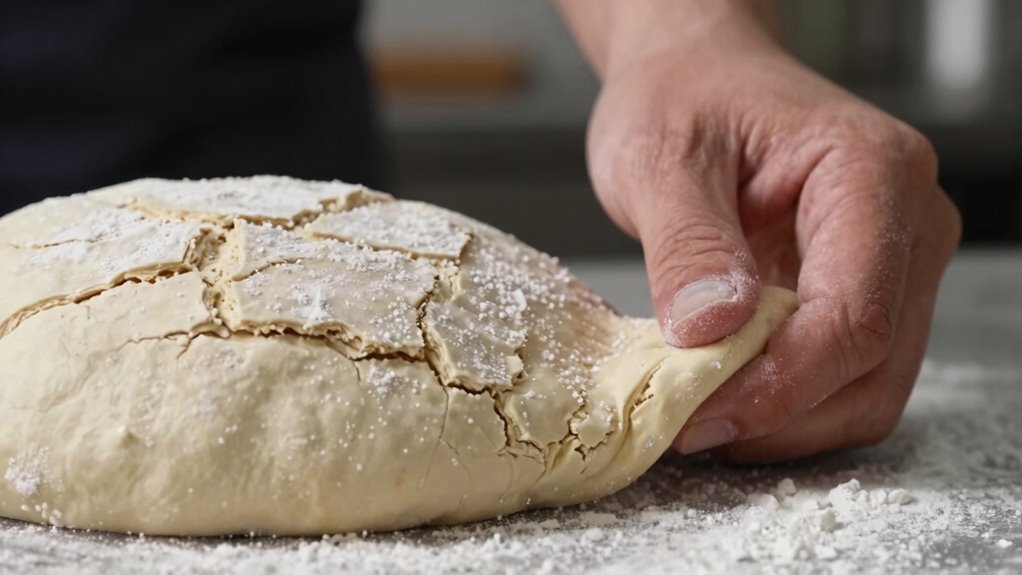

Dry air causes your dough to lose moisture quickly during skinning and stretching, making it tougher and more prone to tearing or cracking. When the environment lacks humidity, the gluten doesn’t develop fully, so the dough becomes less elastic and more brittle. As a result, you’ll find it harder to achieve smooth, thin skins without damage. To master these challenges, keep exploring how humidity impacts dough handling and discover better techniques for consistent results.

Get baking supplies delivered free with Prime
- Fast, free delivery on millions of items
- Prime Video, Amazon Music and more included
- Member-only deals all year
Key Takeaways
- Dry air causes rapid moisture loss, making dough less pliable and more prone to tearing during stretching.
- Lack of humidity prevents gluten from fully developing, reducing dough elasticity and stretchability.
- Reduced moisture content leads to a tougher dough that resists thinning and is more likely to crack.
- Insufficient humidity causes the dough surface to become less smooth and elastic, hindering proper skinning.
- Managing humidity helps maintain moisture, improving dough elasticity and minimizing cracks during skinning and stretching.
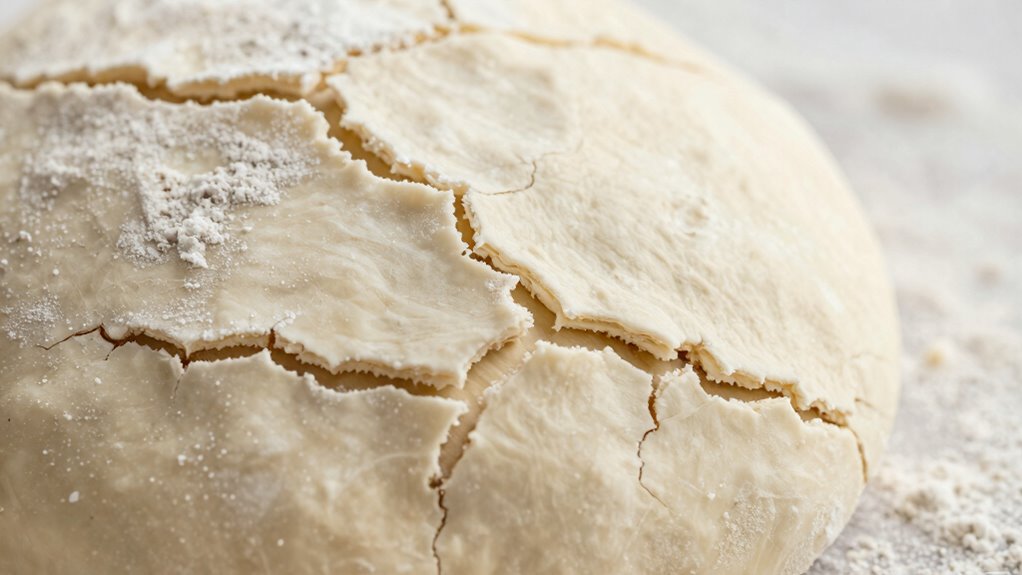
Dry air can considerably impact the way dough skin forms and stretches, often making the process more challenging. When the humidity levels in your environment are low, the moisture content in the dough decreases more quickly during mixing and kneading. This rapid moisture loss causes the dough to become less pliable, reducing its overall elasticity. As a result, you might notice that the dough feels tougher and resists stretching more than usual. The lack of humidity prevents the dough from developing that smooth, elastic surface you aim for, making it prone to tearing or developing cracks when you try to stretch it thin.
Dry air reduces dough elasticity, making it tougher to stretch and more prone to tearing.
In dry conditions, your dough’s elasticity diminishes because the gluten strands don’t have enough moisture to fully develop. Gluten is what gives dough its stretchiness, and when the moisture content drops too low, these strands can become brittle. This brittleness makes it harder to achieve that delicate balance of stretching without tearing. You’ll often find yourself fighting with the dough, trying to coax it into the desired thinness, only to see it snap or develop unsightly tears. The reduced elasticity also means the dough doesn’t recover as well after you stretch it, losing its shape or collapsing under its own weight. Additionally, maintaining proper moisture levels can be particularly tricky in environments with low humidity, which further underscores the importance of humidity control for optimal dough handling.
A controlled environment with regulated humidity can significantly improve the handling and final quality of your dough. In such conditions, employing techniques like using a humidifier or working in a more controlled environment can help maintain consistent results.
If you’re working in an environment with low humidity, you might need to adapt your technique. Covering the dough with a damp cloth or plastic wrap during resting periods helps trap moisture and prevents excessive drying. Using a slightly higher hydration level in your recipe can also compensate for the moisture lost to the dry air, making the dough more manageable. Additionally, working more quickly can help you preserve the dough’s moisture content, preventing it from drying out before you finish shaping it. Being aware of how humidity levels influence dough behavior can help you better anticipate and counteract these issues.
The key to overcoming the challenges posed by dry air is understanding how humidity levels influence dough behavior. When you keep the environment humid or take steps to maintain moisture, you’ll notice that the dough remains more elastic and easier to stretch. It will respond more predictably to your handling, allowing you to achieve a thinner, more even skin without tearing. Ultimately, controlling humidity or adapting your technique ensures the dough’s elasticity stays intact, giving you a better chance at shaping perfect, professional-quality baked goods even in dry conditions.
As an affiliate, we earn on qualifying purchases.
Frequently Asked Questions
How Can I Prevent Dry Air From Affecting My Dough?
To prevent dry air from affecting your dough, keep it well-covered with plastic wrap or a damp cloth to maintain dough moisture. Use a humidifier in your workspace to add moisture to the air, reducing skin formation and drying out. Regularly check your dough’s surface, and if it begins to form a skin, gently knead or cover it again. These steps help preserve ideal dough moisture and prevent unwanted skin formation.
What Environmental Factors Worsen Dough Skinning?
Environmental factors like low humidity and drafts worsen dough skinning by accelerating moisture loss. When the air is dry, your dough quickly loses its moisture, causing a tough skin to form prematurely. Cold temperatures can also slow fermentation, impacting dough elasticity. To prevent this, keep your workspace humidified, cover your dough properly, and avoid sudden temperature changes. Maintaining ideal environmental conditions helps preserve dough moisture and prevents unwanted skin formation.
Are There Specific Ingredients That Resist Dryness Better?
You’re in luck—some ingredients resist dryness better. Look for those with high moisture retention, like fats, oils, or eggs, which act as a shield against dry air. Adding ingredients rich in humectants, such as honey or milk, helps keep dough moist and flexible. Think of it as a protective barrier that preserves elasticity, preventing skinning or tearing. Your ingredient selection plays a vital role in maintaining ideal dough conditions.
How Does Humidity Level Impact Dough Elasticity?
Humidity level directly impacts dough elasticity by influencing dough hydration. Higher humidity keeps the dough moist, enhancing elasticity control and making it easier to stretch without tearing. Low humidity causes the dough to dry out quickly, reducing elasticity and making it more prone to cracking. To maintain ideal elasticity, adjust hydration levels accordingly, especially in dry environments, and cover your dough to minimize moisture loss during proofing and handling.
Can Equipment Adjustments Mitigate Dry Air Effects?
Think of your equipment as a sailor adjusting sails to navigate dry air’s rough seas. Proper calibration and humidity control act as your compass, guiding dough through smooth stretching and skinning. By fine-tuning your equipment, you resist the tug of dry air, maintaining ideal dough elasticity. Regular calibration and humidity regulation create a stable environment, ensuring your dough remains resilient and easy to work with, even amidst dry conditions.
dough skinning and stretching tools
As an affiliate, we earn on qualifying purchases.
As an affiliate, we earn on qualifying purchases.
Conclusion
Think of your dough as a delicate kite. When the air is dry, it’s like pulling that kite’s string in a gusty wind—too much tension causes tears and snags. To keep your kite soaring smoothly, you need a gentle, steady breeze, or in this case, a humid environment. By controlling the air’s dryness, you’re fundamentally giving your dough the calm wind it needs to stretch and skin perfectly, soaring beautifully without ripping apart.
As an affiliate, we earn on qualifying purchases.
As an affiliate, we earn on qualifying purchases.
Halloween Picks
halloween
As an affiliate, we earn on qualifying purchases.