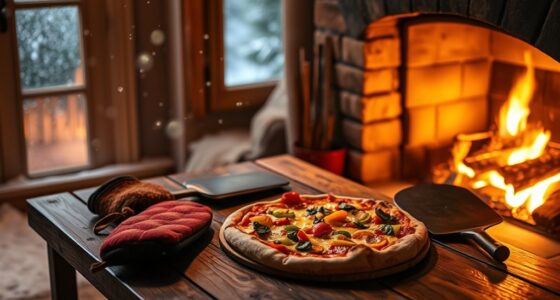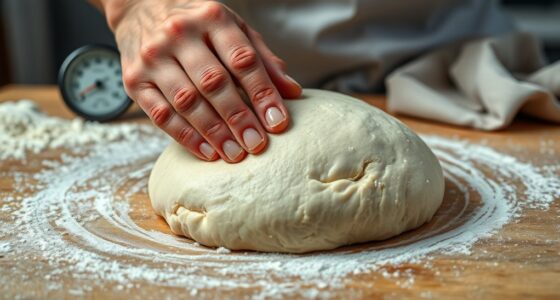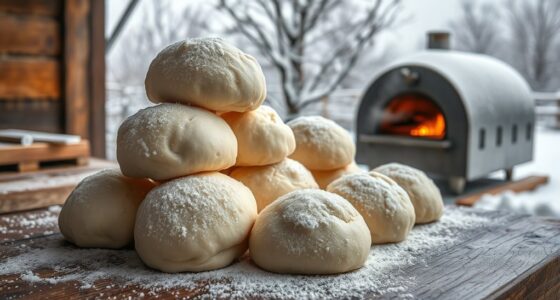
To quickly master high altitude pizza tweaks, start by adjusting your dough with a bit more flour and slightly less liquid to handle lower pressure. Shorten proofing times and increase oven temp by 15-20°F to prevent over-expansion and guarantee even baking. Tweak toppings and baking duration carefully, rotating the pizza for consistency. Focusing on these key changes can markedly improve your results, and you’ll discover even more tips as you explore further.
Listen free for 30 days with Audible
Thousands of audiobooks and originals — cancel anytime.
As an affiliate, we earn on qualifying purchases.
Key Takeaways
- Adjust dough hydration and flour to strengthen gluten and prevent over-expansion due to thinner air pressure.
- Shorten proofing times and monitor yeast activity closely to prevent overproofing at higher elevations.
- Calibrate oven temperature upward by 15-20°F and reduce baking time to counter rapid heat loss.
- Modify topping moisture and placement to ensure even baking and prevent toppings from sliding or burning.
- Use altitude-specific adjustment tables and systematic testing to refine techniques for consistent high-altitude results.
Understanding How Altitude Affects Pizza Dough and Toppings
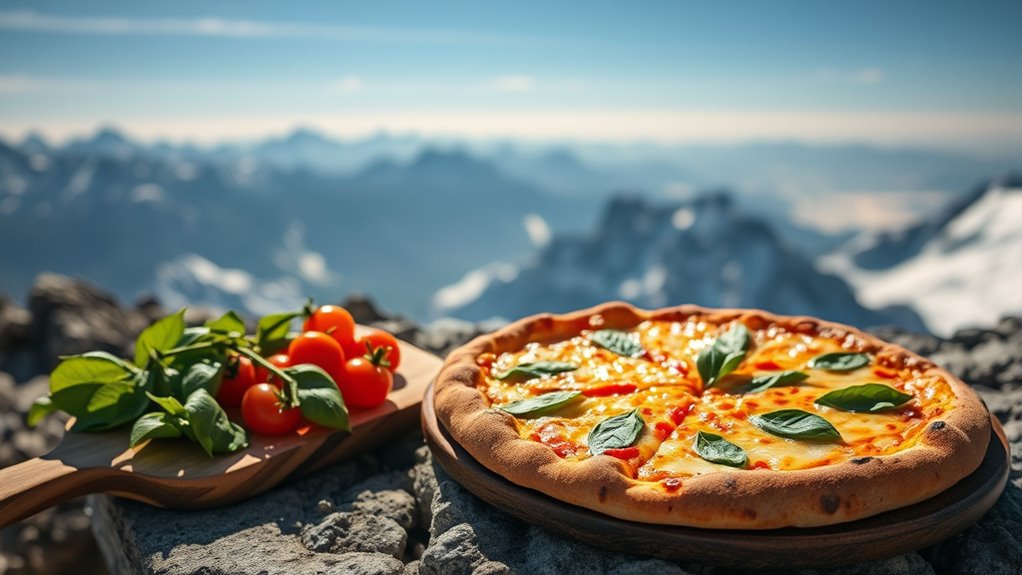
When you bake pizza at high altitude, the thinner air and lower atmospheric pressure directly impact how your dough and toppings behave. Altitude effects cause your dough to rise faster and become less elastic because the reduced pressure weakens dough elasticity. This means your dough might stretch too easily or collapse if not adjusted properly. Additionally, the lower air density affects how toppings cook and settle, often leading to faster dehydration or uneven baking. Understanding these altitude effects helps you anticipate how your ingredients respond, so you can tweak your technique accordingly. Recognizing that lower pressure influences both dough behavior and topping stability is key to mastering high-altitude pizza baking. This knowledge sets the foundation for making precise adjustments for perfect results. Adjusting oven temperature can also help compensate for these changes and improve baking consistency.
Adjusting Flour and Liquid Ratios for Perfect Dough Consistency
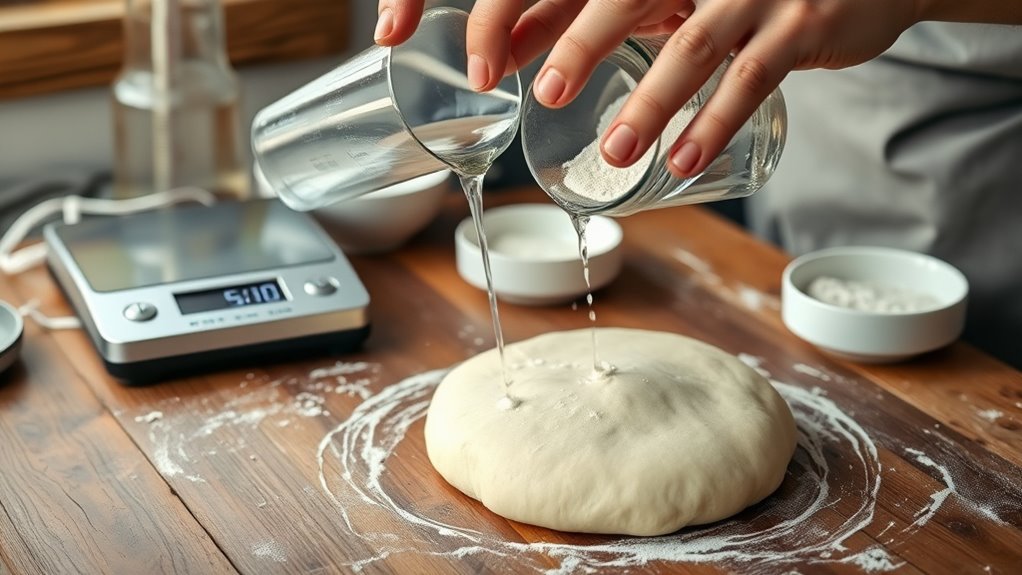
Adjusting the balance of flour and liquid in your dough is key to counteracting altitude’s effects on its structure. High altitude causes faster evaporation and weaker gluten development, so tweaking ratios improves consistency. To get started:
- Slightly increase flour to strengthen the dough and support gluten development.
- Reduce liquid slightly to prevent a sticky, overly loose crust.
- Incorporate a sourdough starter carefully, adjusting hydration to maintain proper dough consistency.
- Test your dough by feeling its elasticity—aim for a smooth, resilient texture that holds together well.
Modifying Yeast and Rising Times to Achieve Optimal Lift
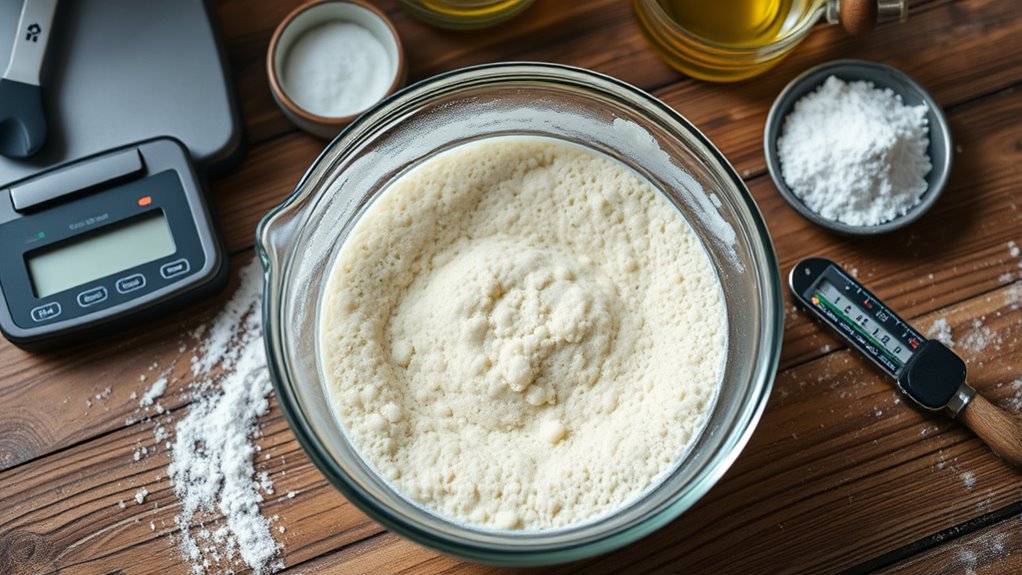
Because high altitude accelerates yeast activity, you need to modify your rising times to prevent overproofing and achieve the desired lift. Yeast activation happens faster, making dough fermentation quicker. To counter this, reduce rising times or proof in a cooler environment. Keep an eye on dough volume; it should double without overexpanding. Adjustments vary, but a good rule is to cut usual rise times by 20-30%. Use the table below to compare typical rising adjustments:
| Rising Stage | High Altitude Adjustment |
|---|---|
| First proofing | 20-30% shorter |
| Second proofing | 20-30% shorter |
| Check for doubling | Slightly less than usual |
| Dough temperature | Keep cooler if possible |
| Yeast activity | Monitor closely |
These tweaks help control dough fermentation, ensuring ideal lift and dough structure. Additionally, paying attention to natural materials like linen and wood can help create a cozy environment that complements the baking process.
Tweaking Oven Temperature and Baking Duration for Even Cooking
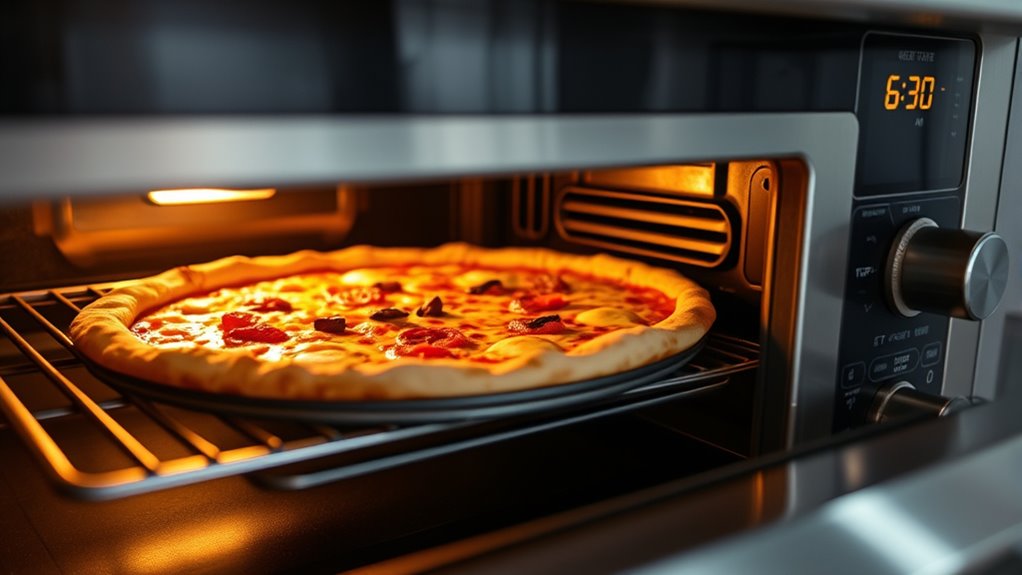
At high altitudes, oven temperatures and baking times require careful tweaking to guarantee your pizza cooks evenly. Start by checking your oven calibration; an inaccurate thermostat can lead to uneven cooking. Adjust the temperature if needed, ensuring it’s accurate for high-altitude conditions. Consider the baking surface—using a preheated stone or steel helps distribute heat uniformly. To optimize baking duration:
Adjust oven calibration and baking surface for even high-altitude pizza cooking.
- Increase the oven temperature slightly (about 15-20°F) to compensate for rapid heat loss.
- Reduce baking time by 2-3 minutes to prevent over-baking.
- Rotate the pizza halfway through baking for even heat exposure.
- Monitor the crust and cheese closely, adjusting as necessary for consistent results.
These tweaks will help you achieve a perfectly cooked, high-altitude pizza every time.
Incorporating Additional Ingredients for Texture and Flavor Balance
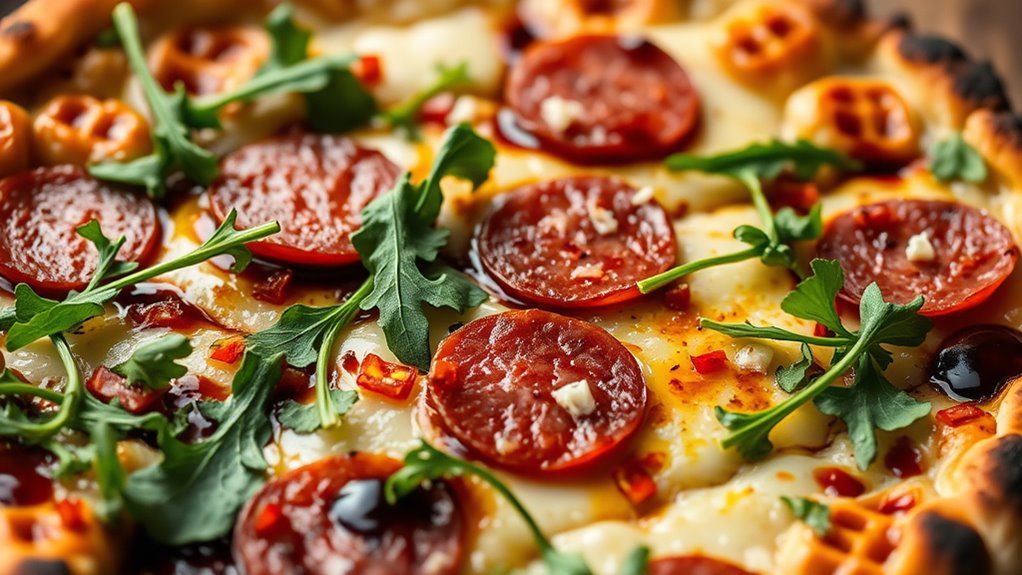
Adding new ingredients can elevate your pizza by balancing flavors and creating interesting textures. Focus on selecting complementary components that enhance the overall harmony of your toppings. Experimenting with different combinations helps you achieve a well-rounded and satisfying slice. Incorporating flavor enhancements like herbs and spices can further refine your masterpiece.
Balancing Flavors Effectively
To achieve a well-balanced high-altitude pizza, incorporating additional ingredients that enhance texture and flavor is essential. Proper seasoning adjustments can elevate your pizza’s taste, guaranteeing no single ingredient overpowers the others. Presentation techniques also play a role, making your pizza visually appealing and appetizing. To balance flavors effectively, consider these steps:
- Adjust seasoning levels to enhance natural ingredients without overwhelming the palate.
- Incorporate contrasting flavors, like sweet and savory, to add depth.
- Use fresh herbs or zest to brighten each bite.
- Ensure even distribution of toppings for consistent flavor and visual appeal.
- Incorporate nutritional balance principles to support overall health and well-being while enjoying your pizza.
Enhancing Texture Variations
Incorporating ingredients that enhance texture can substantially elevate your high-altitude pizza, creating a more interesting and satisfying bite. To improve dough elasticity, consider adding a small amount of essential wheat gluten or using bread flour, which helps the dough stretch without tearing. This ensures even topping adhesion, preventing ingredients from sliding off during baking. Incorporate crunchy elements like toasted nuts, crispy bacon bits, or fresh vegetables such as bell peppers and red onions to introduce contrasting textures. These additions not only add complexity but also balance the chewiness of the crust with crispness and freshness. Be mindful of quantities; too many ingredients can hinder dough elasticity and topping adhesion. Additionally, understanding the effectiveness of eye patches can help you implement quick skincare routines post-baking sessions, ensuring your skin stays refreshed after long baking hours. With the right tweaks, your pizza will have a delightful mix of textures that keep each bite engaging.
Selecting Complementary Ingredients
Choosing the right ingredients can make a significant difference in balancing textures and flavors on your high-altitude pizza. To achieve harmony, focus on selecting complementary ingredients that enhance your sauce and cheese pairings. Consider these tips:
- Use bold cheeses like sharp cheddar or gorgonzola to contrast with sweet or tangy sauces.
- Incorporate fresh herbs like basil or oregano to brighten flavors without overpowering.
- Add crunchy vegetables such as bell peppers or red onions for texture contrast.
- Experiment with unique toppings like prosciutto or olives to deepen flavor complexity.
- Paying attention to credit card security measures can help protect your digital payment data when ordering ingredients online.
Practice Strategies for Refining Your High Altitude Pizza Technique

Refining your high altitude pizza technique requires deliberate practice and targeted adjustments. Focus on perfecting dough fermentation to manage rising times and prevent over- or under-proofing. Consistently test topping adhesion by varying ingredient moisture levels and spreading techniques. Track your results to identify what works best at altitude. Use this table to guide your adjustments:
| Adjustment Area | Key Focus |
|---|---|
| Dough fermentation | Timing, temperature, hydration levels |
| Topping adhesion | Ingredient moisture, spreading uniformity |
Additionally, understanding climate considerations can help optimize your baking conditions and achieve more consistent results.
Frequently Asked Questions
What Equipment Best Supports High Altitude Pizza Baking?
You’ll want a high-quality oven with precise temperature control to support high altitude pizza baking. A stand mixer helps you adjust dough hydration and incorporate alternative flour blends effectively. Using a digital scale guarantees consistent measurements. Consider a pizza stone or steel for even heat distribution. These tools help you refine your dough, manage hydration, and adapt recipes, making it easier to master high altitude pizza baking quickly and successfully.
How Can I Prevent Crust From Becoming Too Dry?
To prevent your crust from becoming too dry, focus on moisture retention and crust hydration. Use a slightly higher hydration dough recipe, which helps keep the crust moist during baking. Cover your dough while rising to trap humidity, and brush the crust with olive oil or spritz with water before baking. These steps guarantee your crust stays tender and flavorful, even at high altitudes.
Are There Specific Toppings That Work Better at High Altitudes?
At high altitudes, certain toppings enhance your pizza’s flavor and texture. Opt for toppings like fresh herbs, robust cheeses, and flavorful vegetables, which hold up well in thinner air. These choices help maintain altitude flavor without losing moisture or becoming soggy. Avoid overly watery toppings or those that tend to dry out quickly. By carefully selecting toppings suited for high-altitude baking, you’ll enjoy a delicious, well-balanced pizza every time.
How Does Humidity Affect High Altitude Pizza Baking?
Humidity effects your high altitude pizza baking by impacting dough hydration. When humidity is high, your dough absorbs more moisture, making it softer and harder to handle. You might need to reduce added water slightly to prevent overly sticky dough. Conversely, low humidity can dry out your dough quickly, so you may have to increase hydration or cover your dough during proofing. Adjusting for humidity helps make certain of perfect crust and texture.
Can Altitude Adjustments Be Scaled for Commercial Pizza Ovens?
Yes, altitude adjustments can be scaled for commercial pizza ovens. You should focus on altitude calibration by adjusting temperature and humidity controls to suit your location. Oven modifications might include installing specialized sensors or adjusting airflow to maintain consistent baking conditions. By carefully calibrating your equipment, you ensure the oven performs reliably at high altitudes, resulting in perfectly baked pizzas every time.
Conclusion
By mastering these altitude tweaks, you’ll craft pizzas that rise beautifully and bake to golden perfection, even among mountain peaks. Picture pulling a crispy crust from your oven, bubbling cheese stretching just right, and toppings bursting with flavor. With a weekend of practice, you’ll transform your kitchen into a high-altitude pizzeria, where every bite captures the essence of a perfectly baked pie. Get ready to elevate your pizza game to new heights—literally.
Fall Picks
fall essentials
As an affiliate, we earn on qualifying purchases.