
TL;DR

Get baking supplies delivered free with Prime
- Fast, free delivery on millions of items
- Prime Video, Amazon Music and more included
- Member-only deals all year
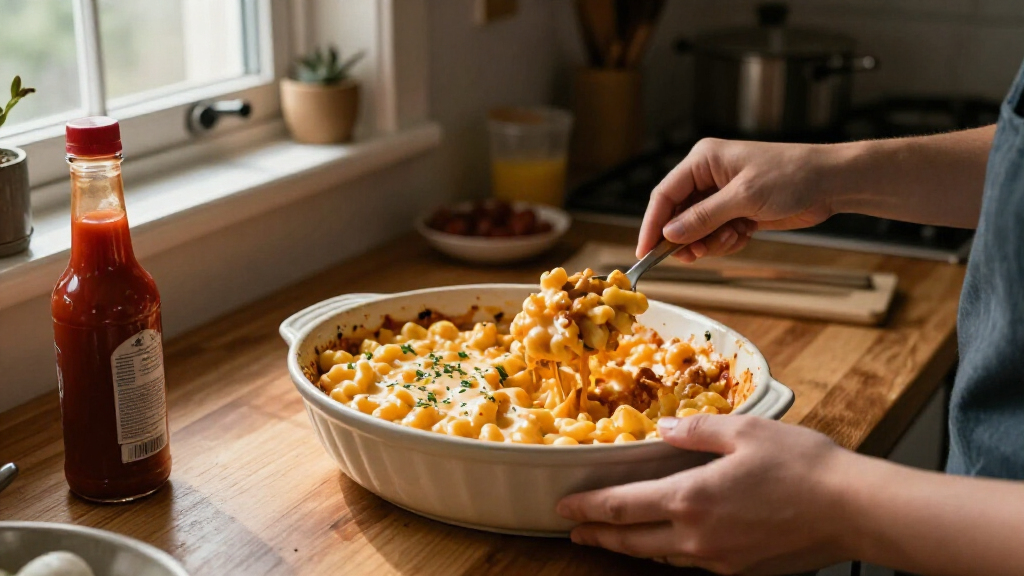
Good Housekeeping’s Buffalo-style mac and cheese recipe is presented as a roughly 25-minute meal, combining pasta and carrots with a sauce made from Cheddar, blue cheese, yogurt and hot sauce. The supplied recipe lists nutrition estimates per serving, but does not specify the serving count or provide independent testing details.
Good Housekeeping’s Buffalo mac and cheese recipe is billed as a 25-minute comfort-food meal, combining elbow pasta or shells and shredded carrots with a sauce of sharp Cheddar, blue cheese, Greek yogurt and hot sauce. The supplied recipe gives a five-step method and estimated nutrition figures, but does not state how many servings it makes.
The recipe calls for 12 ounces of pasta, three cups of shredded carrots, an eight-ounce block of sharp Cheddar, 1¾ cups of crumbled blue cheese, ¾ cup of plain nonfat Greek yogurt, ½ cup of 1% milk and ¼ cup of Tabasco or Frank’s RedHot sauce. Garlic powder, kosher salt and optional chopped parsley round out the ingredient list. The Cheddar is finely grated before cooking.
The pasta is cooked according to package directions, with the carrots added just before draining. Separately, milk and garlic powder are heated in a saucepan; the Cheddar and blue cheese are stirred in gradually until melted. After the pan is taken off the heat, the yogurt, hot sauce and ⅛ teaspoon of salt are whisked into the sauce. The mixture is then tossed with the pasta and carrots, with parsley offered as a garnish.
The source lists estimated nutrition of about 475 calories, 20 grams of fat, 12 grams of saturated fat, 24 grams of protein, 920 milligrams of sodium, 50 grams of carbohydrates and 3 grams of fiber. It does not give a serving size or say whether these figures apply per serving, so readers should not treat them as a complete dietary assessment.
A Quick Route to Buffalo Flavors
The recipe’s appeal is its short stated preparation time and familiar combination of pasta and melted cheese, with hot sauce and blue cheese supplying the Buffalo-style flavor. Adding carrots to the pasta near the end of cooking keeps them in the same cooking step, while the sauce is prepared separately.
For readers planning a weeknight meal, the method offers a compact sequence rather than a long baking process: cook the pasta and carrots, make the sauce on the stove, then combine them. The 25-minute description is the recipe’s stated framing; actual timing can vary with equipment, preparation speed and the package directions for the pasta.
The dish also contains several common allergens: milk and dairy are present in the Cheddar, blue cheese, milk and yogurt, and wheat is likely in standard pasta. People with allergies or dietary restrictions should check product labels and choose suitable alternatives where appropriate.
Products Worth Considering

Breville Bambino Espresso Machine, Brushed Stainless Steel (BES450BSS)

Cuisinart Chef's Classic 11-Piece Stainless Steel Cookware Set

Cuisinart MultiClad Pro 12-Piece Stainless Steel Cookware Set
As an affiliate, we earn on qualifying purchases.
How the Recipe Builds Its Sauce
This is a recipe report, not a newly announced product or a claim about a restaurant or food-industry development. The source material identifies the recipe as a Good Housekeeping report and supplies its ingredients, instructions and nutrition estimates; it does not provide a publication date in the material provided here.
The sauce uses two cheeses for its base and incorporates yogurt after the pan comes off the heat. The hot sauce is added with the yogurt, rather than cooked into the milk-and-cheese mixture. The recipe lists either Tabasco or Frank’s RedHot, giving cooks a choice between two named sauces, but does not specify a heat level or recommend adjusting the amount.
Although the title calls the dish “Buffalo,” the supplied source does not explain the naming or make a claim about authenticity. Its listed ingredients establish the recipe’s flavor cues: hot sauce and blue cheese alongside a rich pasta-and-cheese base.
“This Buffalo Mac ’n’ Cheese Is the Ultimate 25-Minute Comfort Food”
— Good Housekeeping recipe title
Serving Size and Timing Details
The supplied source does not specify the recipe’s serving count or serving size, leaving the basis for the nutrition figures unclear. It also does not say whether the 25-minute estimate includes preparation time, how long each cooking step takes, or whether the timing was tested under particular conditions.
No details are provided about substitutions, storage, reheating or the best way to adjust the sauce’s heat. The recipe includes dairy and pasta, but does not offer allergy-friendly variations. The nutrition values are presented as estimates in the source material, and no independent verification is supplied.
What Cooks Should Check
Anyone making the dish can follow the listed method and the cooking directions on their pasta package, while checking the sauce as the cheeses melt to avoid scorching. The source gives no additional testing, update or follow-up announcement, so there is no further development reported in the supplied material.
Before relying on the nutrition numbers or planning portions, readers would need a serving count and serving-size information that the provided recipe details do not include. For safe handling, keep dairy ingredients refrigerated until use, serve the finished dish promptly, and refrigerate leftovers in a covered container within two hours; reheat leftovers until steaming hot throughout.
Key Questions
What ingredients give this mac and cheese its Buffalo-style flavor?
The recipe uses hot sauce and crumbled blue cheese with a Cheddar-based sauce. It names Tabasco or Frank’s RedHot as hot sauce options.
How long does the recipe take?
Good Housekeeping’s title describes it as a 25-minute recipe. The supplied material does not explain how that estimate was calculated, and actual timing may vary.
When are the carrots added?
Add the shredded carrots to the pasta just before draining, after cooking the pasta according to its package directions.
Does the recipe provide nutrition information?
Yes. It lists estimated figures including about 475 calories and 920 milligrams of sodium, but the supplied material does not state the number of servings or the serving size.
Does the recipe contain common allergens?
It contains dairy in the cheeses, milk and yogurt. Standard wheat pasta also contains wheat; check labels and use appropriate alternatives if needed.
Source: goodhousekeeping.com