
When you add too much cheese on a high-heat pizza, it can become greasy and greasy, creating pools of fat that drown out other flavors. The excess moisture causes soggy crusts, preventing them from crisping properly. Overloaded cheese also insulates toppings, leading to uneven cooking and burnt spots. It can make your slices messy and mask the taste of other ingredients. Want to learn how to balance cheese for perfect pizza results? Keep going to find out more.
Key Takeaways
- Excess cheese causes greasy layers and pooling of fat, leading to an unappealing texture.
- Too much cheese releases moisture, resulting in soggy crusts and preventing proper crisping.
- Overloaded cheese insulates toppings and crust, causing uneven cooking and potential burning.
- Thick cheese layers can cause toppings to slide off and create messiness when slicing.
- Excess cheese diminishes flavor balance, masking other toppings and producing overly rich bites.
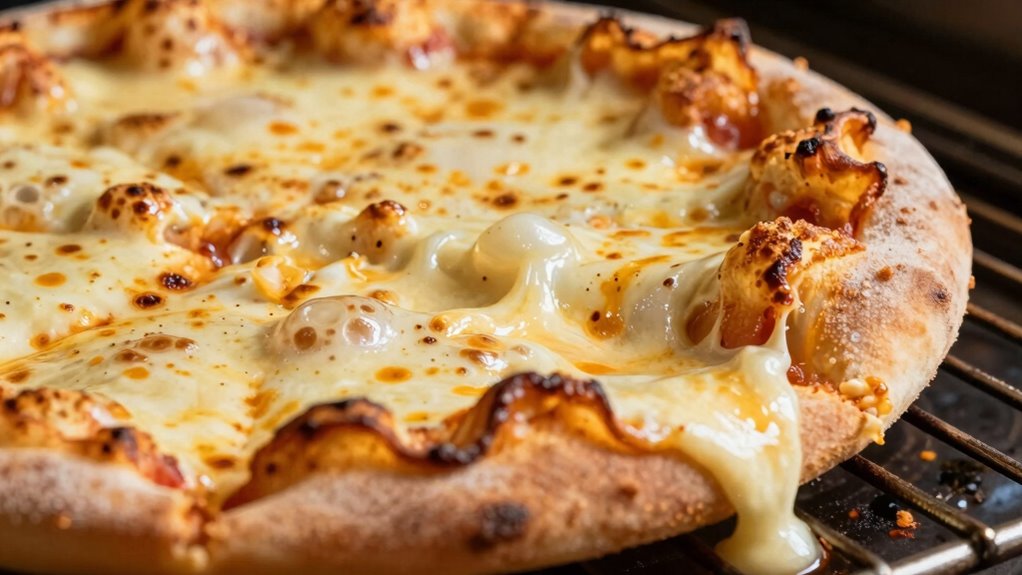
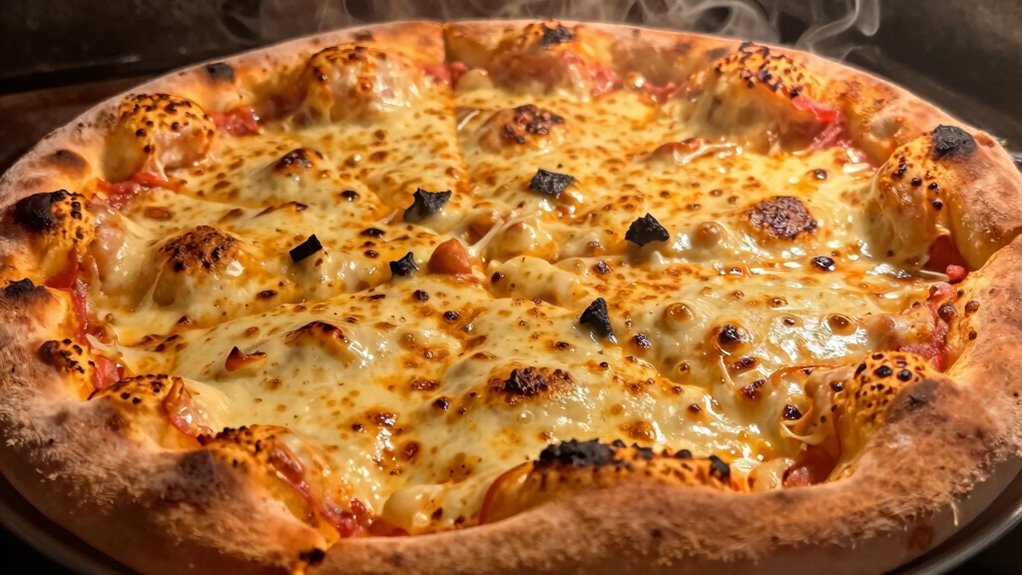
When you pile too much cheese on a high-heat pizza, it might seem like a delicious overload, but it can lead to unexpected problems. One of the first issues you’ll notice is how the cheese melts. Instead of evenly spreading and creating a smooth, gooey layer, excessive cheese tends to become overly oily and greasy. The intense heat causes the cheese to release more moisture, resulting in a pool of fat rather than a cohesive, appetizing layer. You might find the cheese bubbling excessively or even burning in spots, which can ruin the overall texture and flavor. Instead of enhancing the pizza, too much cheese can mask the other toppings and make each bite overly rich or greasy.
Too much cheese on a hot pizza can cause greasiness, uneven melting, and soggy crusts. Balance is key.
Another significant consequence of overloading cheese on a high-heat pizza is the impact on your crust. A crisp crust is what often makes a pizza stand out, but when you use too much cheese, it can interfere with that crispness. The excess cheese releases moisture as it melts, which can seep into the crust and make it soggy rather than crisp. This problem is especially true if you cook the pizza directly on a pizza stone or a high-temperature baking surface. The moisture from the cheese creates steam, softening the crust and preventing it from achieving that desirable crunch. This moisture can also be affected by the type of cheese used, as different cheeses release varying amounts of moisture during cooking. The behavior of cheese during high-temperature cooking can vary, so choosing the right cheese type is essential for optimal results. Proper moisture control can help maintain the integrity of the crust and overall quality of the pizza. Additionally, overloading cheese can cause the topping to slide off when slicing, making the pizza messier and harder to serve neatly.
Furthermore, the extra cheese can cause uneven cooking. Since cheese melting is temperature-dependent, a thick layer of cheese can insulate the toppings and crust, leading to uneven heat distribution. The top may become overly browned or burnt while the crust remains undercooked or soggy. This imbalance not only affects the texture but also the flavor, as burnt cheese and undercooked dough don’t complement each other well.
Ultimately, overloading cheese on a high-heat pizza compromises both texture and taste. You might think more cheese equals better flavor, but in reality, excess cheese can hinder the perfect balance of meltiness and crispness. To get that ideal combination, it’s better to use an appropriate amount of cheese that melts evenly, creating a smooth layer without overwhelming the other elements. Additionally, understanding how cheese behaves during high-temperature cooking can help you achieve a more balanced and satisfying pizza. With just the right amount, your pizza will develop a beautifully crisp crust and a deliciously gooey, well-melted cheese topping—exactly what you’re aiming for in a perfect high-heat pizza.
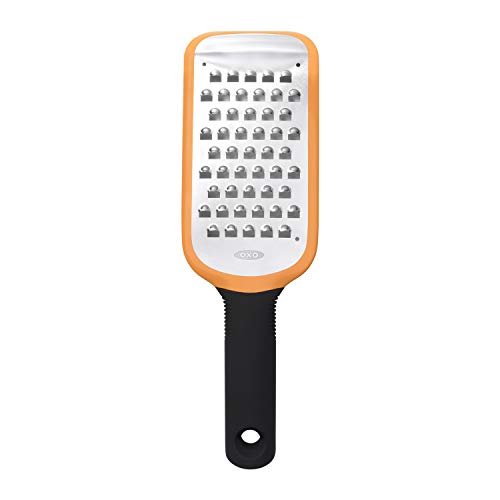
OXO Good Grips Etched Coarse Grater, Orange
- Suitable for various foods: Grates cheeses, vegetables, and fruits
- Sharp etched stainless steel: Provides fast, easy zesting and grating
- Protective cover included: Safeguards grating surface and hands
As an affiliate, we earn on qualifying purchases.
As an affiliate, we earn on qualifying purchases.
Frequently Asked Questions
Does Cheese Burning Affect Pizza Flavor?
Yes, cheese burning affects pizza flavor by creating a burnt cheese taste that can overpower the overall dish. When cheese gets too hot and burns, it loses its natural richness and develops a bitter, smoky flavor. This can ruin the balance of flavors you’re aiming for, making your pizza less enjoyable. To avoid this, keep an eye on the cheese as it melts and prevent it from overcooking at high heat.
Can Excess Cheese Cause Pizza to Become Greasy?
Yes, excess cheese can cause your pizza to become greasy. When you pile on too much cheese, the cheese texture becomes overly oily as it melts, and the cheese distribution becomes uneven, leading to pockets of grease. This excess fat can seep out during baking, making the pizza greasy and heavy. To avoid this, use a balanced amount of cheese to guarantee a better cheese texture and even distribution.
How Does High Heat Influence Cheese Melting?
High heat accelerates cheese melting by quickly reaching its melting point, causing the cheese to become gooey and stretchable. The cheese texture changes from firm to smooth as the heat breaks down fat and protein structures. If the heat is too high, the cheese may melt unevenly or burn, resulting in a greasy surface. Managing temperature guarantees a perfect melt, enhancing flavor and texture without burning or excessive greasiness.
Is There an Ideal Cheese Quantity for High-Temperature Baking?
For high-heat pizza baking, keeping your cheese layer thin and even is ideal. Too much cheese thickens the topping, making it difficult for heat to melt it properly and risking burning. Use a moderate amount to guarantee good melt and flavor without overpowering the crust. Proper cheese layering allows for even melting, prevents excessive bubbling, and gives your pizza a balanced, delicious finish.
What Types of Cheese Are Best for High-Heat Pizzas?
You should choose cheeses with stable flavor profiles for high-heat pizzas, like mozzarella, provolone, or gouda, which melt well and withstand high temperatures. These cheeses often have a longer cheese aging process, developing rich, balanced flavors that enhance your pizza. Fresh cheeses with delicate flavor profiles can burn or become greasy, so opt for aged options when possible to guarantee ideal taste and texture during baking.
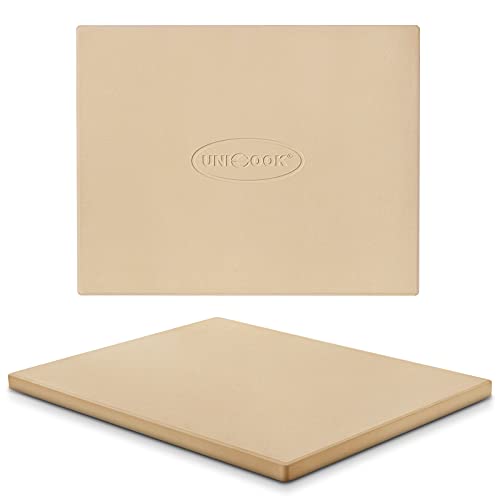
Unicook Pizza Stone, Heavy Duty Cordierite Pizza Pan for Oven and Grill, Thermal Shock Resistant Baking Stone for Bread, 15 X 12 Inch Rectangular, 6.8 lbs
- Rectangular Baking Surface: 15 x 12 inches, 0.6 inch thick
- Heavy Duty Material: Made of durable Cordierite
- High Temperature Resistance: Resists up to 1450°F (787°C)
As an affiliate, we earn on qualifying purchases.
As an affiliate, we earn on qualifying purchases.
Conclusion
Think of your pizza as a fiery dragon’s lair—too much cheese is like adding endless treasure to its hoard. At first, it’s dazzling, but eventually, the weight causes the flames to sputter and the treasure to spill, burning and melting away. Just as a dragon needs balance to keep its lair safe and thriving, your pizza needs just the right amount of cheese to stay delicious without chaos. Keep it balanced, and every bite will be a fiery, flavorful victory.

Etekcity Infrared Thermometer Laser Temperature Gun 774
- Versatile Measurement Applications: Measures objects indoors and outdoors
- High Accuracy: 12:1 distance-to-spot ratio for precise readings
- Easy to Use: Quick temperature readings on bright LCD display
As an affiliate, we earn on qualifying purchases.
As an affiliate, we earn on qualifying purchases.

PYY 12 Inch Indoor Pizza Oven, 800°F Electric Countertop Pizza Maker with Ceramic Stone, Viewing Window, Thermometer, Upper & Lower Heat Control, Compact Pizza Cooker for Apartment, Home Kitchen, RV
- High-Temperature Cooking: Heats up to 800°F for crispy pizza
- Compact Design: Ideal for apartments, RVs, and small kitchens
- Dual Heat Control: Adjust upper and lower heat independently
As an affiliate, we earn on qualifying purchases.
As an affiliate, we earn on qualifying purchases.